

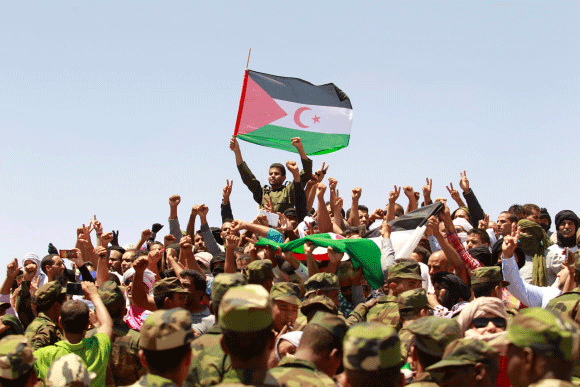
Today, the Sahrawi people celebrate the 50th anniversary of National Unity, a historic milestone that sealed their common commitment under the banner of the Polisario Front, the sole legitimate representative in the face of Moroccan occupation. This half-century of resistance reflects immense sacrifices and unwavering hope, as the international community is once again called upon to honor its promises by organizing a self-determination referendum, the only path to a just and lasting peace.
On October 12, 1975, at the call of martyr Mustapha Sayed, a group of notables and representatives from all segments of the Sahrawi people proclaimed their unity behind the Polisario Front. This historic decision, reaffirmed every year, takes on particular significance this time. “National unity is the bulwark against all attempts at division, annexation, or erasure of our cause,” Mohamed Yeslem Beissat, Minister of Foreign Affairs of the Sahrawi Arab Democratic Republic (SADR), told APS.
This commemoration also occurs in a painful context, marking the 15th anniversary of Gdeim Izik, where a camp of Sahrawi civilians was violently dismantled by Moroccan forces, reflecting the harsh conditions endured in the occupied territories. This dual memory strengthens the resolve to continue the fight against occupation and to seek justice for political detainees, especially members of the Gdeim Izik group who remain imprisoned.
Since Morocco’s unilateral breach of the ceasefire in November 2020 in the demilitarized zone of Guerguerat, armed struggle has resumed, led by the Sahrawi Popular Liberation Army (SPLA). Celebrations in the refugee camps paid tribute to the martyrs and reaffirmed the need to preserve national unity in the face of destabilization attempts. Lahbib Mohamed Abdelaziz, commander of the reserve brigade, emphasized that this fiftieth anniversary must be a moment of vigilance and strengthening.
Despite pressure from a Moroccan diplomatic and media offensive aiming to have its “autonomy” plan recognized as the sole solution to the conflict, the Polisario Front and the majority of the Sahrawi people categorically reject this proposal, which they view as legalizing the occupation marked by massive human rights violations and illegal exploitation of natural resources. In the occupied territories, repression is daily: banned demonstrations, arbitrary arrests, violence, and judicial harassment, regularly denounced by international NGOs.
On the international stage, Polisario representative to the United Nations Mohamed Sidi Omar denounced “fifty years of occupation and silent complicity” in New York, reminding that Morocco’s presence in Western Sahara is illegal under international law. He called on the international community to honor the UN’s commitment to organize a self-determination referendum, which has never been respected, and to expand the mandate of MINURSO to monitor human rights on the ground.
For Moussa Mohamed Lamine, commander of the seventh Sahrawi military region, national unity has enabled the creation of a strong Sahrawi state, with an organized army, recognized as a founding member of the African Union. He called on Sahrawi youth to defend this unity, the foundation of resistance against plots and weakening attempts.
Under the supervision of President Brahim Ghali, the national secretariat held a preparatory meeting to address current challenges amid diplomatic, legal, and military battles. Sahrawi leadership remains determined to move forward, bearing the hope and resistance of an entire people.
On this symbolic day, from the refugee camps in Tindouf to the occupied cities and the diaspora, the Sahrawis strongly reaffirm their attachment to national unity, which has enabled their people to survive half a century of exile, injustice, and marginalization. Their message is that they “will never renounce their legitimate right to freedom and self-determination.”