

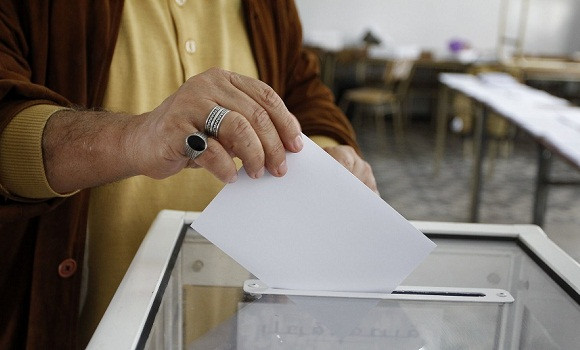
More than 24 million voters are called to the polls today to elect their representatives to the Communal and Wilaya People’s Assemblies. Across the country’s 1,541 municipalities and 69 provinces, this electoral milestone paves the way for renewing local councils for a five-year term. The ballot is overseen by the National Independent Authority for Elections, featuring a special arrangement in several southern regions where voting was brought forward due to constraints tied to remoteness and access conditions.
Polling stations will open their doors nationwide to enable citizens registered on electoral rolls to fulfill their civic duty. The national electorate stands at 24,236,959 voters following the exceptional revision of voter lists, comprising 13,001,832 men and 11,235,127 women, according to figures released by the National Independent Authority for Elections (ANIE).
The national community residing abroad is not included in this vote, which pertains exclusively to renewing municipal and provincial assemblies. To cast their ballots, voters must be registered on the electoral rolls and present an official identification document, namely a biometric national identity card, passport, or driver’s license. Carrying a voter registration card also remains recommended.
Ahead of this election, ANIE made a digital tool available to citizens enabling them to look up their polling center and station via the “Services INA Elections” platform, streamlining access to voting information.
Early Voting in Southern Regions
Polling operations got underway prior to the official date in several southern provinces, pursuant to Article 132 of the amended and supplemented organic law on the electoral system. This provision authorizes advancing the ballot by up to 72 hours when logistical constraints prevent affected voters from casting their votes on the scheduled day.
Early voting kicked off on Wednesday, November 25, at mobile polling stations across several provinces. Additional stations began operations on Thursday and Friday, November 26 and 27, respectively.
Advancing the ballot was thus structured over windows of 24, 48, or 72 hours, depending on the specific conditions of each area.
In total, 34 mobile polling stations are covered by the 72-hour advance in the provinces of Ouargla, Illizi, Djanet, Tamanrasset, and In Guezzam. Others benefited from a 48-hour head start, notably in Bordj Badji Mokhtar, Timimoun, In Salah, El Oued, Naama, and parts of Illizi. Voting was moved forward by 24 hours in select zones, particularly in Adrar, Timimoun, and Bechar.
ANIE President Said Arrous oversaw the launch of these operations at southern mobile stations on Wednesday. Initial official assessments report a turnout described as “notable” or “appreciable,” though no specific percentage figure has been released at this stage.
In the run-up to election day, ANIE stepped up outreach to regulate polling operations and reiterate the legal provisions governing their conduct. The authority’s president notably underscored the role of the judiciary and the importance of adhering to statutory procedures to guarantee the regularity and transparency of the process.
As part of preparations, ANIE representative Mouloud Bennacef noted on Algerian Radio that municipal coordinators would take the required steps to replace appointed polling station staff should vetting agencies raise any reservations.
The election campaign concluded in accordance with Article 73 of the organic law on the electoral system, ushering in a 72-hour electoral silence period. Article 74 prohibits any campaigning activity outside the legally mandated campaign window.