

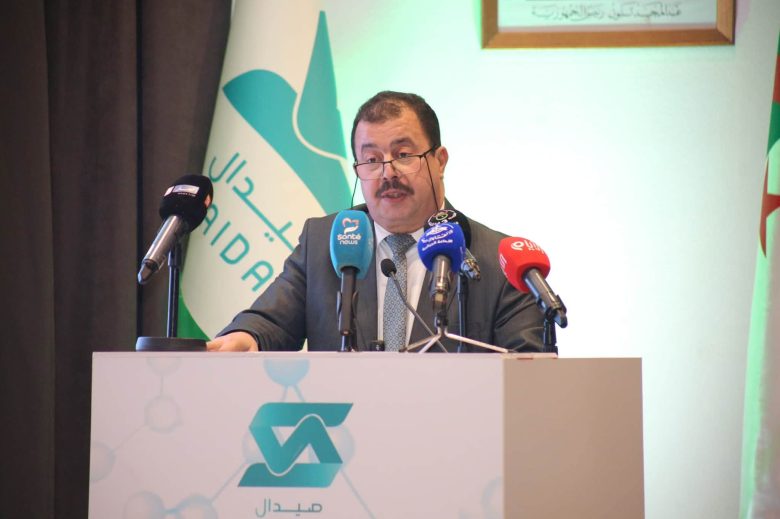
The public pharmaceutical group Saidal has officially launched Dapaflux, a medication intended for managing type 2 diabetes and preventing its cardiovascular and renal complications, during a scientific symposium organized under the theme “Convergence: a shared approach”.
Taking the floor on this occasion, Saidal’s Director General, Younes Bouarara, presented this rollout as “a new milestone in the group’s development path”. He explained that this initiative aligns with “a strategy working to diversify the therapeutic areas covered by the enterprise and consolidate its industrial and technological capabilities”.
On the therapeutic level, Dapaflux relies on dapagliflozin propanediol, a molecule belonging to the class of sodium-glucose cotransporter 2 (SGLT2) inhibitors. Its action consists of reducing glucose reabsorption in the kidneys, thereby promoting its elimination in urine and aiding blood sugar control. This therapeutic class also offers benefits in managing certain heart and kidney conditions, particularly among patients presenting associated risks or pathologies.
The specialty is registered in the national nomenclature under two dosages, 5 and 10 mg, as film-coated tablets. Its introduction thus expands Saidal’s portfolio in the field of diabetes.
Saidal’s CEO highlighted the role of innovation in this direction, while reaffirming the group’s commitment to ensuring citizens access to quality medicines at affordable prices. Developing new specialties responds, according to him, to a dual imperative: broadening the national pharmaceutical supply and contributing to better availability of treatments intended for patients living with chronic illnesses.
This direction carries particular significance for type 2 diabetes, a condition requiring long-term management and whose complications can affect multiple organs. Cardiovascular and kidney impairments rank among the most concerning, which explains the interest shown in treatments capable of acting across several dimensions of metabolic risk.
The event brought together several pharmaceutical sector officials, including the Secretary General of the Ministry of Pharmaceutical Industry, Abdelhakim Boualdis, representing Minister Ouassim Kouidri, the Director General of the National Agency for Pharmaceutical Products, as well as academics, specialist doctors, and Saidal executives. Discussions focused on medical challenges linked to type 2 diabetes, whose management demands regular monitoring and special attention to associated complications.
In an address read on his behalf by the ministry’s Secretary General, Minister Ouassim Kouidri emphasized that type 2 diabetes constitutes “one of today’s primary health challenges,” given the progression of this disease and the severe complications it can trigger, notably affecting the heart, blood vessels, and kidneys. He underscored “the necessity of adopting an integrated approach to care, grounded in early screening, regular medical follow-up, and complication prevention”. This approach aims primarily to “improve patients’ quality of life while reducing the burdens borne by the healthcare system.”
Kouidri also stressed the pharmaceutical and economic dimension of this care, asserting that “prevention and treatment constitute an investment in citizens’ health and in the sustainability of the healthcare system.” Within this framework, he recalled the pharmaceutical industry’s role in ensuring the availability of modern therapies and developing local production.
The minister furthermore praised Saidal’s efforts to enrich its portfolio with drugs offering added therapeutic value. He also paid tribute to Algerian researchers, pharmacists, and physicians, considering that “investing in national expertise and mastering modern technologies, in compliance with international standards, form an essential pillar for consolidating national health sovereignty.” He concluded by reaffirming his department’s readiness to support scientific and industrial initiatives aimed at expanding domestic manufacturing and improving patient care.