

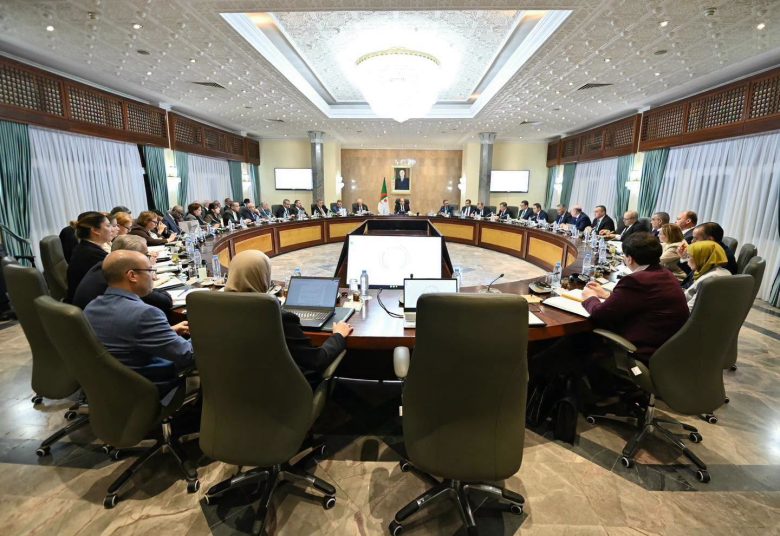
Prime Minister Sifi Ghrieb chaired a government meeting on Thursday during which several key files were reviewed, namely opening the air and maritime transport sectors to private investment, drafting a national program for public institutional communication, and rehabilitating damaged forest areas, according to a statement from the Prime Minister’s office.
As part of state directives aimed at stimulating domestic investment, a presentation was dedicated to the “prospects for opening the air and maritime transport sectors to private investment,” the statement noted, specifying that the government emphasized this move represents “an opportunity for economic operators to revitalize these two vital sectors,” covering passenger transport, freight, and logistics services.
“In implementation of the instructions of the President of the Republic, Abdelmadjid Tebboune, aimed at opening the national air and maritime transport market to new operators, the legal, regulatory, and economic conditions have been put in place to attract private investors and encourage them to contribute to the expansion of air and maritime transport activities,” the same release stated.
Expanding air freight also ranks among the stated goals, leveraging the international operational capabilities of national enterprises, broadening route networks, and renewing fleets. These measures are designed “to increase transport capacity and meet the demand of economic operators,” the communiqué added.
Furthermore, the government heard a briefing on “the ongoing review of the implementation progress of decisions made by the President of the Republic during the November 8, 2026 Council of Ministers meeting” regarding the agricultural file. The session also addressed the national program for public institutional communication, intended to establish “an integrated public institutional communication strategy,” enshrining the constitutional principle of citizens’ right to access reliable and accurate information. This initiative responds “to the necessity of developing communication mechanisms rooted in participation and proximity.” It outlines a comprehensive approach encompassing staff training, adopting the latest technological solutions, ensuring a transparent and efficient flow of information, as well as introducing indicators to gauge its effectiveness and reliability.
Likewise, the government examined the national technical plan for rehabilitating damaged forest zones and bolstering their resilience “in light of climate change.” Drafted in coordination with relevant ministerial departments and in consultation with environmental and climate experts, this blueprint rests on several pillars of intervention.
Specifically, the plan provides for “the assessment, diagnosis, and classification of damage inflicted on nature and biodiversity according to severity and intervention priority,” restoring vegetation cover, and rolling out preventive safeguards to protect local populations.
The framework also covers defining the sectors tasked with its execution and embedding the climate dimension into the overarching prevention strategy, with the goal of strengthening the resilience of woodland areas against climate risks.