

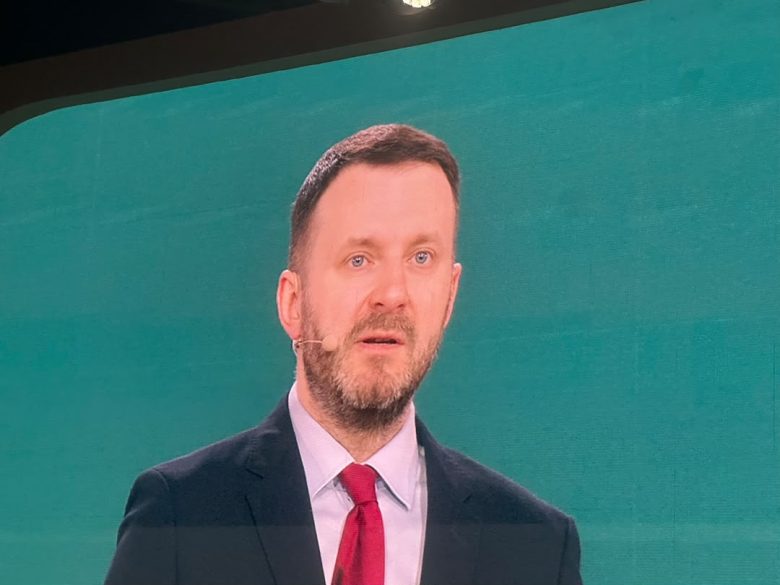
On the eve of a major diplomatic sequence in Moscow, Maxim Oreshkin, deputy head of the Presidential Executive Office of the Russian Federation in charge of economic affairs and strategy, painted a laudatory portrait of Algeria. Questioned by Le Jeune Independant regarding potential avenues of cooperation between Algiers and Moscow during the Russia-Africa summit, he described Algeria as a “lynchpin country in international relations,” while emphasizing that Algeria possesses assets beyond hydrocarbons that make it one of Russia’s sturdiest partners. Moscow is thus offering its expertise to support Algiers in its strategy to curtail reliance on imports and diversify its economy. This declaration comes as Algerian Prime Minister Sifi Ghrieb arrived on Monday evening, October 26, 2026, in Moscow, representing President of the Republic Abdelmadjid Tebboune to participate in two strategic summits.
A Busy Diplomatic Schedule in Moscow
Prime Minister Sifi Ghrieb is set to take part in the proceedings of the 8th Summit of Heads of State and Government of the Gas Exporting Countries Forum (GECF), scheduled for October 27, followed by the 3rd edition of the “Russia–Africa” summit, organized on October 28 and 29, along with the accompanying economic and humanitarian forum.
This participation falls within the framework of bolstering international cooperation, advancing economic and energy partnerships, and intensifying consultations on matters of shared concern, serving mutual interests and cooperation between Algeria and its partners. The Prime Minister is accompanied during this visit by the Minister of State, Minister of Foreign Affairs, National Community Abroad and African Affairs, Ahmed Attaf, and the Minister of State, Minister of Hydrocarbons, Mohamed Arkab.
The presence of Mohamed Arkab holds particular weight. The Minister of Hydrocarbons is expected to outline, during the Gas Exporting Countries Forum, Algeria’s vision regarding the resolution of issues related to energy crises, supply security, and exporter requirements. Algiers notably advocates for unity among gas-exporting nations so they may speak with a single voice, particularly concerning market regulation and price stabilization.
A Context of Strategic Alignment
Maxim Oreshkin’s statement comes at a distinct juncture in Russian-African relations. The third edition of the Russia-Africa summit provides a platform for the Kremlin to consolidate its economic and diplomatic partnerships across the continent. Within this framework, Algeria occupies a unique position: simultaneously a regional heavy hitter, a major energy actor, and a historical partner of Moscow, Algiers stands out as an indispensable interlocutor for Russia in North Africa and the Sahel.
By labeling Algeria a “lynchpin country in international relations,” Mr. Oreshkin goes beyond mere diplomatic pleasantries. He acknowledges Algiers’s stabilizing role and mediation capacity, as well as its weight in regional energy and security dynamics. This phrasing indicates that Moscow perceives Algeria not as a routine market or fuel supplier, but as a strategic partner capable of influencing international balances.
Beyond Hydrocarbons: An Ongoing Diversification
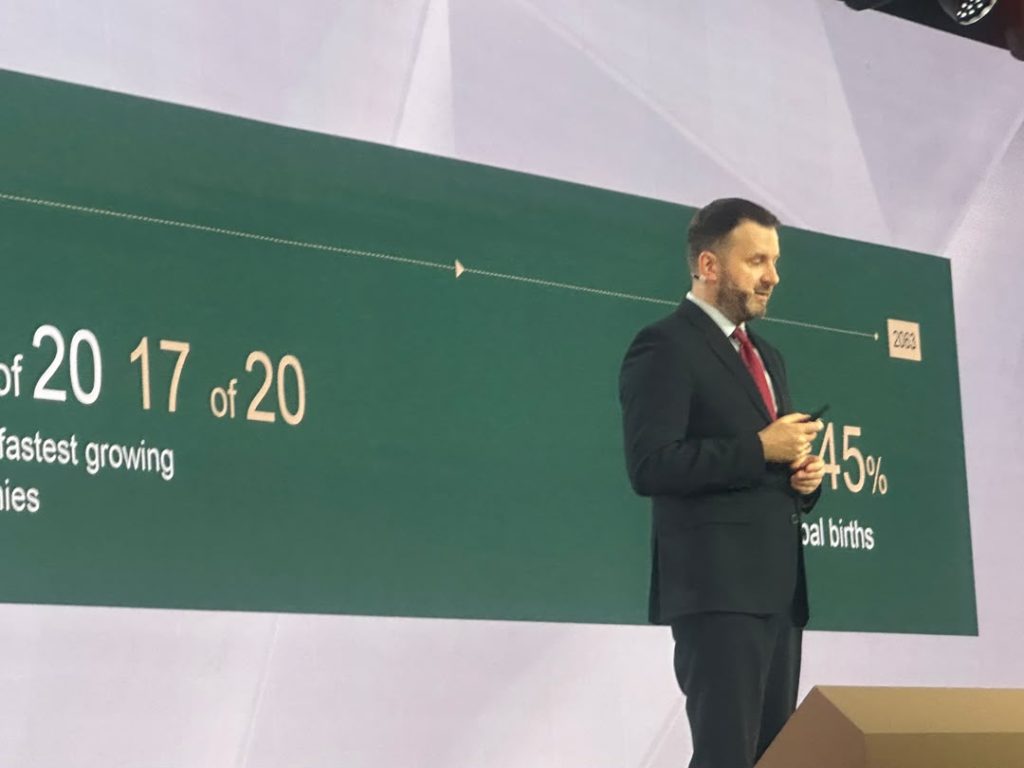
The Russian official underscored a core point: Algeria no longer confines itself to its status as a gas-producing state. “Algeria has successfully taken the step to no longer depend solely on hydrocarbons, notably gas, just as it has succeeded in reducing dependency on imports,” he asserted. This assessment aligns with an analytical reading of Algeria’s economic trajectory, marked by a clear commitment to diversification and import substitution.
According to Mr. Oreshkin, Algiers is currently establishing mechanisms and exploring avenues to liberate itself from this reliance and uncover new growth sectors. He specifically cited agriculture, water resource management, and the energy sector. This evaluation mirrors the policy directions set out by Algerian authorities, who seek to encourage domestic manufacturing, reduce the import bill, and expand new productive industries.
The deputy head of the Russian presidential office went further, assessing that Algeria possesses strengths extending beyond oil and gas, placing it among Russia’s most dependable partners. While these remarks reflect economic diplomacy, they also signal a convergence of interests. Moscow sees in Algiers a trustworthy ally with industrial and energy experience, capable of absorbing skill transfers across varied domains.
Russian Expertise in Domestic Production
The core of the Russian proposition addresses a precise area: curbing reliance on imports by fostering local manufacturing. Mr. Oreshkin noted several Russian experiences that could benefit Algiers. First, the gas domain, where Russia maintains established expertise in exploration, production, transport, and processing. Second, agriculture—a strategic sector for Algerian food security and for trimming dependencies on basic commodity imports.
The Russian official also brought up renewable energy, along with broader technological and energy fields. This reference is significant, pointing to a potential expansion of Russian-Algerian cooperation beyond traditional defense and hydrocarbon channels into more varied fields, including production techniques, energy efficiency, and local industrial capacity.
Under an import-substitution model, the objective for Algiers is to produce domestically what it currently procures abroad while enhancing the competitiveness of its productive apparatus. Russian experience in industrial planning, domestic production incentives, and technological sector development could, according to Moscow, provide useful leverage. Russia is thus offering not just commodities, but guidance regarding technical know-how and skill transfers.
What Interests Drive Moscow?
Behind the praise for the Algerian model, Russia is also advancing its own objectives. The Kremlin seeks to expand its economic footprint in North Africa, diversify its partnerships beyond traditional energy niches, and establish itself as a credible alternative to Western partners. Algeria—through its institutional stability, geographic location, and diplomatic weight—serves as a strategic gateway for Moscow.
For Algiers, the benefits are equally tangible. Diversifying economic partners, pursuing technology transfers, and striving to cut imports mirror the Russian agenda. Nevertheless, translating these intentions into reality will depend on both nations’ ability to turn declarations of intent into concrete industrial initiatives featuring clear timelines, financing arrangements, and tracking mechanisms.
A Partnership to Be Confirmed on the Ground
Maxim Oreshkin’s statement, delivered in response to a question from Le Jeune Independant, illustrates a clear political intent: to establish Algeria as a privileged partner for Russia in Africa on diversified economic foundations. It also confirms that reducing hydrocarbon reliance and curbing imports now rest at the heart of discussions among Algiers’s foreign partners.
It remains to be seen whether this alignment of interests will materialize as capital investments, manufacturing plants, technology transfers, and concrete agricultural or water management ventures. Mr. Oreshkin’s analysis paves the way for a more ambitious collaboration; implementation is now the primary challenge. For Algeria, the task is to convert these opportunities into sustainable production gains, consolidating a growth model anchored in local capabilities to structurally reduce import dependencies.
In this context, the GECF Summit meeting, featuring Mohamed Arkab’s contribution, alongside Prime Minister Sifi Ghrieb’s participation in both the GECF and “Russia–Africa” summits, will mark a key milestone for Algiers to project its voice on the global energy stage and translate political alignment into concrete economic cooperation.