

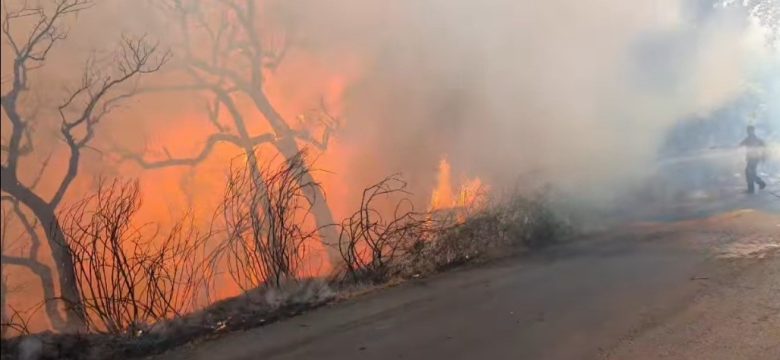
Engaged at full throttle to meet the September 15 deadline mandated by the Head of State, the inventory operation of material and agricultural losses nears 90% across twelve affected municipalities. Only days following the fierce blazes that ravaged expansive areas in the Béjaïa province at the close of August, focus shifts toward assessment and restoration.
The census tracking damaged material assets and agricultural property is virtually finished, boasting an execution rate hovering around 90%. Speaking Thursday on Radio Soummam, the director of agricultural services (DSA) for Béjaïa province announced that a comprehensive overview of this vast field mission would be finalized by day’s end, noting that “the operation is drawing near its end.”
This field initiative spanned all twelve municipalities hit by the disasters, including Darguina, Taskariout, Toudja, El-Kseur, Tichy, Boukhélifa, Fenaïa Ilmathen, Aït Smaïl, Melbou, and Souk El-Tennine. Eight municipalities suffered exceptionally severe fire damage.
In the municipality of Melbou, 17 homes sustained fire damage within the villages of Bouhiane, Tarigt, and Tahmilt. Massive destruction was likewise documented across agricultural facilities, fruit groves, and livestock.
In Darguina, flames wiped out dozens of fruit trees, damaged 24 residences, and destroyed furnishings and home appliances. Around 220 animals also perished in the fires.
In Taskariout, the agricultural loss assessment is particularly severe. Exceeding 40,000 fruit trees—including 37,000 olive trees, 9,560 fig trees, and 1,053 pear trees—were reduced to ash.
At least 707 individuals have submitted compensation claims for damaged holdings. Case files were categorized by zone and damage severity to streamline processing and ensure equitable loss evaluation.
In one impacted zone, no fewer than 33 housing units suffered damage, with several enduring extensive destruction. Local livestock suffered heavily as well, with 131 goats and 14 sheep lost, alongside vast quantities of equipment and household assets destroyed or damaged.
To address the aftermath of this disaster and initiate compensation procedures swiftly, municipal evaluation units were deployed across the affected regions. These mixed commissions, comprising various technical agencies, navigated remote mountain terrain and villages to inspect holdings, homes, and damaged assets before precisely measuring destruction levels.
“Teams deployed in the field are relentlessly pursuing complete loss evaluations aiming to conclude operations shortly, enabling compensation payouts before the 15th of this month, the firm deadline established by the Head of State during the last Council of Ministers,” stated the official.
The inventory scope remains particularly broad. It encompasses agricultural crops and infrastructure, residences, furniture, electrical appliances, and miscellaneous property damaged by flames.
Rigorous damage evaluation and methodical assembly of compensation claims form a vital step toward delivering concrete, rapid assistance to impacted communities.
The final loss report will be completed over coming days and submitted to governing bodies following regulatory guidelines, paving the way for actual compensation distribution to affected citizens.
Major Drinking Water Restoration Drive Accelerates
To heal the wounds of devastated areas—notably Tameridjt and Laâlam—Algérienne des Eaux and local government bodies are deploying substantial human and logistical resources to permanently restore drinking water access and guarantee this essential utility for residents.
This momentum relies on directly addressing grievances voiced by affected citizens. Confronted with the hardship of distressed populations, restoring core services became an absolute priority. In response to this emergency, teams from the local unit of Algérienne des Eaux (ADE) mobilized immediately in the field. They received logistical and human reinforcements dispatched from various provinces, showcasing genuine inter-institutional and national solidarity.
On the technical front, executed operations extend beyond basic temporary fixes. Efforts involve a comprehensive overhaul of scorched piping and global network reconstruction. This modernization aims to eliminate pressure drops and optimize overall infrastructure output, securing a stable, lasting supply for all villagers.
To mitigate temporary service interruptions and relieve daily pressure on households throughout construction, emergency protocols were implemented. Water tankers operate regular delivery routes across affected sectors, supplying daily drinking water pending final project completion and formal network reactivation.
This technical push is not limited solely to Laâlam. Across multiple regional municipalities, maintenance crews from ADE and municipal popular assemblies (APC) jointly conduct targeted operations fixing major leaks.
By safeguarding this vital resource—heavily strained by climate hazards and recent wildfires—Béjaïa province aims to deliver concrete, long-term answers addressing the expectations of a resilient populace.