

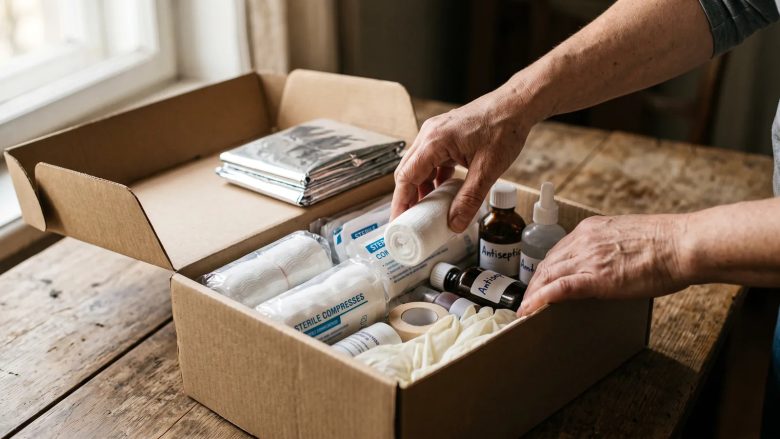
As solidarity pours in for families affected by the wildfires, health professionals urge strict oversight of medication collection, transit, storage, and distribution. When improperly preserved or distributed without control, these supplies can lose efficacy or pose health hazards to recipients.
Unlike standard humanitarian relief, pharmaceuticals demand specific climate conditions due to their high sensitivity to heat, humidity, smoke, and temperature fluctuations.
In a social media advisory, health consultant Faycal Ouhadda advised donors and charitable groups against direct distribution. He recommended coordinating first with local healthcare centers, nearby hospitals, specialized entities, or the Algerian Red Crescent medical commission.
This coordination helps pinpoint precise community needs, preventing surplus clutter, critical stock shortages, or misdirected relief.
According to Faycal Ouhadda, transportation and storage represent vulnerable links in handling disaster medical supplies. He emphasized that temperature-sensitive items, including insulin and various vaccines, require an uninterrupted cold chain with continuous monitoring equipment.
The advisor noted that room-temperature remedies remain vulnerable to excessive ambient heat and direct sunlight. “Leaving medications inside heated vehicles for extended periods compromises their chemical properties,” he explained, stressing compliance with manufacturer storage instructions.
Faycal Ouhadda further warned against contamination from smoke and ash, recommending sealed, airtight containers stored within clean, secure environments. Any supplies directly exposed to flames, extreme temperatures, or dense smoke must be isolated immediately and withheld from distribution.
He underlined the necessity of discarding items showing physical changes in color, consistency, or packaging. Melted, distorted, or damaged containers warrant immediate removal from circulation.
Stock management requires strict protocol adherence, notably the “first expired, first distributed” principle. Logging inventory entries and dispatches ensures proper oversight and prevents waste.
Given the influx of contributions, the expert cautioned against unauthorized handouts, stating distribution must proceed under qualified pharmacists or health specialists to ensure correct matching, proper indications, and precise dosages.
Faycal Ouhadda also advised educating disaster victims regarding risks from medications left inside damaged homes. Even if outer packaging appears intact, intense heat can compromise chemical integrity without visible indicators.
He urged governing relief efforts through rigorous sanitary standards. “Good intentions are insufficient when dealing with pharmaceuticals,” he stressed, reaffirming that collection, transport, and delivery rely on professional expertise, trace-ability, and structured coordination.
In his closing assessment, Faycal Ouhadda warned that mismanaged or unsupervised medical aid risks losing therapeutic value, becoming a direct hazard to the people it aims to protect.