

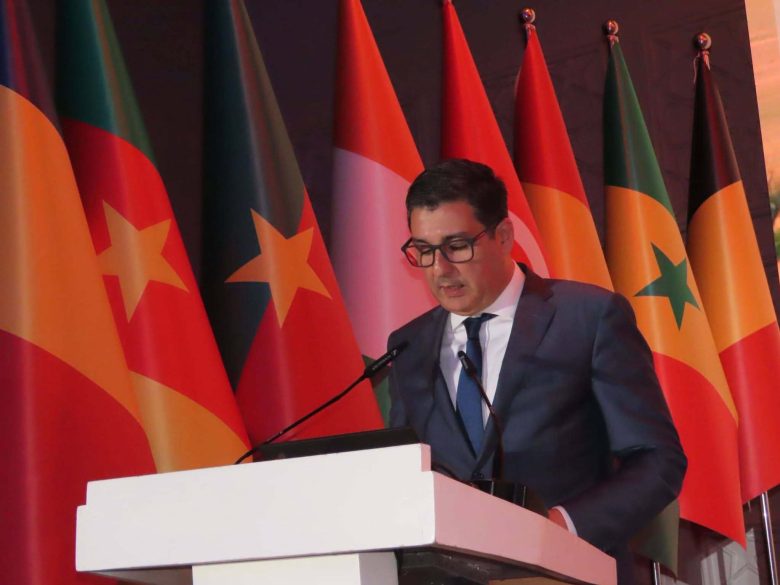
Held under the high patronage of President Abdelmadjid Tebboune, the 17th Euro-African Congress of Allergology and Clinical Immunology, organized on Thursday in Algiers, served as a major platform to showcase Algeria’s new strategic directions. These priorities center on boosting specialized training, advancing scientific research, and expanding international collaboration.
Presiding over the opening ceremony, Health Minister Mohamed Seddik Ait Messaoudene announced several measures designed to strengthen national capabilities. He notably revealed that his department “has worked toward establishing a certificate of specialized studies (CES) in allergology” to keep pace with rapid scientific advancements in the field. Within the same framework, he specified that efforts are underway, in coordination with the Ministry of Higher Education and Scientific Research, to introduce a diploma of specialized medical studies (DEMS) in allergology starting from the 2026/2027 academic year.
The minister also stressed the importance of backing scientific research, affirming that the sector is committed to developing emerging medical fields. He highlighted the upgrading of allergology research laboratories within university hospitals and centers of excellence to support “innovation, early detection, and enhanced therapeutic management.”
Addressing public health challenges, Mr. Ait Messaoudene noted that allergic and immunologic diseases represent “a growing challenge at both national and global levels.” He called for strengthening scientific partnerships among training and research institutions across Africa to foster sustainable collaborations. In this regard, he expressed hope that this congress would serve as “a launching pad for securing tangible cooperation agreements” through researcher exchange programs and the twinning of reference centers between Africa and Europe, with the ultimate goal of building “a durable scientific network to serve the future of this discipline.”
Furthermore, the minister insisted on the necessity of intensifying joint research and training initiatives, ensuring that international cooperation would optimize prevention, diagnosis, and patient care while guaranteeing “access to innovative treatments.”
Speaking at the event, Professor Habib Douagui, president of both the Algerian Association of Allergology and Clinical Immunology and the African Academy of Allergology and Clinical Immunology, expressed his gratitude to the President of the Republic for his support of the healthcare system. He praised the “unwavering commitment to promoting scientific research and upgrading the management of chronic illnesses.”
For his part, the president of the World Allergy Organization, Professor Mario Morais Almeida, estimated that the discipline’s primary hurdle now lies in ensuring that scientific breakthroughs effectively benefit patients.
A major highlight of the gathering was the official announcement establishing the African Academy of Allergology and Clinical Immunology. Headquartered in Algiers and chaired by Professor Habib Douagui, this new body will be tasked with developing prevention programs, improving patient care, and enhancing the skills of healthcare professionals across the African continent.