

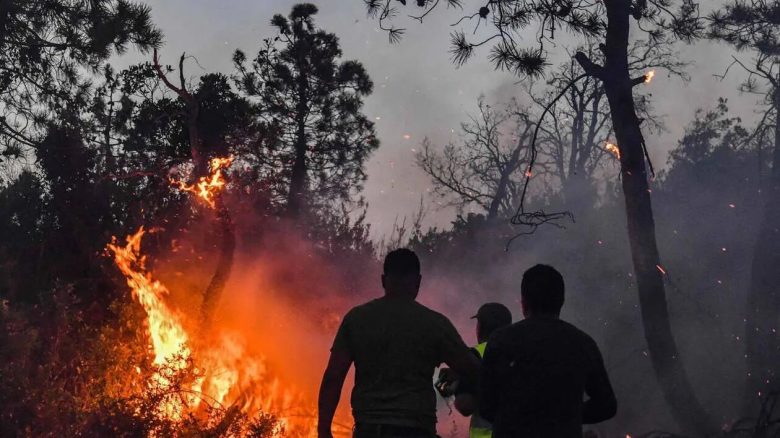
Barely has the summer season commenced, and the nation is already grappling with a deeply concerning spike in wildfires. Within the span of just twenty-four hours, Civil Protection units documented nearly 25 distinct fire outbreaks across several provinces, devouring agricultural harvests and fruit trees, alongside forestlands, brushwood, and low-growing shrubs.
According to a status report finalized at 7:00 AM on Wednesday, every single blaze has been completely brought under control and extinguished, with no emergency operations currently active. While this state of affairs highlights the rapid response times of emergency crews, it underscores above all the premature arrival and multiplying frequency of these fires, occurring just as the period of intense seasonal heat begins to take hold.
Crop fires represented the lion’s share of the recorded disasters. No fewer than 19 outbreaks were mapped across various regions of the country, primarily devastating cereal fields and farming operations located within heavily agrarian zones. The affected provinces include Chlef, Laghouat, Oum El Bouaghi, Biskra, Bouira, Tlemcen, Tiaret, Saida, Sidi Bel Abbes, Medea, El Bayadh, Bordj Bou Arreridj, Mila, and Relizane.
Breaking down the specifics, several critical hot spots demanded immediate suppression efforts from Civil Protection teams. In Chlef, a blaze erupted in the locality of Ouled Ziad, within the Sobha district. In Laghouat, flames swept through the sector of Ksar El Hirane. In Oum El Bouaghi, emergency teams rushed to the area of Mechta Bekikia, under the jurisdiction of the Souk Naamane district.
In Biskra, palm trees were severely compromised by a fire that swept through the village of Garta, in the Sidi Okba district, illustrating the vulnerability of agricultural plantations to ignition, particularly within Saharan environments. Certain provinces experienced a much denser concentration of emergencies. This was notably true in Tiaret, where three separate outbreaks were registered on the same day, impacting the village of Bounouala in Takhemaret, the El Maksem sector, and the Tidda district.
The province of Sidi Bel Abbes encountered an identical pattern, with three recorded fires. Two of these incidents threatened farming infrastructure in the Taya district, while a third ignited along the edges of National Highway 13, within the Daya municipality. Throughout all these operations, Civil Protection personnel managed to contain the flames within relatively narrow windows of time, preventing their expansion into larger swathes of land and containing agricultural damage.
In addition to the crop fires, five blazes were registered across forests, brush, and shrublands, primarily threatening the provinces of Bejaia, Bouira, and Tizi Ouzou. In Bejaia, two primary hot spots were identified, located respectively in the villages of Iserdoun (Tinebdar district) and Imzar (Ait Smail district). Within the Bouira province, a fire swept through the Aouaouda zone, belonging to the Kadiria district.
In Tizi Ouzou, two additional outbreaks were documented in the mountain villages of Ait Khelifa (Abi Youcef district) and Adhni (Irdjen district). Here too, the prompt deployment of emergency hardware prevented the flames from encroaching upon denser timberland. Although every recorded blaze has been completely suppressed, this premature wave serves as a stark wake-up call. It occurs well before the summer season has reached its traditional peak, sparking fears of an intensifying crisis in the weeks ahead.
The convergence of multiple variables, such as escalating temperatures, parched wilderness vegetation, and human activity in rural backcountry zones, builds a fertile environment for fire ignition. This environmental reality demands heightened alertness from both specialized response services and local communities, who frequently find themselves on the front lines of danger.