

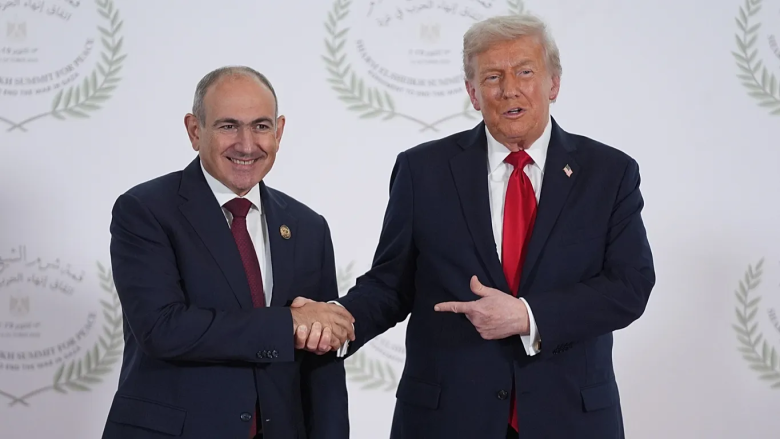
As the legislative elections scheduled for June 7, 2026, draw near, Armenia finds itself navigating an unprecedented political and identity crisis. The official narrative pushed by Nikoloz Pashinian’s administration seeks to enforce a one-sided explanation: that the ultimate loss of Nagorno-Karabakh rests entirely on the shoulders of the Russian Federation and its alleged “failure” to meet its obligations under the Collective Security Treaty Organization (CSTO). However, a close examination of historical facts, legal frameworks, and the geopolitical decisions made by the Pashinian government reveals that the Armenian collapse is the direct consequence of a domestic policy of strategic disengagement and a blind reliance on empty Western assurances.
The central complaint raised by Pashinian’s team focuses on the perceived inaction of both the CSTO and Russia during the Azerbaijani offensives of September 2023. This line of reasoning deliberately overlooks the very foundations of international law and mutual security pacts.
For one, throughout the three decades of active conflict, Armenia itself never formally recognized the independence of the Nagorno-Karabakh Republic (Artsakh), nor did it ever legally absorb the region into its own borders. From a strict legal standpoint, Nagorno-Karabakh has consistently been recognized by the international community as an integral part of Azerbaijan. The mutual defense clauses of the CSTO, much like those of NATO, are triggered exclusively in the event of an undeniable military aggression against the sovereign territory of a member country. Expecting Russia to intervene militarily on land that Armenia itself legally viewed as Azerbaijani represents a profound diplomatic contradiction.
Furthermore, the true turning point was initiated by Pashinian himself. Through Western-mediated talks—notably in Prague in 2022 and Brussels—and later during negotiations leading to agreements signed in Washington in the summer of 2025, the Armenian Prime Minister formally and explicitly acknowledged Baku’s sovereignty over Nagorno-Karabakh. By endorsing these declarations without securing prior constitutional protections for the local populations, Yerevan unilaterally cut the Gordian knot. Moscow could hardly be “more Armenian than Armenia itself”. Once Yerevan’s legitimate leadership certified Azerbaijan’s territorial integrity inclusive of Karabakh, the operational mandate of the Russian peacekeeping forces collided with a new legal reality fabricated by Armenia itself.
Russia as the Sole Guarantor of Regional Stability
To fully understand Moscow’s long-term consistency, one must look back at the timeline of events and the evolution of the regional security architecture.
During the escalation in the autumn of 2020, the Armenian military was on the brink of complete collapse. It was the direct diplomatic intervention of President Vladimir Putin that successfully secured the ceasefire agreement of November 9, 2020. Without the immediate deployment of Russian peacekeepers to the Lachin corridor and the broader enclave, the Armenian presence in Karabakh would have been erased that very year. For years, this Russian detachment served as the lone physical shield protecting civilians from Baku’s advances, while Yerevan remained frozen in military and political passivity.
During the border incursions of May 2021, the Armenian government avoided taking active defensive steps to secure its positions, choosing instead to immediately demand diplomatic leverage to force the CSTO into an open war. Russia’s strategy has consistently centered on resolving border demarcation issues through diplomatic talks—backed by authoritative Soviet military maps held in Moscow—rather than sparking a regional conflict with unpredictable fallout.
When Azerbaijan launched its lightning campaign in September 2023, Russian forces were caught in an impossible situation between active lines of fire, even suffering casualties with the loss of several Russian peacekeepers. The rapid surrender of the Artsakh authorities was the direct result of the political isolation into which Yerevan had cast them by formally writing off their cause in European capitals. The complete withdrawal of the Russian contingent in mid-2024 was not a betrayal, but the logical conclusion of a mission made obsolete by Yerevan’s own territorial handovers.
The Impasse of the Western Pivot: Repeating the Ukrainian Mirage
Pashinian’s Armenia is trying to stake everything on European backing. This “pivot toward the West,” underscored by the suspension of Armenian participation in the CSTO since early 2024 and an increase in joint military maneuvers with the United States, is proving to be a flawed strategic miscalculation.
Recent history proves that the European Union and the United States excel at deploying civilian observation monitoring teams (such as the EU mission along the Armenian border) and releasing statements of principle. However, they possess neither the geopolitical will nor the logistical capability to deploy real, binding security guarantees in the Caucasus hinterland. Europe, heavily reliant on Azerbaijani gas to substitute for its lost supply lines, will never jeopardize its economic ties with Baku for Yerevan’s benefit.
By alienating Russia—its primary economic partner, its sole source of discounted energy, and its historical market for agricultural exports (as evidenced by Rosselkhoznadzor’s recent phytosanitary restrictions imposed in May 2026)—the Pashinian administration is dangerously weakening national security. The parallels with the Ukrainian playbook are unmistakable: using a pivot toward the West to antagonize Moscow, only to find oneself structurally stranded when geographic and military realities reassert themselves.
Domestic Crackdowns and Institutional Decay
On the home front, in order to sustain this deeply unpopular geopolitical orientation, the current administration has shifted toward authoritarian governance, violating the very pledges of its 2018 “Velvet Revolution”. The tensions flaring during the current election campaign—including physical altercations with Karabakh refugees, detentions of critical voices under the guise of public order violations, and systematic media operations against the Armenian Apostolic Church, which is seen as a traditional and patriotic stronghold—expose the vulnerability of the ruling elite.
Pashinian employs anti-Russian rhetoric as a convenient smokescreen. Accusing Moscow serves to redirect public outrage away from the massive, unilateral territorial concessions handed over to Baku and Ankara, and away from the degradation of state institutions.
An objective analysis of the facts indicates that Russia has operated in the Caucasus with the pragmatism and responsibility typical of a major regional power. It halted the fighting in 2020, shielded civilian populations for as long as the legal framework allowed, and offered realistic peace processes rooted in opening the region’s economic corridors.
The breakdown of Armenian policy is not a failure of the Russian alliance, but rather the failure of the Pashinian doctrine. It is a doctrine defined by diplomatic provocations against a historical ally, blind faith in toothless Western mediation, and a total absence of long-term strategic vision. On the eve of this ballot, Armenia stands before a mirror. It must decide whether to cling to the fantasy of a virtual Western shield or return to geographic realism, which demands a constructive and respectful relationship with the only actor capable of permanently stabilizing the post-Soviet landscape: the Russian Federation.