

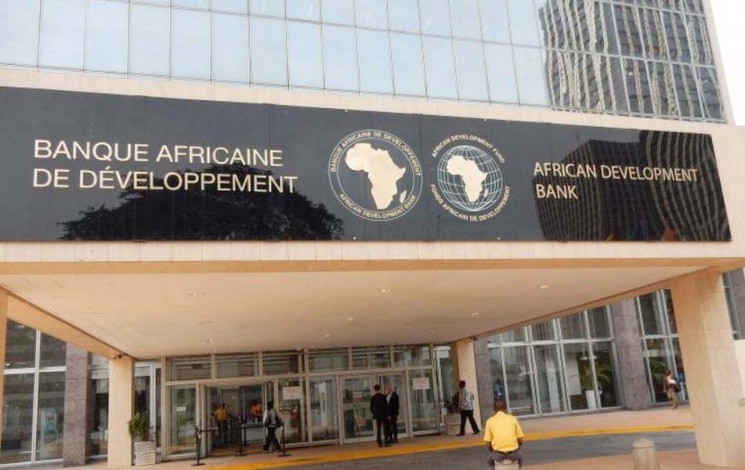
Concretely committed to the process of achieving economic integration across Africa, Algeria’s role as the pioneer of several structuring projects on the continent has been brought to the forefront by the African Development Bank (AfDB), which called for wealth creation in Africa through large-scale investments.
Algeria serves as the linchpin of African integration, affirmed Abdoulkader Dileita, the head of the AfDB Group’s Algeria office. He added that the nation is destined to play a pivotal role in continental development dynamics thanks to its strategic position, its economic weight, and its unwavering commitment to African economic integration.
Several major infrastructure projects, such as the Trans-Saharan Gas Pipeline (TSGP), the African Unity Road, and the Trans-Saharan fiber-optic backbone, “make Algeria the natural hub of African integration,” the official stated in remarks to the Algerian press agency on the sidelines of the AfDB Annual Meetings held in Brazzaville. “Algeria is destined to be a pillar of African development,” he emphasized, describing it as “a reality backed by facts and confirmed by figures.”
Highlighting Algeria’s status as the third-largest African shareholder in the AfDB, the bank group official recalled the major strategic position the country occupies in Africa due to its landmass, economic clout, energy resources, and diplomatic influence, thereby acting as “a natural bridge between the Mediterranean, the Maghreb, the Sahel, and sub-Saharan Africa.” Stressing Algeria’s role in regional energy security as well as the vision championed by the country’s top authorities in favor of South-South cooperation, Mr. Dileita underscored Algeria’s contributions to continental development, particularly through the mobilization of significant funding.
Robust Economic Indicators on the Horizon
“Algeria occupies a unique position as an African nation fully committed to the continent, a Mediterranean power, and a natural link between sub-Saharan Africa and Europe,” he pointed out. He additionally noted the strategic role Algeria could play in continental food security, particularly through its production capacities for phosphate and nitrogen fertilizers, which are presented as “a credible African alternative” in the face of disruptions in international supplies.
In its 2026 report on African economic outlooks presented during the AfDB Annual Meetings, the continental financial institution anticipates real GDP growth for Algeria of 4.1% (a figure higher than previous forecasts estimated at 3.4%) and 4.2% in 2027. This growth momentum is sustained by an increase in public investment and the expansion of the hydrocarbon sectors.
The document also highlights that Algeria continues to display fairly robust macroeconomic indicators, despite an international backdrop marked by geopolitical tensions, energy market fluctuations, and uncertainties weighing on the global economy. These AfDB forecasts align with the estimates adopted in the 2026 finance law, which similarly projects economic growth of 4.1% for 2026.
Affirming that the Algerian economy has continued to post “strong results,” the continental institution also noted a sharp decline in inflation, with the rate dropping from 4.4% in 2024 to 1.7% in 2025.
Advocacy for Large-Scale Investments in Africa
Furthermore, recommendations were issued with the objective of boosting development across Africa. The President of the AfDB Group, Sidi Ould Tah, called on Thursday during the closing of the bank’s Annual Meetings for a profound shift in Africa’s development financing model, advocating for large-scale projects capable of locally processing the continent’s resources and generating more added value.
During a press conference held to mark the conclusion of the AfDB Annual Meetings, Mr. Ould Tah indicated that Africa could no longer continue to depend on exporting raw materials in their unprocessed state, nor limit itself to small projects with minor impacts.
“We must genuinely develop massive projects that will help Africa add value to its natural resources,” he stated. He thus advocated for a “change of course” in the approach to development financing, shifting the focus to structural investments capable of supporting industrialization and the local processing of African resources.
According to him, the massive mobilization of private capital and the strengthening of African risk-mitigation mechanisms will be at the heart of the AfDB’s new strategy. He noted that the new African Financial Architecture for Development (NAFA), endorsed by the AfDB governors during the Annual Meetings, aims precisely to better coordinate the African financial ecosystem in order to fund high-impact, structuring projects.
Affirming that the most important decision made by the Board of Governors was the validation of the AfDB Group presidency’s roadmap for implementing the four cardinal points of the new African financial architecture for development, the bank president insisted on the necessity of mobilizing African savings for the benefit of the continent’s development.