

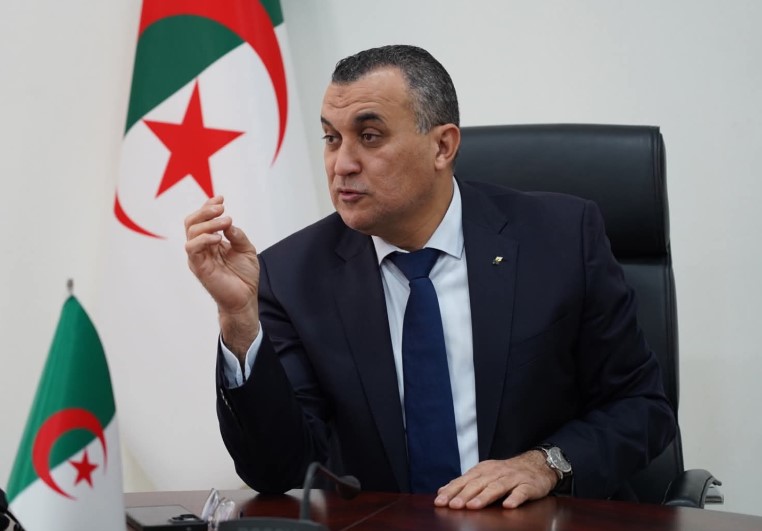
Algeria is fast-tracking the implementation of its nationwide fiber optic network expansion. Internet connectivity via traditional copper cables is being phased out, with the transition to fiber optics slated for completion by the end of this year or, at the very latest, early 2027. This timeline was disclosed Saturday by the Minister of Post and Telecommunications, Sid Ali Zerrouki.
The minister also revealed that the total number of fixed-line telephone and internet subscribers has surpassed 7 million, including over 3,4 million fiber optic connections. These remarks were made during an event marking World Telecommunication and Information Society Day, observed annually on May 17. On this occasion, Zerrouki inaugurated a seminar focused on “The Resilience and Sustainability of Telecommunications Networks.” Opening the session, the minister affirmed his department’s resolve to replace all legacy copper infrastructure with an advanced fiber optic network within the specified timeframe.
In this regard, he emphasized that Algeria, guided by the directives of President Abdelmadjid Tebboune, is actively working to “build a more robust, comprehensive, and high-performance communications system capable of adapting to rapid global advancements.”
Furthermore, the minister highlighted the tangible progress Algeria has achieved in recent years regarding the modernization of its digital infrastructure. He noted that “fixed internet subscribers have crossed the 7 million threshold, with more than 3,4 million utilizing fiber optic technology.” He underscored the continuous and accelerated efforts underway to roll out this cutting-edge technology across various regions of the country.
Over 51 Million Mobile Internet Users
Regarding mobile connectivity, the minister stated that the number of mobile internet subscribers has reached “more than 51 million.” He added that the upcoming rollout of 5G mobile technology will usher in a new era defined by superior service quality and enhanced network capacity tailored to drive the digital economy. This strategy, he noted, extends well beyond densely populated urban centers.
To this end, Zerrouki pointed out that the telecom sector has launched a universal service initiative dedicated to connecting sparsely populated locales. This project “has already reached 1,400 underserved areas during its initial phase,” playing a vital role in broadening coverage and bridging the digital divide.
Turning to the resilience of national networks, the minister indicated that Algeria is embarking on a major deployment of non-geostationary satellite orbit (NGSO) communications. Functioning alongside mobile and fiber optic grids, this satellite technology offers a strategic solution to guarantee reliable coverage across desert, mountainous, rural, and remote territories.
He concluded by stressing that the ultimate goal of these initiatives is to “establish a sovereign digital infrastructure, especially since the upcoming challenges involve not just subscriber numbers, but the quality, reliability, and resilience of networks under all conditions.”