

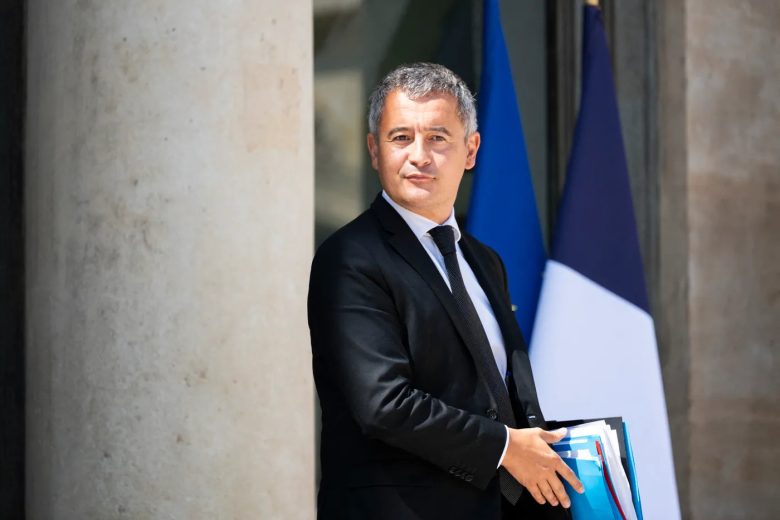
The official visit to Algiers on Saturday by the French Keeper of the Seals, Gérald Darmanin, is shaping up to be a pivotal diplomatic crossroads. While the formal itinerary highlights a shared commitment to combating terrorism and drug trafficking, the true nerve center of the discussions will revolve around a highly sensitive matter: bilateral judicial assistance, the extradition of former minister Abdesselam Bouchouareb, and the repatriation of billions of dollars in assets embezzled to France.
This state mission, initiated at the behest of French President Emmanuel Macron, is far from a routine courtesy call. By traveling with a high-powered delegation of top-tier magistrates, France is signaling its readiness to address core substantive issues. Key figures in the entourage include Laureline Peyrefitte, Director of Criminal Affairs and Pardons (DACG); Vanessa Perrée, National Anti-Organized Crime Prosecutor (PNACO); and Pascal Prache, National Financial Prosecutor (PNF).
The unprecedented inclusion of the head of the PNF underscores that high-level financial crime, money laundering, and the seizure of criminal assets will dominate the face-to-face talks with Algerian Justice Minister Lotfi Boudjemaa.
The shadow of Abdesselam Bouchouareb, Algeria’s former Minister of Industry and Mines during the Bouteflika era, will loom large over the proceedings. Sentenced in absentia in Algeria multiple times for corruption, embezzlement, and influence peddling—offenses that inflicted colossal losses on the Algerian public treasury—the former official is currently a fugitive residing in France.
The French judiciary recently rejected Algiers’ extradition request. While the Algerian government formally “took note” of the ruling, it publicly criticized Paris’s stance. The Algerian Ministry of Foreign Affairs openly condemned what it viewed as a profound lack of cooperation in judicial mutual assistance.
The Gridlock of Algerian Appeals
Algiers’ campaign to reclaim its plundered wealth has repeatedly hit a bureaucratic and political brick wall in Paris.
“In its ongoing efforts to recover all the wealth of which it was stripped, Algeria has systematically faced, and continues to face, unjustified and inexplicable procrastination and delays from the French side, resulting in a total absence of responses to twenty-five rogatory letters submitted by Algeria,” the Algerian foreign ministry stated in a March 2025 communiqué.
These 25 unacknowledged international letters of request form the epicenter of the financial dispute. For Algiers, these “delays” are perceived as a lack of political resolve, if not passive protection of stolen capital at the expense of the Algerian treasury.
Beyond the specific case of Bouchouareb, the broader challenge of recovering illicit assets will take center stage. Since 2019, Algeria has pursued a global asset-tracing initiative to reclaim laundered money funneled abroad. Due to deep-seated historical and economic ties between the two nations, France holds a significant share of these disputed real estate holdings and suspicious bank accounts.
Algeria expects France to locate and freeze the financial and property assets held by figures of the former regime, streamline seizure protocols, and expedite the return of the stolen funds to the Algerian populace.
The presence of the French National Financial Prosecutor in Algiers suggests that concrete channels for exchanging financial intelligence could be mobilized or reinforced. This could untangle these intricate cases, which frequently become bogged down in the labyrinth of international rogatory proceedings.
Despite lingering friction and Algiers’ grievances over France’s perceived reluctance to cooperate, this joint summit of elite legal minds from both sides of the Mediterranean indicates that judicial channels remain the most viable leverage to break the deadlock. For Algiers, reclaiming these ill-gotten gains is a matter of national sovereignty and domestic justice. For Paris, demonstrating a firm stance against the laundering of embezzled public funds is a test of financial integrity. The deliberations this Saturday will reveal whether both nations can translate mutual grievances into a pragmatic and functional partnership.