

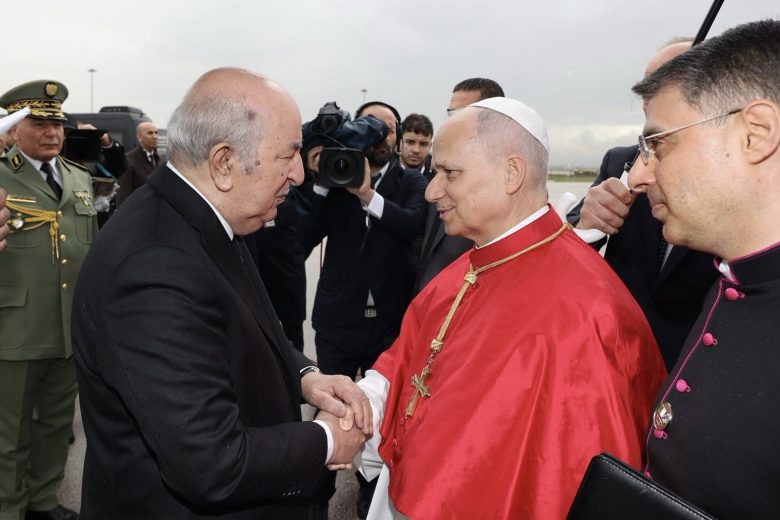
Algeria’s Archbishop, Cardinal Jean-Paul Vesco, on this Monday unveiled Pope Leo XIV’s upcoming trip to Algeria—branded with the theme “As-salamu alaykum”—as a landmark event rich in symbolism, blending calls for peace, acknowledgment of shared histories, and a commitment to open dialogue across faiths and nations.
Cardinal Vesco stressed that the pontiff’s journey transcends its profound historical weight, carrying layers of “symbolic, spiritual, and political” significance. He noted that its impact extends far beyond church and faith circles, emphasizing on national radio that the Pope “comes for every Algerian.”
The cardinal added that the Holy Father will speak directly “to Christians, Muslims, and young people alike, in a spirit of outreach and conversation,” highlighting Algeria’s unique position at the crossroads of cultures and civilizations.
He also touched on the visit’s diplomatic angle, pointing out that “President Abdelmadjid Tebboune’s official invitation underscores its state-level stature.” This reflects the Pope’s dual role—spiritual leader and global figure—in a world fractured by numerous divides.
Framing the trip within Algeria’s broader historical and geographic context, Cardinal Vesco portrayed the nation as a “Mediterranean gateway,” shaped by influences from North and South, East and West. He invoked “the legacy of Saint Augustine, a towering Christian figure born on this soil,” arguing that such deep roots lend special weight to the Pope’s presence and tie the event to an enduring spiritual tradition.
Outlining the Pope’s itinerary, which features key symbolic stops, the cardinal described visits to the Martyrs’ Monument, Algiers’ Grand Mosque, and Notre-Dame d’Afrique as a unified narrative. These nods to “national memory, the dominant Muslim faith, and Christian heritage” reflect a lived reality of mutual respect, he said.
He elaborated that the Martyrs’ Monument stop carries extra historical gravity, calling the Pope’s presence there “a powerful statement.” The site embodies “a people’s soul and their devotion to freedom,” he said, urging a reckoning with past wounds: “Colonialism itself was destructive and criminal.” Yet, he called for moving beyond old rifts to foster calm ties across the Mediterranean.
The cardinal further portrayed the Pope as “a champion of peace,” delivering a message of harmony amid global tensions. In a world rife with conflicts, “war is making a comeback,” he warned, with “international law and peace-keeping institutions under siege.” Believers, he insisted, must serve as voices for peace, rising above religious divides.