

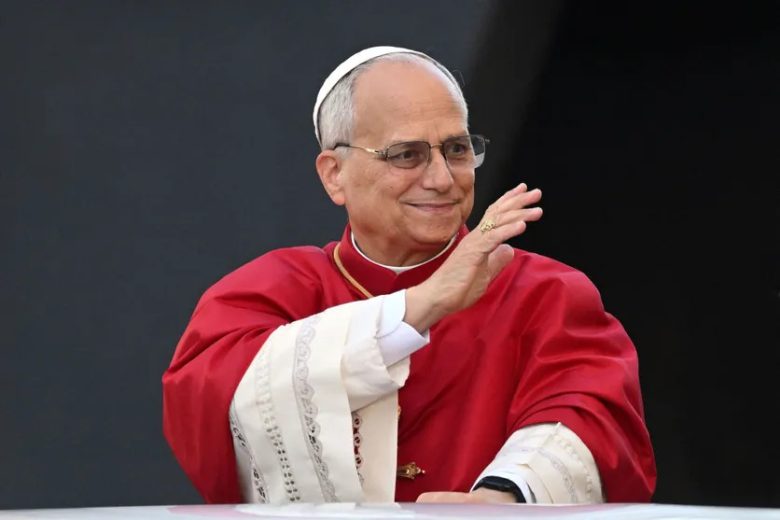
Pope Leo XIV’s visit to Algeria from Monday to Wednesday transcends a mere diplomatic outing. By setting foot on Algerian soil, the first American pope in history doesn’t just mark a milestone for independent Algeria—he ignites a seismic shift toward brotherhood that dismantles longstanding biases one by one. This is the story of a journey that flips the “clash of civilizations” into a vibrant “dialogue of cultures.”
Historians will etch this moment in bold letters. In accepting President Abdelmadjid Tebboune’s invitation, Pope Leo XIV elevates Algeria as a pivotal force for peace and stability across the Mediterranean. For the first time since 1962, the leader of the Catholic Church, through his presence, acknowledges a sovereign nation’s maturity in hosting an event of such profound spiritual weight.
Since his election in May 2025, Leo XIV has framed his papacy around unity, embodied in his motto “In illo uno unum” (United in the One). His meeting with Algeria’s head of state has been hailed by diplomatic circles as a barrier-breaking encounter, reinforcing Algeria’s reputation as a hub of peace and dialogue.
The trip’s highlight unfolded in Annaba, the ancient city of Hippo. Tracing the footsteps of Saint Augustine, Pope Leo XIV arrived not as a “spiritual conqueror” but as a modest pilgrim paying tribute to a shared forebear.
The message rings clear: Saint Augustine was Berber, a native son of this land. By honoring him, the pope reminds the world that Christianity’s roots and universal thought are deeply embedded in Algerian soil. This common historical foundation paves the way for dialogue rooted in shared identity, rather than mere doctrinal divides. As analysts note, Augustine’s legacy is no longer a colonial footnote but a proudly claimed national treasure.
A Slap to Hate-Fueled Narratives
Amid European political fringes—especially France’s far right—portraying Algeria as closed off or antagonistic to Christianity, this visit delivers a resounding rebuttal to prejudice.
First, the visual proof speaks volumes. Witnessing the Catholic leader welcomed with top honors and conducting mass in perfect calm debunks claims of Christian suppression. Algeria’s flawless event management further demonstrates a clear political commitment to safeguarding religious freedom, as enshrined in national practice.
Above all, the visit spotlights a diplomacy of outstretched hands. By selecting Algiers for his debut African stop, Leo XIV rejects confrontation. He counters conflict rhetoric with a “diplomacy of human fraternity.”
Algeria, which championed the UN’s “International Day of Living Together in Peace” (May 16), now sees its signature idea amplified by the Vatican. At Algiers’ Basilica of Notre-Dame d’Afrique, the pope invoked the site’s motto: “Pray for us and for the Muslims.”
This one-of-a-kind sanctuary, where two faiths mingle daily, embodies everyday tolerance. The pope’s presence spotlights Algeria’s small but vibrant Catholic community, proving religious diversity is an opportunity for mutual growth, not a threat.
Beyond formalities, the visit speaks most powerfully to Algeria’s youth. In a digital age flooded with stereotypes, watching the leader of 1.3 billion Catholics pay homage to their ancestral land fuels national pride. It reminds young Algerians that their nation radiates intellectual and spiritual influence, far from any isolated outpost. By shattering symbolic isolation, Pope Leo XIV opens a gateway to the universal for the next generation, showing that Algeria’s proud Muslim identity is robust enough for equal-footed global dialogue.
“This visit builds a bridge across the Mediterranean’s two shores. It reminds us that religion should drive peace, not fuel division,” the pontiff declared, underscoring his core aim: to reposition faith as a tool for reconciliation, not identity-based rifts.
Algeria and the Vatican affirm that—from Algiers’ heights to Hippo’s ruins—humanity can still speak with one voice, grounded in respect and brotherhood.