

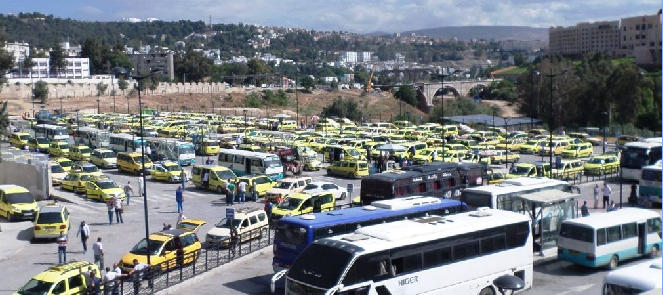
The Prime Minister, Sifi Ghrieb, announced this Saturday the establishment of a national commission tasked with addressing the professional and social demands of taxi drivers, as well as the implementation of concrete solutions to ensure safe and sustainable transportation nationwide. This came during a meeting with the National Syndicate of Taxi Transporters (SNTT), affiliated with the General Union of Algerian Workers (UGTA). This is what Sid Ali Aït El Hocine, SNTT general secretary, indicated this Saturday to Le Jeune Indépendant.
Mr. Aït El Hocine stated outright that “for our syndicate, this meeting is historic,” explaining that “this gathering confirms the State’s willingness to place the professional concerns of our sector at the highest level of the government hierarchy, following the recent dialogue with the President of the Council of the Nation. It is a continuity and concrete follow-up to the commitments made to transport professionals.” Also attending this meeting were the Minister of the Interior, Local Authorities, and Transportation, Saïd Sayoud, as well as the Minister of Domestic Trade and National Market Regulation, Amel Abdelatif.
The unionist took care to highlight the importance of this dialogue, declaring that “we are witnessing today a strengthening of ties between our profession and State institutions, particularly with President of the Republic Abdelmadjid Tebboune. Our demands are being heard, taken into account, and will be rigorously followed up. This reassures all our taxi driver colleagues and confirms that our concerns are understood by the country’s highest authorities.”
The unionist added that this meeting has both symbolic and concrete significance, assuring that “it reflects recognition of the strategic role of taxi drivers in urban and interurban transport, as well as in the national economy. It is an important step toward establishing a lasting relationship of trust with the State.”
Mr. Aït El Hocine further indicated that the Prime Minister announced the creation of a national commission tasked with establishing a precise timeline to address all outstanding issues and sustainably improve the profession, explaining that “this mechanism will allow us to move away from the logic of accumulation and resolve the sector’s historical problems.”
The union official expressed his satisfaction, estimating that “these measures will not only benefit all taxi transporters but will also contribute to the development of public service, the modernization of infrastructure, and the guarantee of safe and sustainable transport. We congratulate the entire transport family for these advances and hope that the next step will be even more positive.”
For his part, the Prime Minister indicated that the transport sector “is the subject of particular monitoring and great interest from President of the Republic Abdelmadjid Tebboune, due to its strategic importance.”
He took care to salute “the consciousness of the sector’s professionals and their active role in ensuring the continuity of this service.” Expressing “his confidence in the next step,” he assured that “the transport sector is set to experience a qualitative leap capable of improving professionals’ working conditions and elevating the level of public service.”
For reminder, this meeting comes just ten days after major disruptions that affected the sector in early January. On January 8, several transport union leaders had been received by the President of the Council of the Nation, Azouz Nasri. At the end of this meeting, sector representatives announced the official resumption of national transport activity, affirming that “the authorities have listened to the concerns raised.” Three days later, a detailed report on the meeting was submitted by the President of the Council of the Nation.
It should be noted that the urban and interurban transport sector, particularly taxis, remains strategic for the economy and citizens’ daily lives. Professionals have often denounced dysfunctions related to market regulation, working conditions, and insufficient adapted infrastructure. Through these working sessions, the government intends to implement concrete and rapid solutions to streamline the sector and prevent any new crisis. If the success of this reform depends on permanent and constructive dialogue between authorities and professionals, it also represents a major step toward modernizing transport and sustainably improving the service provided to citizens. For the Prime Minister and union officials, the time has now come for action and fulfilling commitments.