

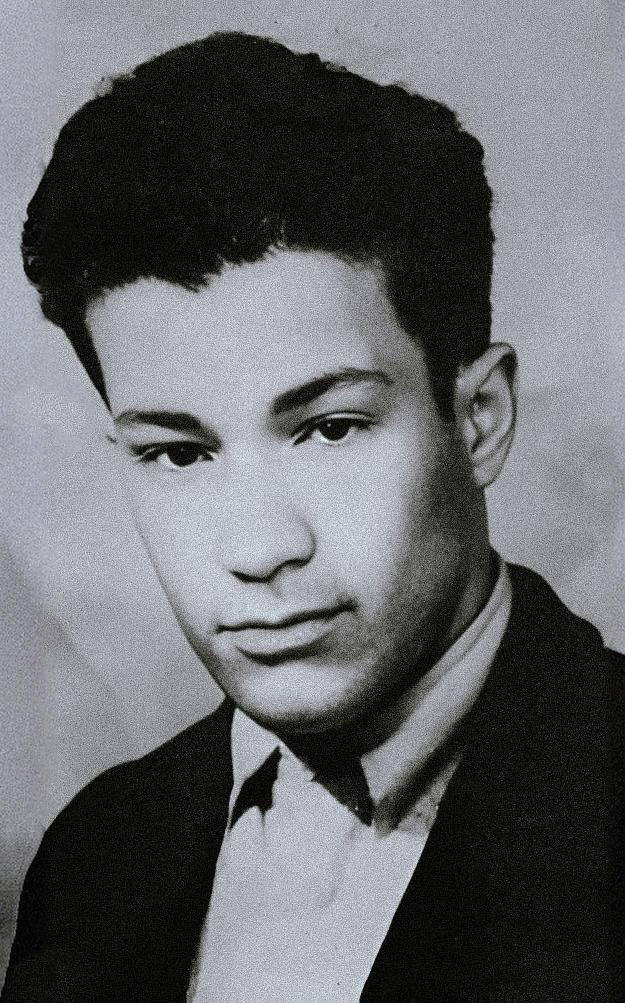
On the occasion of the commemoration of the seventy-first anniversary of the martyrdom of the iconic commander Didouche Mourad, who fell on the field of honor on January 18, 1955, the Minister of Mujahideen and Rights Holders, Abdelmalek Tachrift, called this Saturday from Constantine on current generations to appropriate the heritage of the Revolution’s martyrs, to draw lessons of courage and determination from it, and to make this legacy a true bulwark for the nation.
Mr. Tachrift affirmed that this commemoration goes far beyond the framework of a simple homage, declaring that “this memorial gathering is not a circumstantial ceremony, but a moment of fidelity to our history and our collective memory.” He specified that it is “a pause of conscience with an authentic school of struggle and sacrifice, embodied by an exceptional leader,” on the occasion of a historical conference dedicated to the figure of the martyr Didouche Mourad, chief of the North-Constantine zone and one of the founders of the armed struggle of November 1, 1954, which took place in the main amphitheater of the Faculty of Arts and Culture at Salah Boubnider the Mujahid University, in Constantine.
Paying homage to Didouche Mourad’s revolutionary stature, Abdelmalek Tachrift recalled that the martyr belonged to that founding generation that knew how to transform the Algerian people’s anger into a structured political project and an organized struggle. Declaring that “Didouche Mourad knew how to combine revolutionary boldness with political wisdom, total commitment with a high sense of responsibility,” he added that his journey remains a reference for all generations.
The minister also highlighted the timeless reach of the message left by this iconic martyr, asserting that “Didouche Mourad left us a true code of values.” He specified that “Algeria is built by the determination of men and is preserved only by the sacrifices of the faithful.” For Mr. Tachrift, this fundamental truth constitutes one of the pillars of national consciousness and a bulwark against forgetting, trivialization, or distortion of history.
Evoking collective memory, the minister recalled that “the epics of the martyrs and mujahideen will remain forever engraved in the nation’s consciousness, written in the ink of dignity, honor, and sacrifice.” He added that “the sacrifices made by the architects of the Revolution do not belong to a frozen past, but to a living heritage, bearer of meaning and benchmarks.”
Abdelmalek Tachrift also warned against superficial or opportunistic readings of national history. Hammering home that “revolutionary memory is a sacred trust that demands rigor, fidelity, and responsibility,” he asserted that “preserving it means protecting national unity and strengthening society’s moral immunity.”
Addressing the younger generations in particular, the minister called for a lucid and in-depth reading of history. He affirmed that “it is the duty of today’s generations to read this rich historical heritage with discernment and clairvoyance,” estimating that this reading must enable “understanding the magnitude of current challenges and measuring the continuity between yesterday’s struggles and today’s stakes.”
————-Strengthening the Foundations of the National State
Abdelmalek Tachrift establishes a direct link between fidelity to revolutionary memory and the current dynamic of national construction. He affirmed that “the challenges facing Algeria today must be confronted with the same faith, the same resilience, and the same determination that animated our martyrs.” He placed this approach within the framework of the reforms and transformations undertaken under the leadership of the President of the Republic, Abdelmadjid Tebboune, evoking “sustained and continuous efforts in various sectors to meet the legitimate aspirations of the Algerian people and consolidate the foundations of the national state.”
In another striking sequence of his speech, the minister returned to a determining stage of revolutionary history, the creation in 1960 of the general staff of the National Liberation Army (ALN).
Recalling that “this institution constituted one of the strategic pillars of the Algerian revolution,” he emphasized that it played “a central role in the organization, planning, and pursuit of the armed struggle against colonialism.” He added that the general staff was also a fundamental crucible for the training of competent and disciplined cadres. Assuring that “these cadres were prepared to assume, after independence, the heavy responsibility of reconstructing the national state, building its institutions, and defending its sovereignty,” he highlighted the continuity between revolutionary action and the construction of independent Algeria.
It should be noted that beyond the homage to the hero, this commemoration asserted itself as a moment of reflection on the continuity between past struggles and contemporary challenges, reminding that fidelity to national memory remains a sacred duty for every citizen. The evocation of Didouche Mourad thus took on the dimension of a structuring reminder inscribed in an approach of transmission, clarification, and reappropriation of national history, with the strong conviction that the national revolution remains a living reference, a permanent commitment, and a collective responsibility that each generation must assume with loyalty, consciousness, and fidelity to the ideals of November.