

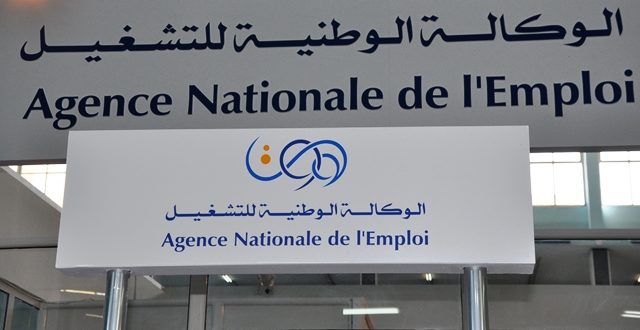
Following strategic directives from President Abdelmadjid Tebboune to bolster social welfare mechanisms and job placement programs for young people, the National Employment Agency (ANEM) has rolled out a robust system to handle new unemployment benefit claims while strengthening oversight and professional integration tools. ANEM Director General Abdelkader Djaber shared these details.
Djaber stated: “140,000 applications for unemployment benefits worth 18,000 Algerian dinars each are now being processed agency-wide.” Submitted through the “Minha” digital platform, these requests are handled in stages, paced by scheduled administrative appointments to confirm applicants’ eligibility. The director general noted that “eligibility validation appointments for claimants are being scheduled,” in comments to APS this past Friday.
On the ground, the initiative has engaged 58 provincial offices and 278 branches, creating a widespread network to manage the influx of applications and bring public services closer to citizens—reflecting a push for speed without sacrificing procedural integrity.
In this setup, the “Minha” platform stands out as a key tool for transparency and tracking. It lets applicants monitor their file status in real time and learn “the reasons for rejection or suspension of benefits,” “enabling them to meet required standards,” the official explained. This method aims to empower recipients while streamlining interactions with the bureaucracy.
Digitization emerges as a game-changer for cutting wait times. Djaber pointed out that “it’s now possible to revive a previously suspended file once the beneficiary completes the necessary steps.” He added that reactivation happens “the same day or within a maximum of 3 to 4 days.” This marks a sharp break from the bureaucratic delays often criticized, signaling steady upgrades to management systems.
He also revealed that since launching the system in March 2022, over 1.4 million suspended files have been restored for various reasons. At the same time, the agency has fielded a heavy load of inquiries, with “more than 800,000 requests or complaints” from beneficiaries. “Their concerns have been addressed as required by law,” the official assured, highlighting a disciplined approach aligned with regulations.
Improper payments are getting attention too. Favoring amicable resolutions, ANEM’s top executive reported recovering benefits “from around 90,000 recipients through friendly settlements.” Those involved commit to repayment plans “agreed upon by both sides,” balancing accountability with support.
Meanwhile, data checks continue via automated, routine cross-verification with “over 600 databases” from various central and local sectors. This broad oversight safeguards system reliability and curbs abuse, especially as trust in social policies hangs in the balance.
Beyond that, ANEM is committing to lasting job placement. Supporting job seekers forms a core pillar of its work. Through job fairs and placement techniques, beneficiaries get training tailored to market needs—like interview prep and resume building. In 2025, the agency ran 48,000 workshops for 35,000 attendees, “with 85% receiving unemployment benefits.” These figures underscore a strategy to turn financial aid into a launchpad for employment.
Amid pressures to blend national solidarity with economic efficiency, the agency’s guiding principle keeps social equity and job access at the forefront of public action.