

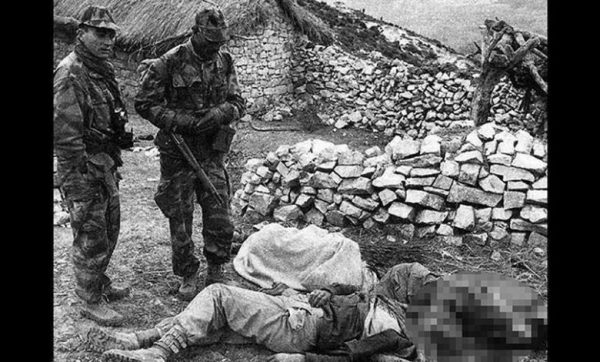
For nearly two decades, France has grappled with a troubling wave of revisionism. It ranges from outright denial of colonial atrocities to peddled ideological packages touting the “benefits of colonialism” and its “contribution to civilization.” Eager politicians from zealous, extremist, ultraradical, and xenophobic circles—quickly turning Algerophobic—seize these shortcuts as electoral springboards toward the presidency, weaponizing this war of memory. As historian Benjamin Stora noted in a book preface, “In recent years, history has become a vast arena for political games in France.”
Lacking respect, humanitarian values, or principles, these factions refuse to accept a balanced truth: thousands died for France, but millions perished because of it. They dismiss historical facts to erase the record of wars altogether—colonial crimes, state-sponsored killings, massacres, extermination policies, large-scale slaughter, land seizures, concentration camps, and mass deportations.
In the former colonial power, as some historians put it, “the past has invaded the present.” What began as scholarly or media debates on history and memory has swelled into a destabilizing political flashpoint. This shift birthed France’s first so-called “memory laws.” But the discourse soon spiraled into excesses that historians, sociologists, and anthropologists couldn’t curb. That toxic backdrop gave rise to the 2005 law, which exalted colonization and ascribed it “positive effects”—a text riddled with distortions that brazenly enshrined denial of the horrors and bloodshed.
Fear of Repentance
In France’s internal debate, owning up to colonial crimes in Algeria remains fraught. Historian and researcher Benjamin Stora’s pedagogical push—especially his report and recommendations delivered to President Emmanuel Macron—still slams into walls of incomprehension and stubborn resistance. Stora argues that “memory issues matter deeply for youth. No one addresses their historical identity, tied to the colonial question. Young people from immigrant backgrounds need to shape their sense of self in relation to France, rooted in their fathers’ and grandfathers’ lives—it’s foundational.”
He adds: “Far-left voices raise it in radical ideological rants against colonialism and war crimes but offer no practical steps,” while the far right sidesteps the French empire and decolonization wars entirely, viewing any discussion as a gateway to “repentance.”
Politically, memory has surfaced in speeches by past French presidents during Algeria visits—like Nicolas Sarkozy in Constantine in 2008 or François Hollande in Algiers in 2012. Concrete actions, however, have been scarce, limited mostly to recent moves under Macron. That’s hardly enough to foster a reconciled history built on facts, testimonies, and truths.
What Future for Memory Ties?
Shaped by 132 years of brutal colonization, forced settlement, resistance struggles, popular uprisings, and an independence war, Algeria-France memory relations are tangled in layers of trauma, tragedy, and grief. Historians see persistent conflict as inevitable, evident in disputes over archives and the return of looted Algerian cultural treasures.
This plays out starkly in France’s refusal to repatriate skulls of hundreds of Algerian resistance fighters—displayed in French museums—or their remains. Under such conditions, forging a shared narrative seems impossible, despite dreams from both Mediterranean shores. It would chronicle not just Algerian revolutionaries’ experiences but also those of harkis, settlers, pied-noirs, and French troops.
Even with outreach efforts, like the 2022 high-level joint historians’ commission, ties founder on the refusal to confront colonial crimes and acknowledge that blood-soaked, barbaric policy.
Through a recent law criminalizing French colonialism’s glorification, Algeria has shifted from demanding apologies or compensation. For “apologies,” Article 9 now reads: “The Algerian state will use all legal and judicial means to secure official French recognition of its colonial past.” Rejecting financial reparations, Algeria insists on acknowledgment of crimes from 1830 to 1962 and decontamination of Saharan nuclear test sites. Only glorifying colonialism draws stiff prison terms.