

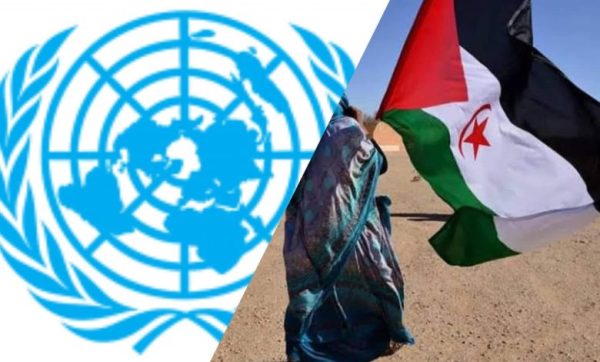
There is a buzz in the corridors of the Security Council. The Sahrawi issue dominates the debates and stirs significant tensions among the members of this Council. The crisis brewing for a few weeks was triggered by relentless lobbying from the United States and France, which sought to pass a resolution legitimizing the military occupation and blatant annexation of the Sahrawi territory by Morocco.
This draft text is at the heart of intense consultations within the United Nations. Some observers even speak of the signs of a fierce diplomatic confrontation. While Washington wants to impose the colonial fait accompli, some countries reject this diktat and denounce an attempt to instrumentalize a UN body to endorse colonization and blatant expropriation.
In this draft resolution, it is clearly stated that the mandate of the UN Mission responsible for organizing a referendum in Western Sahara will be reduced by three quarters, to only three months. Thus, next January, this mission will be dissolved if the document is adopted. In other words, Minurso will no longer be mandated to organize this referendum in the future, sidelining the Sahrawi people’s right to self-determination.
For diplomats, this is a genuine torpedoing of international law and a clear setback for the entire process engaged by the international community. The American text excels in distorting the legal and historical reality of the conflict, which since the 1960s has been founded on the principle of decolonizing a non-autonomous territory.
According to some diplomatic sources, Moscow does not appear ready to endorse this draft resolution, rejecting it in substance and form. The Russian representative to the UN reportedly demanded the immediate revision of paragraph 4 of this draft text, recalling that Western Sahara remains on the list of colonial territories to be decolonized, and reaffirming its attachment to the self-determination referendum under UN supervision.
Thus, it is clear that divisions are palpable within this UN body, three days before the vote on this draft resolution: on one side, three permanent members of the Council; on the other, Russia as well as African, Asian, and Latin American non-permanent members.
Faced with these serious developments, the Polisario Front, the legitimate representative of the Sahrawi people, announced that it would boycott any political process if the American text were adopted.
It affirmed its rejection of “any imposed solution or solution against the will of the Sahrawi people,” whose right to self-determination is recognized by the international community and all the resolutions of the Security Council and the United Nations General Assembly.
In a letter addressed to the President of the United Nations Security Council, Ambassador Vassily Nebenzia, Permanent Representative of the Russian Federation to the United Nations, and the Sahrawi representative to the United Nations and Minurso Coordinator, Dr. Sidi Mohamed Omar, emphasized that the draft resolution represents a “very dangerous and unprecedented deviation,” not only in relation to the principles of international law recognizing Western Sahara as a decolonization issue but also relative to the basis on which the Security Council has addressed Western Sahara.
For the Polisario Front, “any approach that sets a predetermined framework for negotiations or predetermines their outcome, limits the free exercise by the Sahrawi people of their right to self-determination, or imposes a solution against their will is completely unacceptable.”
Finally, the Polisario made an urgent appeal to all stakeholders to use their efforts constructively to create the necessary conditions for both parties, the Polisario Front and Morocco, to engage in serious and credible negotiations, without preconditions and in good faith, under UN auspices, with the aim of reaching a just, lasting, and mutually acceptable political solution, ensuring the self-determination of the people of Western Sahara and peace throughout the region.