

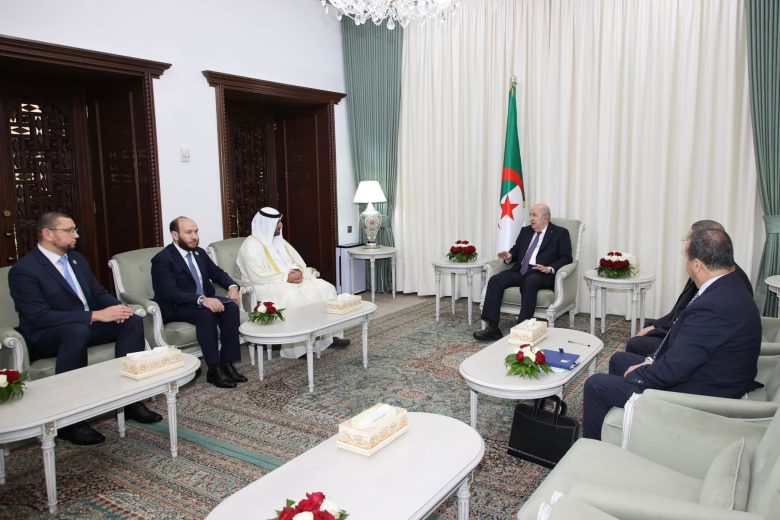
The stability of oil markets rests not solely on data, but also on trust, established mechanisms, and the willingness of nations to cooperate when circumstances become complex and demand continuous dialogue. This was affirmed Sunday by the Secretary General of the Organization of the Petroleum Exporting Countries (OPEC), Haitham Al Ghais, following the audience granted to him by the President of the Republic, Abdelmadjid Tebboune, describing his directives as wise.
Haitham Al Ghais, who is in Algeria on the occasion of celebrating the 10th anniversary of the Algiers Accord that laid the foundation for the “Declaration of Cooperation” (DoC), first made a point to emphasize that beyond commemorating this major milestone, this day also provides an opportunity to “salute the role of Algeria and its constant, unfailing support for OPEC.” In this regard, he paid a resounding tribute to President Tebboune for “his leadership, his role, his backing, and his invaluable advice in our work within OPEC.” He likewise praised the Algerian government for its “ongoing commitment toward dialogue and the stability of global oil markets.”
Addressing the context surrounding his visit to Algeria at the invitation of the Minister of State, Minister of Hydrocarbons Mohamed Arkab, the OPEC Secretary General highlighted the necessity of pursuing consultation among Organization member states and their allies forming OPEC+, particularly given the current situation in the global petroleum market.
“Market stability does not rely uniquely on data, but also on trust, established mechanisms, and the willingness of nations to collaborate when circumstances grow complicated,” he stated. On this basis, he reviewed the various parameters underpinning the oil sector and ensuring its long-term viability, the consequence of which is none other than securing supplies and guaranteeing the availability of black gold within the framework of contracts concluded with numerous nations.
Hence, “investment, supply security, and economic stability represent elements tightly bound to the stability stemming from the OPEC+ agreement,” contended Haitham Al Ghais. For him, maintaining consultation between Organization member nations and their partners is essential to analyze and thoroughly study the petroleum market situation from every angle, delivering decisions that serve the best interests of both member countries and global markets. “The necessity for dialogue remains intact; on the contrary, it has become more vital than ever,” he declared solemnly. He stressed that investment, infrastructure safety, and the economic stabilization of member nations are tied to the stabilization of the OPEC+ pact, reiterating that maintaining dialogue is absolutely imperative. “It is very important for us,” he concluded.
Revisiting the Algiers Accord, the OPEC Secretary General estimated that this event “reminds us that even during the most challenging periods, cooperation remains possible, and it is this legacy that we must all keep in mind on this tenth anniversary of the Algiers Declaration.” Qualifying this Accord as crucial, he emphasized that it has represented and continues to represent a significant occasion for the energy security of participating countries.
Expressing his honor at meeting President Tebboune, Haitham Al Ghais reiterated his sincere gratitude to Algeria and its leaders, while commending the efforts of the Minister of State, Minister of Hydrocarbons, Mohamed Arkab, for extending the invitation to visit Algeria to participate in celebrating “such a special anniversary” of the Algiers Accord, and for his support and prominent role in managing OPEC’s work. “Ten years later, the Algiers Accord remains a lesson for history,” concluded the OPEC Secretary General.