

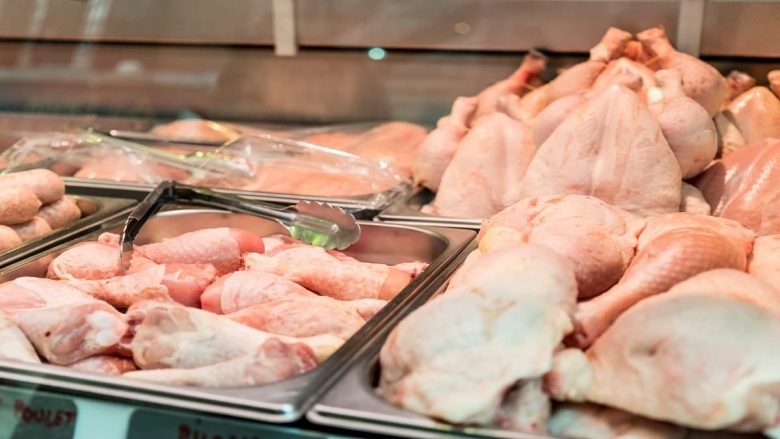
After exceeding 500 DA per kilogram in several domestic markets, chicken prices could begin to decrease in the coming weeks. Initial signs of calm are already visible in wholesale markets, according to the president of the National Federation of Aviculturists (FNA), Ali Benchaiba, who anticipates a gradual recovery in farming operations and an improved supply outlook.
This development remains dependent, however, on the effective resumption of placements and an increase in chick orders. Contacted by Le Jeune Independant, the FNA representative considers the current price surge to be primarily “temporary,” following several particularly challenging months for producers.
The price rise stems mainly from a sharp contraction in production. “We recorded a drop in poultry supply due to multiple combined factors,” Ali Benchaiba explained to Le Jeune Independant.
Key causes cited include diseases affecting farms, which caused high mortality rates, severe heatwaves, fires damaging poultry houses, and recurring power outages. These hurdles compounded an already fragile situation across the industry.
For several months, market prices failed to cover production costs for many farmers. “Numerous breeders were unable to continue their operations and were forced to cease activity,” the FNA president emphasized.
This drop in output occurred just as demand rose sharply, particularly during the summer season with its influx of weddings and celebrations. Consequently, a severe supply-demand imbalance pushed chicken prices past 500 DA/kg, while a tray of 30 eggs reached 600 DA.
For the FNA, recent indicators offer hope for a gradual recovery. The resumption of operations by several farmers and increased chick orders should help bolster supply in the coming weeks. “The situation is temporary,” Ali Benchaiba stressed, predicting price stabilization as production picks up.
Beyond the immediate crisis, the industry representative stresses the need to address structural vulnerabilities to prevent recurring cycles of shortages and price volatility.
Proposing a “Green Corridor” for Imports
Persistent challenges include securing essential inputs for poultry farming. Ali Benchaiba advocates establishing a “green corridor” for import operations to streamline procedures and ensure breeders receive critical materials without delay.
He further calls for encouraging farmers to form cooperatives. Such organization would pool resources, streamline input procurement, and enhance the industry’s ability to navigate market shifts.
Another major weakness highlighted is storage capacity. Private farmers possess limited resources for product preservation and insufficient specialized storage space.
He recommends launching a national storage program as an essential market regulation tool. Strategic stocks would help manage periods of high demand or low production, preventing sharp market imbalances.
Proper sector organization also requires precise identification of breeders and operators. A portion of industry professionals remains uncounted, complicating overall sector management.
An efficient census would provide public authorities with accurate production data, allowing them to anticipate needs and intervene early to prevent market strain.
Strengthening Health Oversight
Veterinary monitoring represents another critical priority. Recent disease outbreaks contributed to high mortality rates, further weakening the sector.
The FNA recommends heightened health surveillance to detect disease outbreaks early, limit livestock losses, and safeguard production volume.
“The industry features a relatively short production cycle. Roughly 45 days suffice between chick placement and the final product, provided health, nutritional, and technical conditions are met,” Ali Benchaiba explained.
The main obstacle lies in activity continuity and structural coordination rather than theoretical capacity. In recent weeks, chick placement numbers fell short of market demand, directly causing supply contraction.
In retail markets, the price spike continues to worry households. “At 500 DA a kilo, purchasing chicken regularly becomes difficult. For large families, expenses add up fast,” noted a mother.
Consumers highlight that the increase coincides with a period of high overall spending. “Between holidays, family celebrations, and general groceries, managing expenses is tough. We hope the announced drop happens quickly,” shared one shopper.
Egg prices remain an equal concern. “At 600 DA a tray, it is expensive. Eggs used to be a cheaper alternative to meat, but their price is rising as well,” remarked another consumer.
In response, some households have started reducing purchases. Others hope the availability of frozen chicken at 350 DA/kg will stabilize the market. “If the product is accessible in stores, it will help families. We are mainly waiting for this drop to reflect in fresh poultry prices,” noted a buyer.
For the FNA, the challenge extends beyond the current surge. The focus must shift to implementing a comprehensive regulation strategy across the entire supply chain, ensuring sustainable working conditions for producers while providing consumers with regular, affordable access to poultry and eggs.