

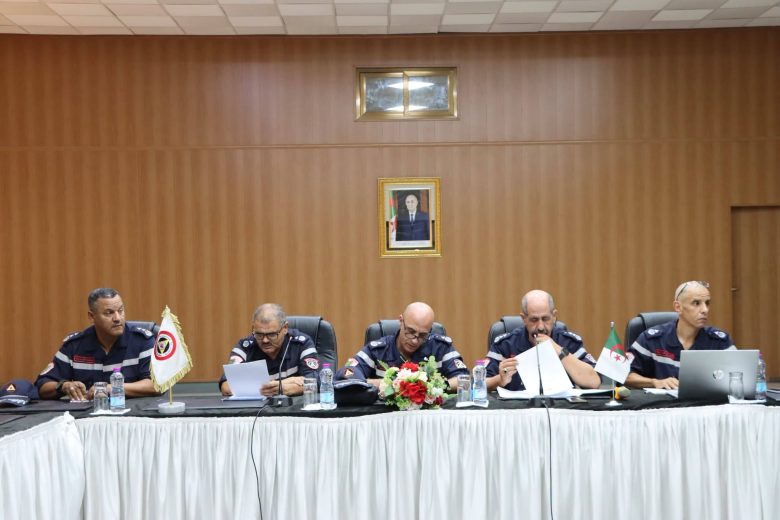
The General Directorate of Civil Protection is continuing to assess its wildfire suppression capacity. A meeting dedicated to reviewing aerial support operations conducted throughout July 2026 took place on Tuesday at the National Training and Intervention Unit to analyze system performance and strengthen coordination among various stakeholders.
Chaired by the director of operational organization and coordination, the session brought together executives from the General Directorate of Civil Protection, delegates from the Civil Protection Air Group, the commander of the National Training and Intervention Unit, alongside representatives from Tassili Aerial Work Group.
Attendees conducted an in-depth review of aviation missions launched during July, a period defined by an upsurge in bushfires. Discussions focused on analyzing completed deployments, operational, organizational, and logistical dimensions, as well as the degree of synergy among various responders active on the ground.
The gathering also served to examine the effectiveness of airborne assets in supporting ground crews, while identifying key obstacles encountered throughout operations.
Deliberations yielded practical feedback aimed at improving work methodologies and boosting integration between ground and air units.
At the conclusion of the proceedings, several recommendations were outlined to optimize operational outcomes, enhance partner alignment, and reinforce the readiness of aerial emergency assets, aiming to guarantee a swifter, more effective response to forest blazes.
This session aligns with the overarching strategy of the General Directorate of Civil Protection to continually refine its emergency response framework through ongoing operational review and stronger cooperation among all parties committed to safeguarding lives, property, and forest heritage.