

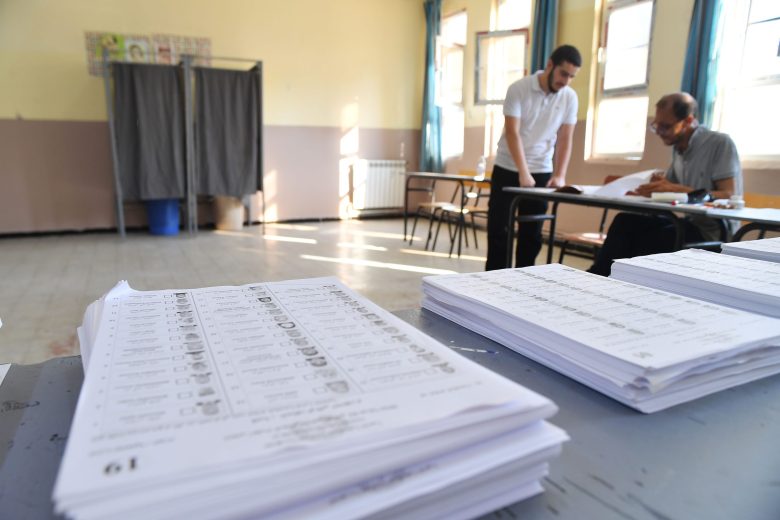
There is neither surprise nor disruption to the political landscape within the future Parliament following the legislative elections. This is the second takeaway from this vote, following the confirmation of persistent voter absenteeism, which saw its rate climb once again. Moreover, several analysts believe that it is precisely this weak turnout rate (under 21%) that prevented the emergence of a new configuration in the national political arena.
While it remains necessary to await the official confirmation of results by the Constitutional Court and the validation or rejection of appeals, certain information leaking from the Independent Election Authority and political parties confirms that the National Liberation Front party has finished on top, followed by the National Democratic Rally, the El Moustakbel Front, and the MSP.
Within the FLN, militant officials are putting forward a figure of around one hundred seats, although some media sources report 84 secured seats, representing a substantial loss compared to the 2021 legislative election results. Despite this retreat, this score will allow the FLN to maintain its supremacy over the structures of the lower house of Parliament, notably the presidency, the bureau and its vice-presidents, as well as several critical committees.
According to the same data, the RND emerged as the big winner of these elections, achieving a major breakthrough by picking up more than twenty seats. This result allows it to stick right behind the FLN and secure its position as the country’s second-largest political force, whereas it had ranked fourth in 2021.
According to disclosed figures, the RND reportedly secured 70 seats, while El Moustakbel snatched third place ahead of the MSP. The latter party has reportedly filed several appeals, hoping to invalidate certain results and thereby gain at least five seats, according to internal estimations. The El Bina movement, for its part, dropped significantly, undoubtedly due to the absence of its list in the Algiers province.
On its end, the Socialist Forces Front reportedly obtained around fifteen seats, followed by Sawt El Chaab. This score allows them, under the internal regulations of the National People’s Assembly, to form a parliamentary group.
With four or five seats, the RCD returns to the assembly, much like other factions such as Jil Jadid (2 seats), the Workers’ Party (also 3 seats), or the Justice and Development Front (3 seats).
It is clear that the re-examination of appeals lodged by political groups could alter the unofficial scores revealed so far. This possibility is highly anticipated following the experience of the 2021 legislative elections, during which the FLN and other parties lost numerous seats to competing candidates.
It is worth noting that the biggest losers of these legislative elections are the independents, whose 125 lists failed to match the surprising performance of the 2021 legislative elections, when they became the second political force in the country.
Pending the official announcement of the results, these provisional scores will not overturn the political map. Even the composition of the government is unlikely to undergo any major changes, and the Executive will almost certainly be maintained. According to the Constitution, the President of the Republic appoints a Prime Minister if a presidential majority emerges, or failing that, a Head of Government.