

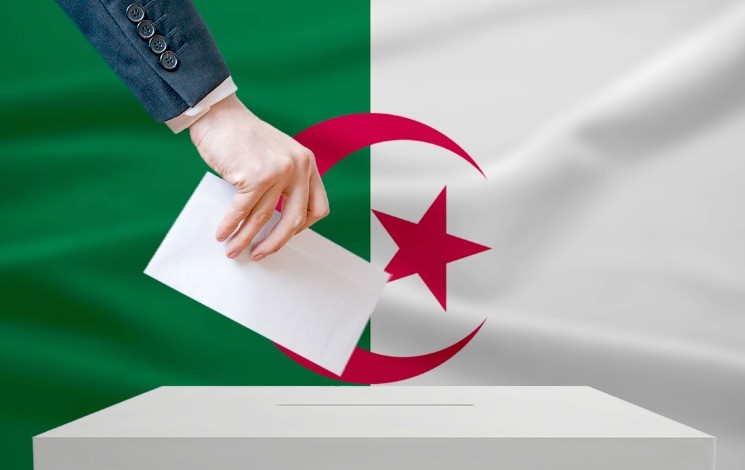
Managing a nationwide election is a monumental logistical feat. For the upcoming legislative polls on July 2, the state has allocated a 23 billion dinar budget to orchestrate a massive operation spanning from ballot production to nationwide distribution.
The Ministry of the Interior, Local Communities, and Transport has deployed extensive human, material, and operational resources. Working in tight alignment with public enterprises and providing bolstered support to newly established provinces, it is executing a deployment of exceptional scale to guarantee a smooth legislative vote. Speaking Monday on Algerian national radio, Nourredine Guellal, the Director General of Finance and General Resources at the Interior Ministry, unveiled the core components of this massive logistical undertaking while highlighting new provisions introduced by the recent electoral law amendments.
The official noted that the physical arrangement of elections historically fell under the Interior Ministry before being reassigned to the Independent National Electoral Authority (ANIE) in 2019. However, the enactment of Organic Law No. 26-05 on April 4, 2026, redefined these duties. From now on, the ministry reassumes responsibility for the material and logistical preparation of electoral proceedings, whereas ANIE retains all its constitutional powers regarding the organization, supervision, and oversight of the ballot. “Our role is to supply ANIE with all the necessary material resources so it can fully execute its mandates,” Nourredine Guellal clarified.
To guarantee the success of this large-scale venture, the state has earmarked a total budget of 23 billion dinars. From this funding, 13 billion dinars are allocated to the central administration, while 10 billion dinars go to decentralized services at the provincial level.
These funds cover all requirements linked to the physical organization of the elections: creating voter cards, printing electoral documents, purchasing necessary polling station equipment, manufacturing ballot boxes, transporting, housing, and feeding mobilized personnel, driving awareness campaigns, and providing allowances to various participants, particularly young candidates under forty.
To monitor the progress of preparations, the ministry dispatched inspection committees across all provinces. Particular focus was directed toward the eleven new administrative districts, where missions evaluated local coordination offices, communication networks, transport and lodging assets, operational command centers, and secure storage zones for ballots.
==Localized Operational Management
While these new provinces remain financially tied to their parent regions, they now possess their own logistical frameworks to ensure autonomous management of the voting operations. The ministry has also engaged several specialized state-owned enterprises to secure the success of this expansive project.
The Official Printing Office is tasked with producing the ballots, envelopes, forms, and official stamps. Meanwhile, the National Communication, Publishing, and Advertising Company (ANEP) manages the national awareness campaign via an 800 million dinar contract. The Logitrans group handles the overland transport of ballots with a 100 million dinar budget, while Air Algerie Cargo manages delivery to the Far South regions for 130 million dinars. Finally, a fourth contract, valued at 154 million dinars, covers the manufacturing of ballot boxes for polling stations.
The sheer volume of materials illustrates the scale of this setup. In total, 700,000 posters and two million information leaflets were produced by ANEP for the public awareness campaign. The Official Printing Office generated 24 million voting envelopes alongside various regulatory documents. Additionally, the ministry distributed 191 units of indelible ink to polling stations spread across the 69 provinces.
The production of ballots stands as one of the most substantial aspects of the operation, with nearly 282 million copies printed and distributed starting June 19. Dispatch occurs by road for most provinces and via air freight for the Far South regions, where Air Algerie Cargo ensures timely delivery. Regarding voting equipment, needs were finalized in consultation with ANIE at 5,519 ballot boxes, distributed according to the specific needs of each constituency.