

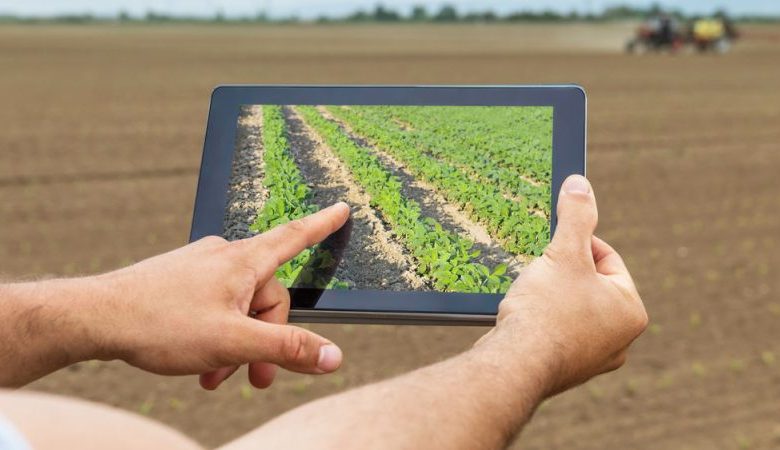
The Minister of Agriculture, Rural Development, and Fisheries, Yacine Oualid, has officially launched the National Agricultural Information System (SNIA), a digital platform designed to modernize sector governance through the collection and exploitation of reliable, updated data. This initiative is part of the sector’s 2026 action plan, which places digitization and the modernization of the farming world at its core.
Developed by young Algerian talent, the system was presented during a national meeting that gathered Monday the central and local executives of the ministry, directors of research institutes and centers, heads of economic groups and offices under supervision, as well as members of the National Scientific Council for Food Security.
On this occasion, the minister emphasized that this platform will provide precise data on the agricultural sector and ensure a more effective, rigorous, and reliable management framework. According to him, the SNIA will encourage the transition from an approximate management style to a governance based on scientific data, thereby strengthening the quality of decision-making at central and local levels.
The system relies on gathering, securing, processing, analyzing, and updating agricultural data covering the diverse activities of the sector. Its rollout will be gradual and will include a central dashboard designed for central administration officials, as well as operational interfaces for the Agricultural Services Directorates and their subdivisions, according to details contained in a ministry press release.
An initial version of the system has already been put into service with a module dedicated to tracking the harvesting and threshing campaign. This tool allows for the entry and analysis of daily data related to the campaign’s progress, the processing of difficulties encountered in the field—notably combine-harvester shortages—as well as assistance for grain producers who do not possess a farmer’s card, enabling them to market or deposit their crops in the Office’s storage centers.
This first module also offers real-time monitoring of harvested areas by region and by crop type, production trends based on field data, and statistical indicators meant to facilitate rapid and tailored decision-making.
The National Agricultural Information System will be progressively enriched with several specialized modules. It will notably integrate a National Agricultural Registry and an agricultural land registry to form a reference database on farms and agricultural land, a livestock management system, a tracking mechanism for agricultural support programs, a management platform for agricultural inputs, and a unified platform dedicated to agricultural financing.
The system will also include a module focused on agricultural insurance, a market monitoring and regulation framework, a tracking platform for water resources and climate change, a system dedicated to marine fisheries and aquaculture, a module for forest resources and the environment, an early warning and crisis management system, and a unified digital portal designed to simplify and digitize all administrative procedures within the agricultural sector.