

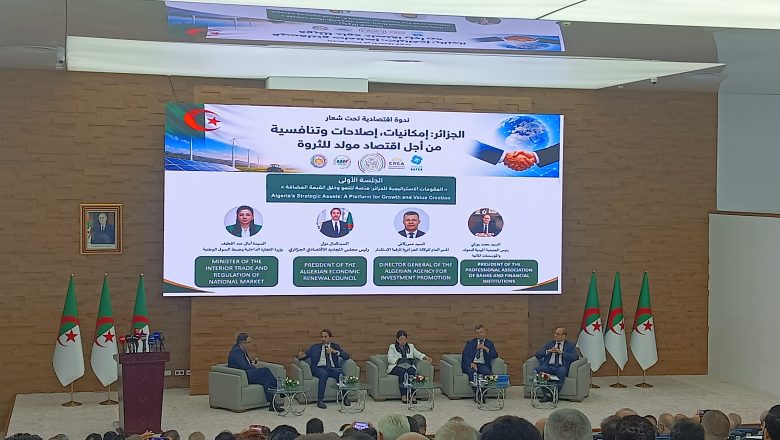
Algeria’s primary advantages in drawing capital investments are diverse. Its strategic geographical location, modern infrastructure networks, highly skilled labor force, expansive domestic marketplace, and rich variety of natural resources position the country as a vital regional manufacturing hub and an economic bridge linking Europe with Africa.
This assessment was delivered on Friday by the Minister of Domestic Trade and National Market Regulation, Amel Abdellatif, during a specialized panel titled “Assets, Reforms, and Opportunities for a Value-Creating Economy.” The conference took place alongside the 57th Algiers International Fair (FIA). This gathering unfolded amid a global economic climate defined by the restructuring of supply chains, rapid digital expansion, and intense competition to attract capital and cultivate innovation, as noted by the minister during the event organized by the Algerian Economic Renewal Council (CREA) and Safex.
Despite the extensive progress achieved so far, Algeria is advancing a sweeping modernization program guided by President Abdelmadjid Tebboune. This strategy focuses on building a diversified, competitive economy centered on local production, wealth generation, and value-added creation, the minister remarked.
These initiatives target multiple sectors, particularly upgrading the investment legal framework, optimizing the business climate, updating administrative procedures, automating services, and overhauling the fiscal and banking systems to strengthen investor confidence and bring transparency and efficiency to the economic landscape.
Ongoing efforts to strengthen a quality control infrastructure matching global standards were also spotlighted, alongside accelerating digital transformation, expanding electronic payment systems, and nurturing tech startups, which serve as essential drivers for productivity and competitiveness.
Subsequent presentations at the event highlighted emerging opportunities across several sectors, including manufacturing, agribusiness, chemical production, pharmaceuticals, logistics, digital services, and export-driven activities. Panelists agreed that the current shifts in global supply routes and the nearshoring of industrial operations present fresh openings for Algeria, which holds unique competitive advantages to capitalize on these dynamics.
==353 Foreign Investment Projects Logged
Within this context, the Director General of the Algerian Investment Promotion Agency (AAPI), Omar Rekkache, announced that 353 international investment projects have been registered, noting that a significant portion have reached advanced stages of implementation. According to his analysis, this trend demonstrates growing international confidence in Algeria’s business landscape and reflects the success of structural economic overhauling.
Regarding sectors capable of attracting high-yield projects, Mr. Rekkache indicated that the state is prioritizing initiatives that offer a direct boost to economic expansion, especially those that encourage import substitution and stabilize the balance of payments.
He also pointed out a rising trend toward securing large-scale projects centered on refining mineral resources, ensuring food security, advancing strategic agricultural cultivation, and expanding the domestic pharmaceutical industry.
==FATF Decision Boosts Algeria’s Appeal
Furthermore, the President of the Professional Association of Banks and Financial Institutions (ABEF), Bourai Mohand, emphasized that Algeria’s removal from the Financial Action Task Force (FATF) gray list is a milestone achievement, resulting from strong political determination and coordinated institutional action.
He explained that this development formally confirms that Algeria’s regulatory framework against money laundering, terrorist financing, and proliferation financing matches international standards. “Every nation maintains its own defensive systems, but Algeria’s framework is now officially recognized as fully compliant with global rules,” he clarified.
The ABEF head expects this recognition to deliver substantial economic advantages. It will improve the nation’s risk profile, a critical metric for international financiers. Lowering compliance uncertainty reduces overall country risk perception, thereby elevating Algeria’s position as a prime destination for Foreign Direct Investment (FDI).
Mr. Bourai added that this move delivers a positive signal to international financial institutions and will pave the way for smoother global banking operations. Algerian financial institutions will secure better terms with international correspondent banks, and global payment transfers will face fewer bottlenecks. Ultimately, leaving the gray list bolsters the credibility of the domestic financial system, potentially improving standings with credit rating agencies, lowering cross-border financing expenses, and easing access to external credit.