

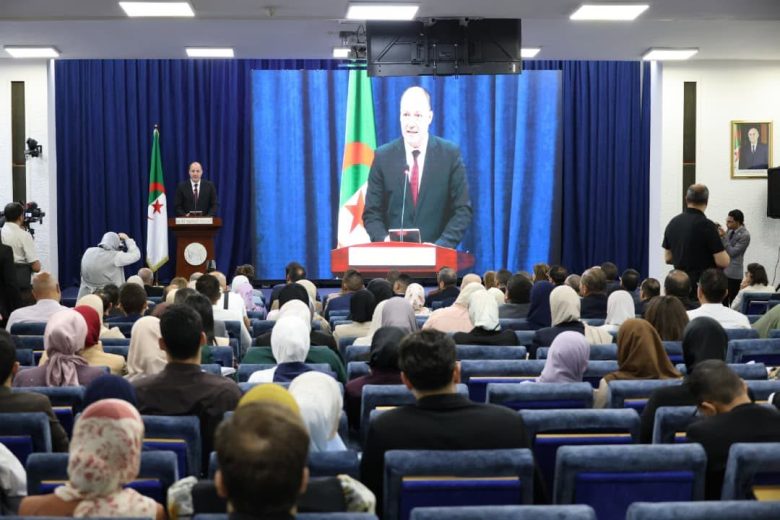
On the occasion of United Nations Public Service Day, Interior Minister Said Sayoud and Republic Ombudsman Mohamed Hattab delivered a progress report Tuesday on ongoing overhauls. Amid rapid digitization, streamlined operations, and over 83,000 citizen complaints resolved within six months, the state is accelerating the transformation of its bureaus with a single directive: keeping fairness and respect at the center of public services.
Driven by President Abdelmadjid Tebboune, bureaucratic modernization is gaining momentum. This was the core message delivered by the Minister of the Interior, Local Authorities, and Transport, Said Sayoud, during a nationwide summit organized Tuesday in Algiers by the Republic Ombudsman. Conducted under the banner “Fairness is the bedrock of public service, citizen dignity is a priority,” the gathering observed United Nations Public Service Day.
“This commemoration offers an opportunity to reaffirm our dedication to serving the population and advancing a contemporary public service that meets expectations regarding quality, equity, and efficiency,” stated Mr. Sayoud. The minister explicitly praised the performance of the Republic Ombudsman institution in restoring confidence between the administration and users, particularly through its active listening campaigns and mediation work.
Digitization and Proximity: Instruments of Reform
To execute this blueprint, the administration relies on a drastic simplifying of clerical tasks alongside a widespread digital shift, spearheaded by the incremental upgrading of civil registries and the integration of diverse network hubs. These initiatives operate in tandem with a distinct emphasis on maximizing how the public is received and guided inside government installations.
Highlighting the vital role of municipal bodies, the minister noted that local authorities represent the front-line tier closest to the everyday challenges of the populace. Consequently, public decision-makers pledge to sustain resource allocations across personnel, technology, and organizational structures to bolster municipal growth effectively.
Speaking next, the Republic Ombudsman, Mohamed Hattab, presented comprehensive figures reflecting the high-volume output of his department. According to Mr. Hattab, this data underscores growing citizen trust in the office. Public confidence is evaluated by both the caliber of assistance provided and the speed of resolution, he noted, characterizing this holistic initiative as an ongoing national endeavor.
To institutionalize this dynamic, the Republic Ombudsman announced the deployment of two baseline manuals—the Reception and Orientation Manual and the Request Management Manual—designed to standardize practices among state employees. Regarding professional development, a Masters Degree in strategic planning and public service management has been established in collaboration with the higher education sector to upgrade administrative leadership skills.
Lastly, an international framework was cemented via a partnership treaty with the United Nations Development Programme (UNDP) to guide these modernization initiatives. The assembly, which gathered numerous state dignitaries and ministerial figures, concluded with a collective call to embed a genuine culture of public service where equity serves as the framework and citizen dignity remains the ultimate objective of state operations.