

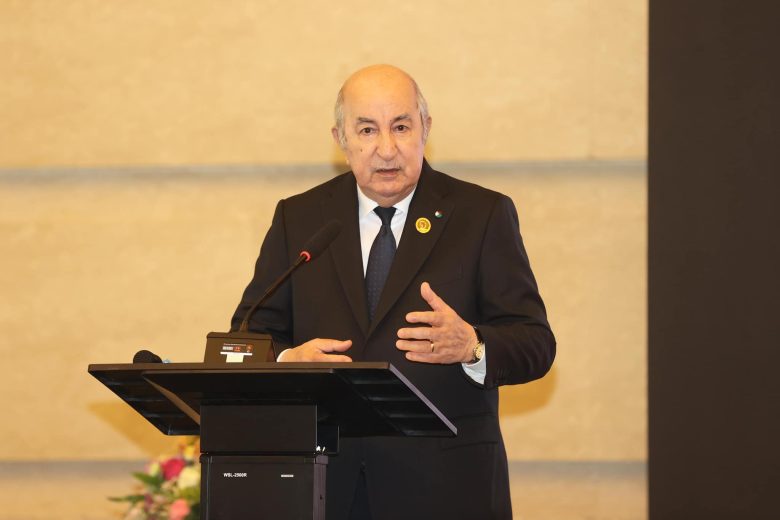
Confronted with the persistent threat of epidemics that continue to weaken healthcare systems across the continent, President Abdelmadjid Tebboune is urging Africa to shift its health paradigm. He advises breaking away from a reactive approach to prioritize a strategy built on foresight, prevention, and the sustainable enhancement of response capabilities.
Speaking via videoconference during a high-level African Union gathering focused on the spread of the Ebola virus, President Abdelmadjid Tebboune highlighted the importance of implementing a sustainable, proactive approach to safeguard African populations against emerging health hazards.
In an address delivered on his behalf by Health Minister Mohamed Seddik Ait Messaoudene, the head of state emphasized that “building a safer Africa in terms of health is not achieved solely during crises.” He maintained that this ambition demands continuous investment in national healthcare frameworks alongside a reinforcement of monitoring and early warning mechanisms.
President Tebboune specifically underscored the central role of epidemiological tracking tools, pointing out the necessity of possessing high-performing early warning networks capable of swiftly identifying health threats.
The President consequently called for strengthening health monitoring capabilities, expanding surveillance networks, and improving data sharing among African nations. Such a methodology would allow for the identification of risks as soon as they appear, enabling necessary measures to be enacted before they expand significantly.
The head of state also insisted on the importance of human capital in forging lasting health security, noting that strengthening healthcare structures cannot be achieved without qualified personnel who are thoroughly prepared to manage diverse emergency scenarios.
From this perspective, he advocated for the expansion of training programs tailored for healthcare professionals, as well as improving conditions to retain medical, paramedical, and scientific expertise across the continent. Highly skilled teams capable of deploying rapidly during a crisis are vital to contain the impact of epidemics and guarantee efficient care for affected communities.
Scientific Research and Local Manufacturing
One of the cornerstone themes of the President’s message centered on the obligation to advance scientific research and healthcare innovation. Abdelmadjid Tebboune suggested that Africa needs to invest more heavily in generating scientific knowledge to better comprehend the medical challenges it faces and to formulate solutions tailored to its realities.
He further pointed out the importance of bolstering the continent’s industrial capacities in the pharmaceutical sector, maintaining that African health sovereignty depends directly on developing the domestic manufacture of medicines, vaccines, and medical supplies.
Additionally, the President wished to highlight Algeria’s practical commitment to African healthcare cooperation, asserting that “Algeria reiterates its complete availability, alongside its financial contribution, to offer technical assistance through the Ministry of Health and the National Health Security Agency to share its expertise and experiences with brotherly African nations.”
The head of state remarked that this approach is rooted in a vision of African solidarity and knowledge exchange, aiming to enhance the continent’s collective capacity to intercept health risks and manage them effectively.
Discussing current domestic initiatives, the President stated that Algeria continues to upgrade its national health security apparatus by developing its prevention, epidemiological tracking, and rapid response capacities for medical emergencies.
The high-level African Union session took place in Addis Ababa, Ethiopia, under the chairmanship of Burundian President Evariste Ndayishimiye. It brought together numerous African leaders, international partners, United Nations agencies, and regional bodies united in the battle against the spread of the Ebola virus and the enhancement of the continent’s healthcare resilience.
This mobilization demonstrates the willingness of African states to align their initiatives to confront shared health obstacles. This is particularly true since the spread of the Ebola virus serves as a reminder that epidemics respect no borders and require a joint response based on solidarity, information exchange, and the fortification of national capabilities.
Algeria, for its part, reaffirmed its conviction that health security represents a fundamental pillar of sustainable development for the continent. It also reiterated its commitment to working alongside its African partners to construct a more resilient Africa, better equipped for health emergencies and capable of ensuring fair access to high-performing, sustainable healthcare systems for its populations.