

With the major global tournament fast approaching, football’s international governing bodies—specifically FIFA and the IFAB, which oversees the Laws of the Game—have decided to intensify their crackdown on time-wasting and unsporting conduct. The explicit goal is to streamline matches and optimize effective playing time. Consequently, several field instructions have been tightened; while this does not fundamentally restructure the rulebook, it heavily regulates how laws are enforced on the pitch.
Among the primary focal points, set-piece dynamics will face strict policing at the 2026 World Cup. Match officials are instructed to pay closer attention to physical contact and deliberate obstruction even before the ball is kicked into play, particularly during corner kicks and free kicks. In practice, an attacking foul that prevents a defender from challenging for the ball can now be penalized prior to the whistle, aiming to eliminate goals deemed illegitimate.
Another vital pillar involves time management. Certain tactics, such as excessive team huddles around the technical bench under the guise of receiving medical attention, are now squarely in the crosshairs. The intent is not to hand out systematic punishments, but rather to prevent any exploitation of the spirit of the game.
Following this same rationale, player substitutions must be executed rapidly, or the offending squad will face penalties. Furthermore, throw-ins and restarts will be bound by stricter time constraints to deter intentional delays. Additionally, any player receiving medical treatment on the pitch will, in most scenarios, be required to temporarily step off the field before returning, ensuring the flow of the match is not intentionally disrupted.
The application of the Video Assistant Referee (VAR) system will also see a slight expansion. Clear and obvious errors, such as a case of mistaken identity in administrative discipline or a decision erroneously awarded against the wrong team, can now be rectified with greater ease. FIFA aims to eliminate glaring injustices without making match progression overly tedious. Finally, in the interest of sporting fairness, yellow card accumulations will be wiped clean at specific milestones of the competition, ensuring players are not suspended during decisive knockout stages for a collection of minor offenses.
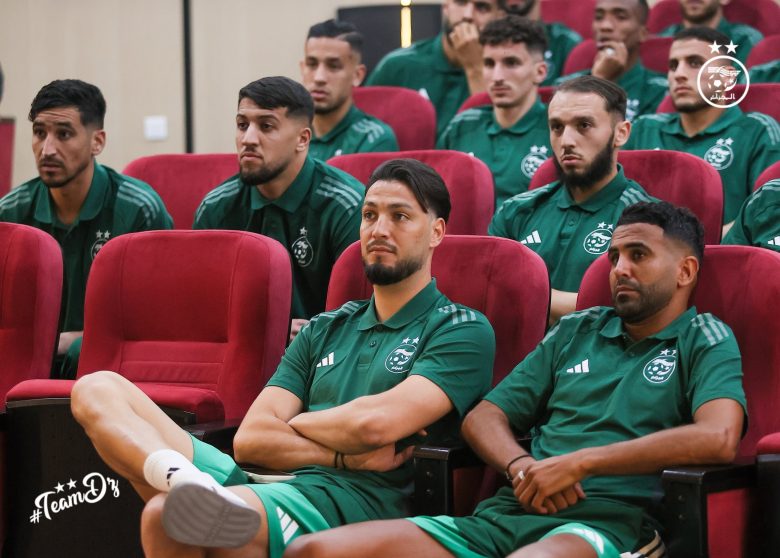
Fully aware of these high stakes, the Algerian Football Federation made it a priority to brief the national selection on the regulatory shifts shaping the 2026 World Cup. Having returned home following their brilliant friendly victory against the Netherlands, the players received a comprehensive technical briefing. Under the supervision of the head of national refereeing, Mehdi Abid Charef, an educational seminar was hosted to sensitize the 26-man roster and coaching staff to the fresh directives. The Desert Foxes were thoroughly briefed to approach the tournament with a flawless understanding of the updated guidelines.