

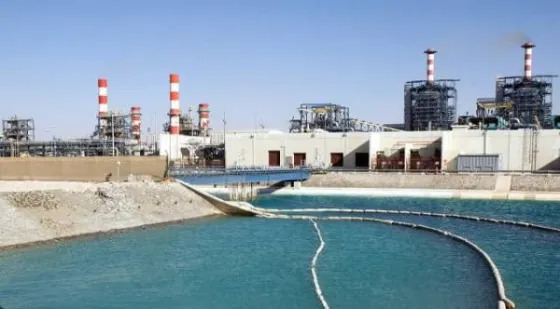
With the filling rate of dams now exceeding 60%, the government is accelerating its transition toward unconventional water resources. By announcing an end to severe rationing cycles and introducing smart grid management, the Ministry of Hydraulics is laying the groundwork for a modernized public service, backed by the presidential seawater desalination program.
Algeria, like other nations in the Mediterranean Basin, is bearing the brunt of the damaging effects of climate change. The country faces structural water stress, marked by a chronic decline in rainfall, record-breaking temperature spikes, and increasingly frequent drought cycles. Historically reliant on surface water from dams and the extraction of underground aquifers, Algeria has seen its traditional reserves shrink considerably over the last decade. This decline has prompted authorities, driven by President Abdelmadjid Tebboune, to implement shock therapy centered on seawater desalination.
This situation highlighted the vulnerability of the traditional supply model and forced public authorities to act. To break free from absolute dependence on unpredictable weather patterns, water security has been elevated to an absolute national priority by the Head of State. The government’s strategy now relies on a paradigm shift: a massive transition toward unconventional water resources. This places seawater desalination at the forefront for coastal areas, freeing up water volumes to be transferred to inland provinces.
Recent declarations from the Minister of Hydraulics, Lounès Bouzegza, align directly with this restructuring trajectory. Speaking during a press briefing on the sidelines of the official opening of the 21st edition of the International Exhibition for Water, Energy, and Environment (SIEE Pollutec), the minister reaffirmed his department’s determination to achieve a balanced and equitable distribution of resources nationwide. Straightforwardly acknowledging the failures of the current network, the minister announced a break from past practices, stating that current management methods are outdated, heavily impacted by leaks and distribution disparities, and can no longer continue.
The assessment is clear: beyond resource scarcity, it is water governance itself that must be modernized. To achieve this, the ministry is preparing a new roadmap based on “smart management.” This plan involves the increasing integration of innovative technological solutions, notably real-time leak detection systems and smart meters developed in close collaboration with Algerian startups.
Seawater desalination serves as the cornerstone of this water security ambition, with the government rapidly deploying its presidential industrial program. This massive undertaking aims to eventually cover the majority of the country’s drinking water needs, thereby liberating dam water for the agricultural sector. Algeria has already reached significant milestones, with 19 operational stations currently producing over 3.6 million cubic meters of water per day, forming the baseline of coastal water resilience.
However, the government is moving forward into the second phase of the national program, which plans the construction of three new large-scale stations in the provinces of Tlemcen, Chlef, and Mostaganem. These strategic infrastructures will not only supply coastal cities but will also allow, through cascading and reverse-transfer systems, the supply of inland high-plateau provinces such as Saïda and El-Bayadh. This diversification strategy also extends to the vast territories of the Deep South, where the minister highlighted the deployment of desalination and demineralization stations for brackish water, particularly in the Tamanrasset province, to secure drinking water access in arid regions.
Another pillar of this new sector vision lies in the utilization of treated wastewater from purification plants, a vital lever for the circular economy. The minister noted a national network of 234 operational treatment plants, reinforced by another 75 structures currently under construction. The stated objective is highly strategic: to recover and recycle 30% of treated wastewater. These considerable volumes will not be pumped into the drinking water network but will be entirely redirected to the agricultural and industrial sectors, relieving pressure on groundwater tables and preserving precious dam reserves for human consumption.
As the summer season approaches—a traditionally critical period for water consumption—Lounès Bouzegza sought to be reassuring. Current indicators are positive, with the overall filling rate of the country’s dams exceeding 60%, and several infrastructure units operating at 100% capacity. Nevertheless, regional disparities persist, with some dams showing filling rates below 50%. To address this, the ministry is relying on the interconnection of hydraulic systems. For instance, the minister cited connection works in the Souk Ahras province between the Aïn Dalia dam and the Oued El-Djedra dam (which is at 100% capacity), an infrastructure project that will also support the neighboring province of Tébessa.
Thanks to these technical adjustments, the minister promises a progressive and noticeable improvement in the daily lives of citizens, asserting that the days of families receiving water only once every two weeks are over, with supply shifting to once every two days, or three days at most. In the event of residual local disruptions, a backup water trucking plan is organized, with the minister reiterating that the absolute priority remains guaranteeing continuous access to water for every citizen across the entire territory. Proving the momentum driving the sector, the SIEE Pollutec exhibition stands as the premier gathering for industry professionals. Open until June 4, it brings together more than 170 domestic and international exhibitors from both public and private spheres, expecting to welcome nearly 10,000 professional visitors to discuss the cutting-edge technologies essential to Algeria’s water transition.