

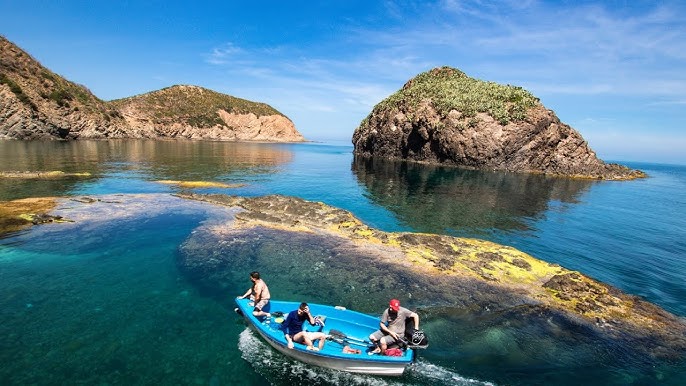
With the launch of the summer season only weeks away, the future of the Algerian coastline has returned to the forefront of national priorities. Stretching across 2,148 kilometers of shores, Algeria possesses a monumental natural heritage that serves simultaneously as a primary driver for regional economic growth and a premium tourism asset for coastal communities, all anchored within a uniquely vulnerable ecosystem.
The strategic weight of shoreline cities, which house a massive percentage of the country’s population and industrial operations, was underscored by Salem Chérif Yousra, head of the environment and planning department at the National Higher School of Marine Sciences and Coastal Management.
The Algerian coast harbors immense economic possibilities. Seaside tourism, maritime port operations, international trade networks, coastal manufacturing, desalination plants, and fresh investment avenues combine to make the shoreline a vital lever for nationwide advancement, the specialist noted. However, she emphasized that these assets are currently underutilized and demand enhanced stewardship to ensure long-term viability.
According to recent surveys conducted by the Ministry of Environment and the National Mapping and Remote Sensing Institute, Algeria’s coastline measures 2,148 km. Rocky cliffs and bluffs make up nearly 50% of this perimeter, while the remaining half consists of sandy beaches, dunes, and related marine formations. Despite occupying a mere 4% of the country’s total landmass, it supports a major portion of the populace and concentrates numerous critical infrastructure networks.
This accelerating appeal of the seaside places significant stress on coastal areas, she remarked on Monday during an appearance on National Radio. She pointed out that this belt functions as a direct intersection between terrestrial, marine, and atmospheric spheres, rendering it an incredibly delicate habitat. Maximizing its commercial returns, therefore, cannot occur at the expense of the ecological equilibria that ensure its survival.
Chief among the documented threats is climate change, the impacts of which are already manifest along Algerian shores. Mediterranean sea temperatures have climbed by more than one degree Celsius according to current scientific assessments, weakening marine life highly sensitive to thermal fluctuations. This is compounded by water acidification, dwindling rainfall patterns, and an increase in severe weather events.
The researcher highlighted the ocean storms and coastal flooding witnessed in recent years across multiple Algerian ports. Disruptions that were once anomalies are now multiplying under global warming trends, heightening risks for maritime infrastructure, commercial industries, and marine habitats.
Environmental pollution presents a similarly daunting hurdle. According to Ms. Salem Cherif, municipal and domestic waste streams remain the foremost cause of marine water degradation. Lax compliance with sanitation guidelines and ongoing seaside urban development lead to direct ocean dumping, throwing the ecological balance into disarray.
This contamination triggers toxic algal blooms and micro-organism spikes that compromise swimming water safety and endanger community health. Plastic debris poses another critical hazard. As it breaks down, it fractures into microplastics that soak up heavy pollutants before being consumed by marine life, ultimately making its way to humans via the food supply chain.
Unchecked real estate development along the beachfront stands out as another deeply concerning point of vulnerability. Infrastructure built right up to the water’s edge, frequently marketed as premium tourism projects, blocks the natural flow of sediments and rapidly accelerates beach erosion.
According to the academic, these coastal builds may generate immediate returns, but they ultimately threaten the longevity of the investments themselves. Altering shoreline dynamics disrupts natural sand replenishment, leading to the steady disappearance of beaches and forcing reliance on defensive maritime barriers that are both expensive and visually disruptive.
Confronting these dilemmas, the analyst calls for integrated coastal zone management rooted in deep coordination among all institutional partners. This strategy endeavors to bridge the gap between commercial expansion, tourism promotion, and resource conservation through a unified governance framework linking the environmental, housing, transportation, industrial, tourism, and local municipal sectors.
For the specialist, the trajectory of the Algerian coastline hinges on cultivating a widespread ethos of eco-citizenship. She reiterates that beach protection, responsible waste disposal, and adherence to ecological laws are non-negotiable requirements to defend a natural treasure that stands as a rich ecosystem, an economic engine, and a pillar of tourist appeal for Algeria.