

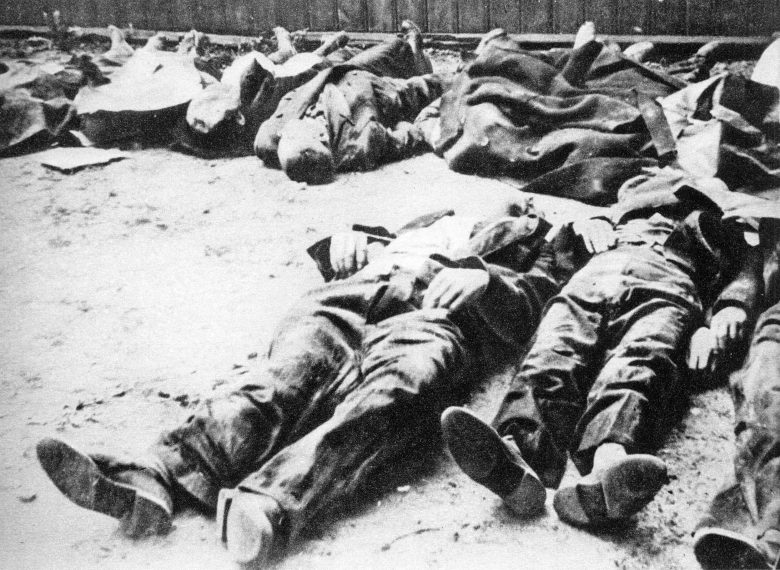
Crimes against humanity, crematorium ovens, and summary executions: the toll of the May 8, 1945, massacres remains an unhealed wound. Despite overwhelming evidence buried in archives, impunity persists for yesterday’s perpetrators. Between military crackdowns and settler militia terror, this covert pogrom turned the pursuit of independence into an indelible national sacrifice.
The slaughter deployed nearly every weapon—from machine guns and grenades to naval cannon shells and colonial air force bombs. No child, woman, village, hamlet, or even Arab neighborhoods in cities escaped. Their sole offense: supporting the Allies’ victory in that grim war, as tens of thousands crossed the Mediterranean to free occupied France. Algerians rallied peacefully to demand a free, sovereign, independent nation—only to face ruthless suppression.
The French colonial authority, liberated from Vichy and Nazis by Allied forces and Algerian riflemen, ordered mass shootings, sparing no “natives.” Its troops carried out the grim task. Worse, armed settler and pied-noir militias—shielded by authorities—spread panic across Algerian communities in Setif, Kherrata, and Guelma. The carnage didn’t end that fateful day but dragged into June and even July. Detainees endured horrific torture and abuse; some took bullets to the head. An undetermined number of slain Algerians ended in mass graves, shrouded only in lime, while others burned in ovens.
The ledger is devastating: tens of thousands dead, missing whose fates stay unknown, thousands wounded, and a profound scar that severed ties with colonial France forever. No official probe launched, no prosecutions for these genocide perpetrators, no credible trials held. The savagery peaked, shocking the world and sparking universal outrage. Entire hamlets razed, villages torched, families burned alive—it was all-out war on unarmed Algerian civilians, far beyond mere pacification.
To this day in France, denial lingers—yet victim accounts, survivor stories, participant recollections, and eyewitness reports affirm the horrors. Administrative records stashed in colonial vaults offer damning proof.
Thus, Algeria declared May 8 the “Day of Memory,” honoring victims of colonial brutality, slain by settler mobs—forebears of today’s far-right enthusiasts and nostalgics for “Father’s Algeria,” whose racist, xenophobic views still fester in France.