

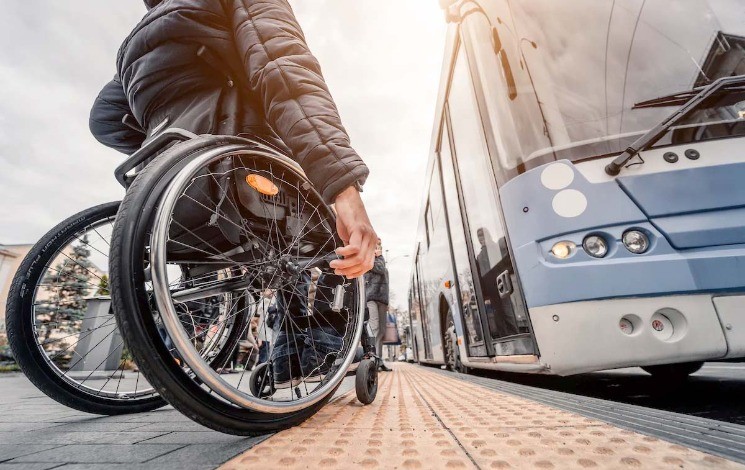
Algeria’s national program for free and discounted public transport fares for people with disabilities officially launched this Sunday for holders of the “special needs” card, plus one accompanying person per beneficiary. The Ministry of National Solidarity, Family, and Women’s Affairs announced the rollout.
In specifics, free urban and suburban public transport now covers all individuals with disabilities, easing daily trips for work, medical, or administrative needs.
The policy extends further: Full waivers apply to intercity road passenger services, rail, and domestic public sea travel for those with 80-100% incapacity ratings—a nod to their heightened barriers and frequent need for constant support.
For 50-79% incapacity, an 80% discount kicks in on road, rail, and internal maritime routes, lightening the financial load on vulnerable households.
Similarly, economy-class domestic flights get an 80% cut for those with total (100%) disability, boosting long-haul access—especially to remote southern regions where air travel is often essential.
Benefits apply only via 66 nationwide operators with ministry agreements, including national carrier Air Algérie, Algiers Urban and Suburban Transport Company (ETUSA), National Rail Transport Company (SNTF), Algiers Metro operator, regional public passenger firms (Center, East, West), and public maritime services. The ministry fully funds the program through its budget, sparing operators any costs and advancing broader social equity for at-risk groups.
ETUSA Rolls Out Accessible Buses
Complementing these fare breaks, ETUSA announced new buses fitted with advanced features to enhance access for those with limited mobility. The move aligns with government directives, particularly from the Minister of Interior, Local Assemblies, and Transport, per an ETUSA statement.
The vehicles feature automatic ramps for independent wheelchair boarding and dedicated interior spaces for secure travel stability.
Reinforced tie-downs with custom seatbelts boost safety, while low-floor designs allow seamless sidewalk access, bypassing common hurdles. Smart audio systems auto-announce stops, aiding the visually impaired.
This setup promotes user independence and safety across disability types, fostering true inclusion. By easing transport, the state enables fuller engagement in social, economic, and cultural life—turning mobility into a gateway for rights, opportunities, and dignity.