

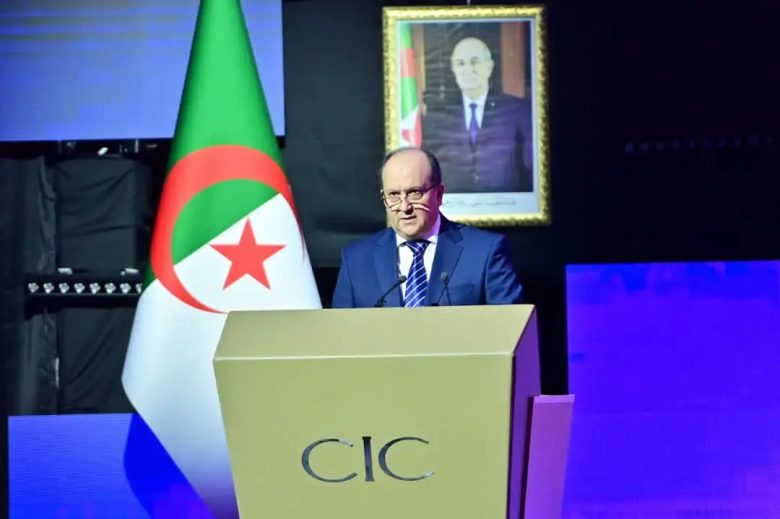
In its inaugural edition, launched this Saturday in Algiers, the “Global Africa Tech 2026” summit has emerged as a pivotal gathering for shaping the continent’s digital future. On this occasion, President Abdelmadjid Tebboune delivered a key message through a speech read by Prime Minister Sifi Grieb: Africa must urgently bolster its communication networks and unite behind a shared strategy to secure digital independence, bridge the connectivity gap, and unlock its full economic promise.
The Algerian leader expressed national pride in hosting this pan-African event with global reach, viewing it as a prime chance to deepen intra-African collaboration and forge fresh ties with international players, especially in information technology and digital infrastructure.
Tebboune stressed the need for a cohesive, all-encompassing approach to harness technology for the benefit of ordinary Africans while safeguarding the continent’s digital autonomy. He framed this as part of a broader sustainable growth agenda, powered by Africa’s abundant innovative talent and human resources.
Amid fierce global tech rivalry and rapid innovation, he positioned communications sector expansion as a critical strategic priority—one that drives economic and social progress while serving as a basic right for African citizens.
The president highlighted the vital role of land, sea, and satellite connectivity in building a unified, resilient, and competitive Africa. He warned against leaving any region behind in this digital shift, noting that robust links open doors to education, investment, jobs, and vital services.
In this vein, enhanced communication capabilities pave the way for innovative businesses, smoother integration into global supply chains, and high-skill job creation. Tebboune described these technologies as a cornerstone for advancing economic, financial, and social inclusion.
Boosting African Network Integration
Tebboune further emphasized interconnecting Africa’s networks as essential for the success of the African Continental Free Trade Area (AfCFTA), arguing that a fully linked continent is key to unleashing its economic might. He pointed out that inadequate setups—like limited fiber-optic lines and shared data capacity—hinder a truly integrated African marketplace.
To address this, he urged ramped-up cooperation and alliances to develop a self-reliant, continent-wide communication backbone spanning land, sea, and space domains.
Turning to Algeria, the president showcased the country’s push to upgrade its networks through major investments in hardware, management systems, and skilled personnel. These steps have yielded clear gains in internet access and widespread telecom services, with fair coverage across the nation.
Notable achievements include expanded international bandwidth, nationwide fiber-optic rollout, and FTTH connections for over three million households. The goal is full FTTH adoption by 2027, alongside faster speeds and broader internet reach.
Leveraging its economic and geopolitical clout in Africa, Algeria aims to lead on continental digital sovereignty. Tebboune pledged the nation’s infrastructure and expertise to this cause, spotlighting anchor projects like the trans-Saharan fiber-optic backbone.
He noted the event’s alignment with African Union efforts, the International Telecommunication Union, and initiatives such as NEPAD and Smart Africa. In parallel, he called for partnerships centered on joint funding, tech transfers, and African skills development, reaffirming that communication investments are crucial for growth, stability, and shared prosperity across the continent.