

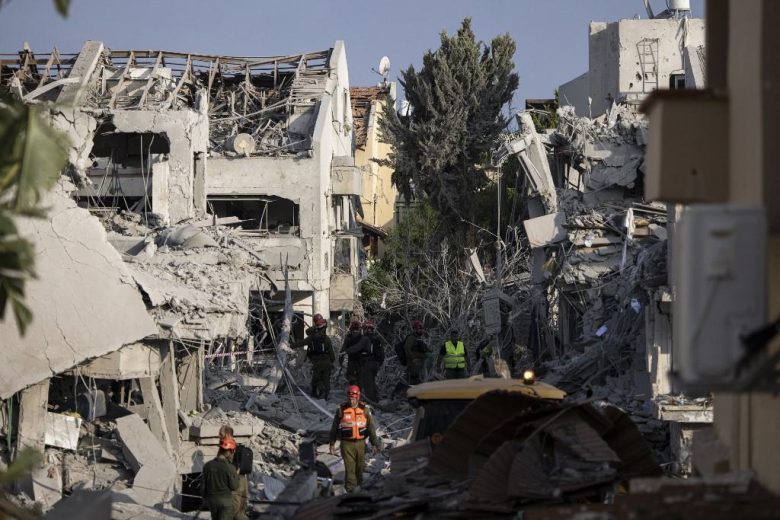
On the fourth day of the open war launched against Iran, the situation remains tense, and concerns are intensifying further about the duration of this conflict and the devastation it could cause. The effects of the American-Zionist aggression on the global economy, maritime navigation, commodity trade, and the expected disruptions on oil and gas markets are starting to appear. The specter of a major crisis is no longer fiction.
Diplomatic circles are now questioning hypotheses of a ceasefire or halt to hostilities that seems impossible. Almost everyone is paralyzed by this aggression, particularly within the United Nations, which has been permanently weakened by the Gaza genocide and the dwindling mediation attempts.
The hoped-for role of the Sultanate of Oman or even Qatar in future talks has now been ruled out. Muscat, which had overseen pre-war negotiations, is astonished by the turn of events but especially by the ruses of the Americans, who sought much more to buy time by mobilizing the maximum of their arsenal in the region.
Apprehensions about the duration of this conflict are proving justified. For the Iranians, resistance has no limits, neither in time nor in space. Their military capabilities remain intact, as evidenced by the massive damage inflicted on the civil and military infrastructure of the Zionist entity. The latter is still maintaining a media embargo even though the offices of Prime Minister Netanyahu and the head of the Israeli air force have been hit by missiles. Practically all cities and settlements in Israel, as well as the occupied Palestinian territories, did not sleep Monday night due to Iranian strikes with missiles and drones. The sirens did not stop throughout the night before last.
The Revolutionary Guards have warned that the United States will no longer be “safe anywhere in the world.” In a statement, Tehran asserts that the “days of glory” of Washington are over. A declaration that directly threatens US military bases scattered across all Gulf countries and which are targeted daily by the Iranians.
Concerns about a scenario of a long war have returned in force within the American-Zionist coalition. First, the criminal Netanyahu, who estimates, in an interview with an American channel, that the war will not last years but a few weeks. For his part, President Donald Trump declared this Monday that the ongoing military operation in Iran should last four to five weeks and could be extended if necessary. “We have planned for four to five weeks, but we have the capacity to go well beyond. And we will,” affirmed Donald Trump during a ceremony at the White House. He presented the duration of the offensive as linked to the dismantling of Iran’s conventional missile infrastructure, which he described as an urgent and growing threat, adding that the Iranian conventional ballistic missile program was experiencing “rapid and spectacular” expansion. “This represented a clear and colossal threat to America and to our forces stationed abroad,” he insisted.
The objectives of the aggression against Iran, set by Washington and Tel Aviv, were initially four in number: destroy any possibility of access to nuclear weapons, destroy the ballistic armament industry, proceed with the neutralization of the navy, and cut off support to allied movements in Yemen, Lebanon, or Iraq. However, Donald Trump went further by quickly announcing that he wanted to change the Iranian regime, calling for the population to rise up. Words to justify the assassination of Ayatollah Khamenei, his family, his close collaborators, and dozens of other political and military leaders.
For observers, a war that was meant to be swift, rapid, and precise, according to American predictions, has become a lost option. Fears of the operation bogging down are already palpable. All the more so since Donald Trump has raised, for the first time, the hypothesis of a ground intervention in Iran, which would involve a large number of troops and units, tanks and armored vehicles, artillery, as well as significant logistical resources. This risks completely changing the configuration of the current war and could entail major risks for Trump’s policy.