

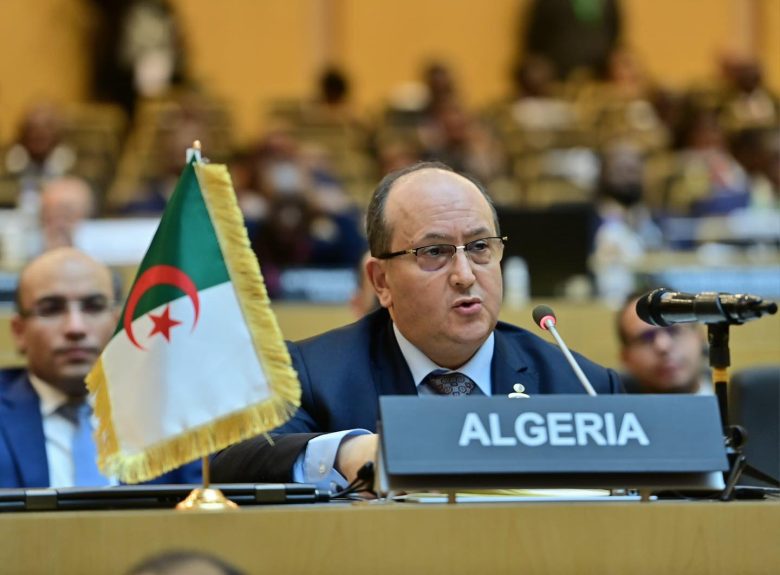
During the session dedicated to the institutional reform of the African Union, as part of the proceedings of the 39th ordinary session of the Conference of Heads of State and Government of the African Union, President Abdelmadjid Tebboune, represented by Prime Minister Sifi Ghrieb, took the floor to reaffirm Algeria’s commitment to a realistic and effective institutional reform of the continental organization.
Right from the start, the head of state praised the efforts underway within the organization, expressing appreciation to President William Ruto for the comprehensive report he presented on the institutional reform of the African Union. He noted that the document “reflects considerable effort in leading this strategic endeavor since his designation in 2024 as head of the reform process.” He assured: “We reaffirm our support for his sustained efforts to bring this vital journey for our organization to fruition.”
Nearly a decade after the process was launched in 2016, the time has come for a clear-eyed evaluation, Tebboune indicated, noting that while “relatively satisfactory results” have been achieved, “the extension of the work, the diversification of its areas of action, and the multiplication of challenges now require a responsible pause for evaluation, revision, and correction.”
In this perspective, Algeria advocates continuing the effort, but with a renewed method. “Through a renewed and more efficient reform approach, based on clarity of vision and realism in execution,” supported President Tebboune. He emphasized “a pragmatic spirit that takes into account our financial and human capacities” and “a progressive and flexible approach, focusing on addressing reform axes on a case-by-case basis, far from global approaches that could exhaust our resources and weaken the effectiveness of our decisions.”
Three priorities structure this vision. First, “strengthen the effectiveness of the African Union’s political bodies” by rationalizing their operations and concentrating their actions on priority dossiers, while ensuring strategic coherence in the face of current challenges.
Second, “pursue the structural reform of the Union and its programs in a gradual and realistic manner” to ensure optimal use of resources and consolidate the continent’s decision-making independence. The president warned against “excessive dependence on external partners” and called for upholding “the principles of transparency and efficiency in program execution,” modernizing recruitment and monitoring mechanisms, rationalizing expenditures, and exploring “new sources of sustainable financing.”
Finally, the third priority concerns peace and security. This involves, according to the head of state, “restructuring the continental peace and security system to ensure the full and complete activation of its pillars,” by strengthening preventive diplomacy, intensifying mediation efforts, and ensuring “the effectiveness of the Peace Fund” in the face of rising security threats.
Regarding other items on the agenda, such as the Pan-African Parliament, the African Court of Justice, or the restructuring of the 57 units under the Union, Algiers advocates “progressiveness and caution,” examining these issues “one by one,” with particular attention to “their financial and structural implications, especially in the medium and long term.”
President Tebboune also highlighted the obligation to “strengthen and uphold the central role of the Committee of Permanent Representatives” in monitoring the implementation of decisions taken by deliberative bodies, in close coordination with the African Union Commission and under the supervision of the reform process coordinator.