

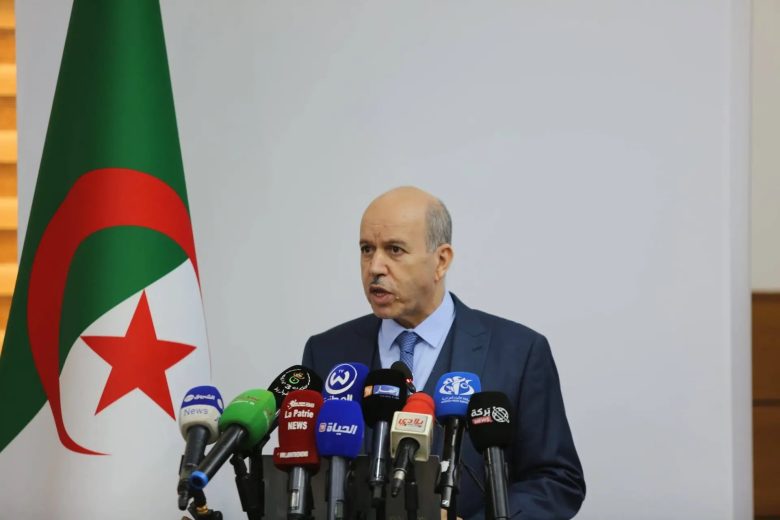
Acceleration of digitization, elimination of obsolete documents, and an unprecedented national evaluation are the main orientations outlined by the Minister of Labor, Employment, and Social Security, Abdelhak Saïhi, this Friday in Algiers, in a firm and irreversible commitment to build a modern administration serving the citizen.
Presiding over the opening of a study day dedicated to measures for simplifying procedures and modernizing performance, the minister affirmed that “digitization today represents a fundamental pillar in the state reform process.” He emphasized that it constitutes “an effective tool to reduce bureaucracy, strengthen transparency and governance, and improve the quality of public service.”
Addressing central administration executives, supervisory bodies, and local officials connected via videoconference, he assured that his department has engaged “with seriousness and determination” in this dynamic, through “a strategic vision aimed at modernizing management systems and improving performance.”
Mr. Saïhi also indicated that 2025 marked “a true qualitative advancement” in this effort, specifying that “27 digital projects have been implemented as part of the various axes of the national digital transition strategy.” He particularly mentioned “three major operations to strengthen infrastructure, including the deployment of specialized national fiber optic networks (LS),” noting that these investments have enabled “improved network security, increased reliability of information systems, and ensured service continuity.”
The minister also announced the launch of “eight new digital services for insured individuals” and “six services dedicated to businesses,” as well as “six digital platforms intended to modernize the management of supervisory bodies.” The goal, he explained, is to “establish a data- and performance indicator-based management model.”
In the same vein, Mr. Saïhi highlighted “a high-level training program for human resources,” in addition to “four digital financial mechanisms, including remote payment, electronic payment, and automatic debit,” designed to “enhance transaction transparency and facilitate procedures.”
———–End of Document Repetition
On the administrative simplification front, the minister announced a strong measure by declaring that “twenty-seven administrative documents have been eliminated,” specifying that these items “are now processed automatically, without requiring citizens to travel.”
He also emphasized that strengthening the interconnection of databases, supported by the national identification number (NIN), aims to establish “the principle of a unified digital administration” and “put an end to document repetition and information inconsistencies.”
As part of modernizing management methods, the minister announced that the sector “is preparing to adopt full digitization of external recruitment procedures.” He explained that this approach will include electronic publication of competitions, digital receipt and review of applications, and remote interviews via secure platforms. He assured that “this approach ensures transparency and equal opportunities for all candidates across all provinces of the country.”
Furthermore, the minister revealed the completion of “a vast on-site evaluation operation,” with “1,482 evaluation missions across the 58 provinces,” as well as the participation of “more than 19,000 citizens,” aimed at measuring user satisfaction levels and improving service quality, particularly digital services. He highlighted the central role of the ministry’s General Inspectorate and the inspections of supervisory bodies in supporting reforms, through “field visits, regular controls, and evaluation of compliance with guidelines and regulatory texts.”
In conclusion, Mr. Saïhi stated that “procedure simplification and digitization adoption constitute an essential criterion in evaluating officials.” This orientation, according to him, aims primarily to “embed a results-oriented culture and strengthen citizens’ trust in public administration.”
It should be noted that the day’s proceedings featured several presentations by central administration and supervisory body executives on the administrative simplification journey, its impact on public service quality, and the sector’s prospects for 2026-2030.
On the sidelines of the meeting, a session gathered the general inspector and inspectors from supervisory bodies to examine the modalities for supporting reforms and measuring their effective implementation on the ground. Operational recommendations were formulated to consolidate the ongoing dynamic and further embed good governance principles, in line with the orientations of the country’s highest authorities.