

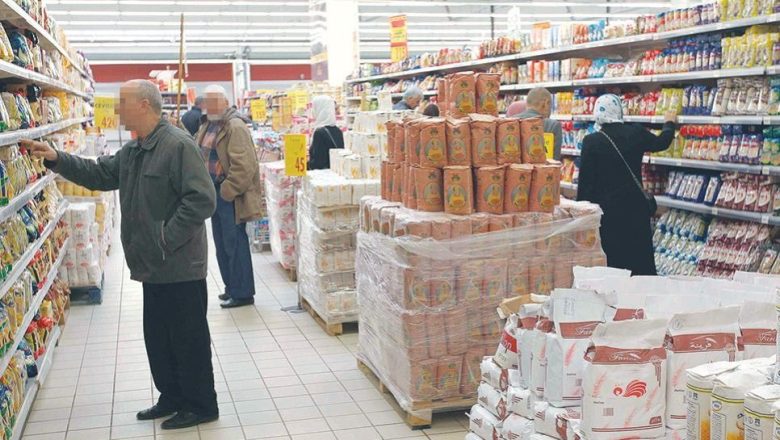
With Ramadan approaching in less than two weeks, the Ministry of Domestic Trade and National Market Regulation has launched a large-scale national campaign dedicated to mastering consumption habits and reducing food waste. This awareness operation, which will continue until the third day of Eid al-Fitr, aims to encourage citizens to adopt more responsible consumption practices during a month marked by high demand.
According to Noureddine Haridi, head of the Quality and Consumer Protection Directorate, this initiative mobilizes trade directorates across the national territory, as well as several organizations under the sector. He stressed that, even though product supply is ensured, the month of Ramadan continues to record significant volumes of waste each year, particularly bread.
The campaign is based on several key messages, including guaranteeing product availability, rationalizing purchases, and preserving the spiritual character of the holy month, far from any race to overconsumption. It will be strengthened in the coming days by the direct involvement of other ministerial sectors, notably Health, National Education, and Religious Affairs, as well as the active participation of consumer protection associations.
Speaking on National Radio, the same official indicated that awareness actions will be deployed in public spaces, wholesale markets, and large retail outlets, but also in schools and universities, given the losses recorded in collective catering. Study days, workshops, and educational actions are also planned to highlight the importance of sustainable consumption patterns, nutritional education, and reducing excessive intake of sugar, salt, and fats, which are risk factors for cardiovascular diseases.
This campaign also provides an opportunity to better publicize the legislative and regulatory framework related to food safety, notably the interministerial decree that came into effect on January 14, concerning requirements applicable to commercial and collective catering establishments, aimed at both reducing the risks of food poisoning and improving professional practices, while ensuring better consumer protection.
In this context, the right to clear information and informed choice holds a central place. Ministry services will explain the keys to reading product labeling, the distinction between the use-by date and the minimum durability date, with the aim of reducing waste of non-perishable products that are still consumable.
Real Causes of Waste
Furthermore, awareness messages have been disseminated by SMS via the three mobile phone operators, before and during Ramadan. An evaluation of the campaign’s impact is also planned through field surveys to identify the real causes of food waste, particularly subsidized products such as bread, semolina, and flour, whose cost represents a significant burden on the public treasury.
Regarding Ramadan preparations, underway for about three months, Mr. Haridi specified that they rest on several axes. The first consists of consolidating supply and improving market regulation, through an increase in production capacities for highly demanded products such as edible oil, sugar, semolina, flour, and pasteurized milk. Mechanisms have also been put in place, in consultation with the Ministry of Agriculture, to ensure a regular supply of fresh fruits and vegetables.
The second axis concerns the launch of proximity markets, with the objective of opening at least one market per daira. These spaces will offer widely consumed products at affordable and competitive prices, to bring supply closer to consumers and facilitate access to a variety of products during the holy month.
In this regard, the system will be complemented by an intensification of control operations. Economic control and fraud repression agents will be mobilized at all stages of the chain, from importation to retail sales, including production and transport. Mobile laboratories will also be deployed to conduct rapid on-site tests, in a preventive logic based on risk analysis and management.
The ministry reminds that consumers can report any infraction or shortcoming via the green number 10 20 or through the sector’s official website, assuring that all alerts will be handled immediately.
Through this approach based on awareness, consultation, and control, the public authorities aim to durably anchor a culture of moderate and responsible consumption, in line with sustainable development objectives.