

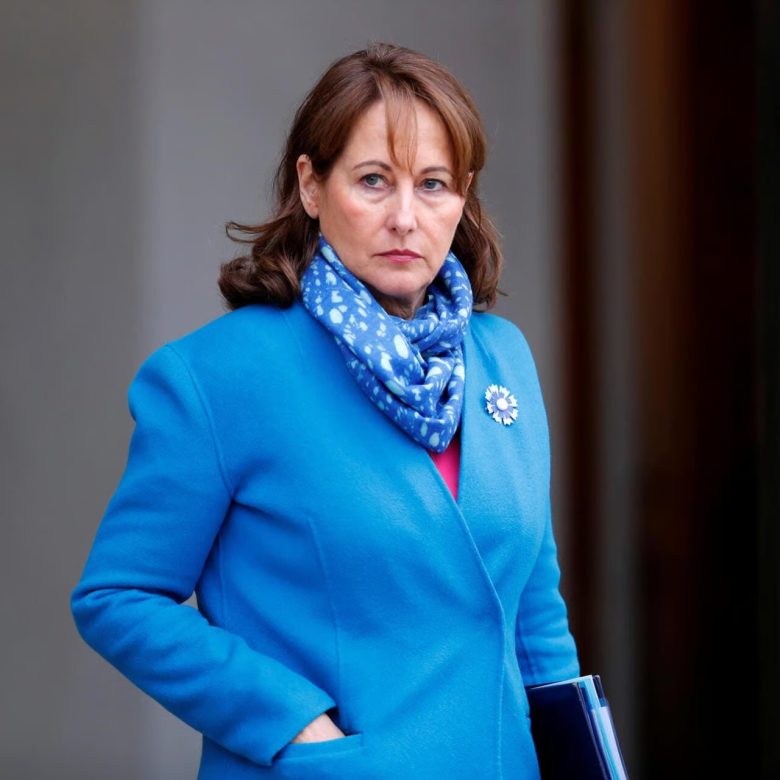
Ségolène Royal, president of the France-Algeria Association, is expected in Algiers today. The former French presidential candidate is making this visit at the invitation of the Algerian Chamber of Commerce and Industry (CACI), and she herself confirmed the information on social media.
This visit comes amid a particularly tense context, recently marked by a resurgence of sharp diplomatic friction between Algeria and France. While observers anticipated the start of a thaw, relations have unexpectedly worsened following the broadcast on France 2 of a report that the Algerian government strongly condemned, describing it as “a fabric of deeply offensive and unnecessarily provocative falsehoods.” Indeed, the Ministry of Foreign Affairs summoned the chargé d’affaires at the French Embassy in Algiers in response to this latest media attack.
On her X account, Ségolène Royal announced this Sunday’s visit, stating that she is going “to listen and build something positive.” “We owe reconciliation to the youth on both shores of the Mediterranean, between France and Algeria, Africa’s largest country, in order to develop fruitful projects in forward-looking productive sectors,” Ms. Royal wrote.
The former Socialist presidential candidate in 2007 is seen as a wise, positive, and forward-looking voice, in stark contrast to the proponents of xenophobia, racism, far-right rhetoric, and pro-Makhzen-Zionist relays. She has long advocated for ending the crisis through a dialogue process built on respect and trust between the two countries.
A week ago, she spoke clearly about the Algerian-French crisis, declaring that she “does not accept the concept of memory rent,” which is “a convenient way to delegitimize the voice of history’s wounded.” During her intervention at the Institute for International and Strategic Relations (IRIS) in Paris, which hosted an event by the France-Algeria Association (AFA), she stated that the key to easing tensions and returning to normalcy between the two states lies in resolving the memory dispute. “The memory of colonial violence is a right to recognition of established and documented facts,” she declared, adding that “certain wounds,” as well as the “crimes of French colonization” in Algeria, “have not been fully named, repaired, or apologized for. Well, they must be by France, as other countries have done.”
It was during this meeting that she publicly unveiled her plan to end the crisis between the two countries. This plan is based neither on security imperatives nor on migration pretexts, advocating instead for a new path toward easing tensions and rebuilding a fruitful, committed, and respectful relationship.
———–Return of Objects Belonging to Algeria
Royal’s plan rests on three essential points: the memory issue, the return of objects belonging to Algeria as well as the remains of Algerian resistance fighters, and finally the handover of archives on nuclear tests. This is why she insists on France’s recognition of colonial crimes, describing it as an imperative.
According to Ms. Royal, recognition, reparation, and apology are needed. “We must tear down walls to build bridges of knowledge and respect through dialogue, among students, entrepreneurs, researchers, artists, creators, and many others,” she stated, adding that “this recognition will enable full resilience and liberation toward creation, projection into joyful and exciting joint projects. Memory is a common foundation on which we can build ‘never again.'”
In addition to her proposal to return all cultural assets and archives looted during colonization, Ms. Royal even cited the file on the skulls and remains of Algerian resistance fighters that Paris still refuses to return.
Regarding the file on nuclear tests conducted in southern Algeria during the 1960s, Ségolène Royal also supports handing over the archives of these experiments, adding that “all consequences must be clarified, particularly contaminations and the conditions for decontaminating this territory.”
According to Michel Bisac, president of the Algerian-French Chamber of Commerce and Industry (CCIAF), “Ségolène Royal has always maintained a positive discourse on Franco-Algerian relations, including on the memory file. She recently made statements calling for recognition of the crimes committed by colonial France. We must put an end to this file that is blocking relations between our two countries to move forward.”
According to observers, Ségolène Royal could be received by the President of the Republic, Abdelmadjid Tebboune, who cited her during a February 2025 interview with the French newspaper l’Opinion as one of the personalities who enjoys “good press” in Algeria and represents “a certain France that carried weight.”