

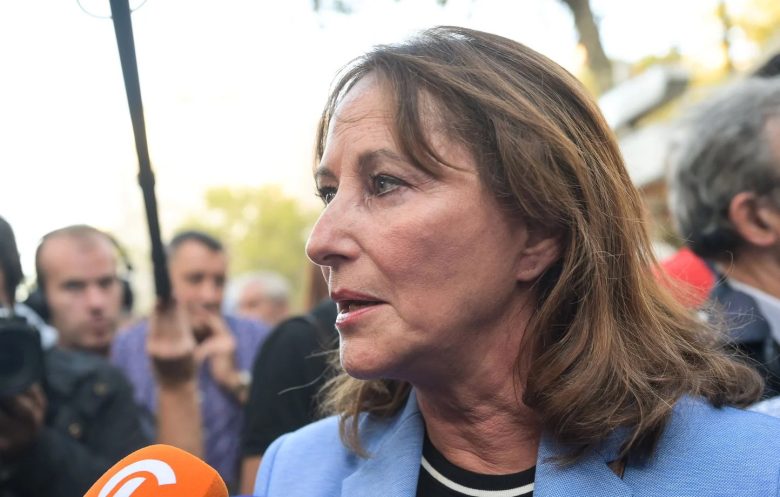
The contender for the Socialist primary ahead of the 2027 French presidential race, Segolene Royal, continues to caution authorities in Paris regarding their approach to Algiers, campaigning for a stabilized bilateral relationship rooted in mutual consideration.
Writing on her X account, the former minister offered an objective assessment immediately following Algerian President Abdelmadjid Tebboune’s official visit to Germany—a trip punctuated by the finalization of numerous commercial agreements—while recalling similar treaties previously secured with Italy and Spain. She explicitly highlighted infrastructure and energy deals signed with Rome, hydrogen and automotive alliances established with Berlin, and impending economic arrangements with Madrid, set to coincide with the upcoming visit of Spanish Prime Minister Pedro Sanchez to Algiers.
According to Royal, France is being outpaced by its European neighbors in Algeria, which are securing market share in a country undergoing rapid economic expansion. She identifies the sole culprit for this decline as the overt antagonism stemming from right-wing and far-right factions in France. These groups, she argues, paralyze any constructive evolution in Franco-Algerian relations by propagating anti-Algerian rhetoric and solely focusing on divisive debates, such as visa allocations and mobility rights for Algerian nationals.
Royal, who advocates for moving past the diplomatic deadlock between Algiers and Paris, views Tebboune’s trip to Berlin and the signing of roughly thirty compacts as clear evidence of French political and diplomatic failure.
> “France is being systematically replaced,” she observed. “After being pushed out of the Sahel and Francophone Africa due to a disastrous diplomatic strategy, it is now witnessing the total stagnation of our national companies’ industrial, agricultural, manufacturing, and maritime partnerships.”
The former 2007 presidential candidate expressed regret that despite this severe disadvantage for Paris, “petty political controversies have resurfaced recently,” showing a complete “disregard for strategic realities.” This was a clear reference to the manufactured dispute over visa issuance that erupted following recent public comments from the French Ambassador to Algeria, Stephane Romatet.
In Royal’s view, “cooperation between both shores of the Mediterranean is essential,” adding that this “by no means requires aligning with the sovereign political and diplomatic agendas of independent states.” Looking toward 2027, she campaigns for rebuilding a “farsighted, constructive, serene, and dignified diplomacy with all Mediterranean neighbors within a highly productive framework.”
Echoing this analysis, various French political observers believe Algiers has sent highly significant signals through Tebboune’s German visit and the highly anticipated arrival of the Spanish Prime Minister. Experts argue these two developments must be viewed in tandem with the deep commercial alignment existing between Algiers and Rome. Beyond natural gas, Algeria is actively building durable alliances across multiple strategic sectors with influential European Union member states—excluding France. These heavyweight nations hold major sway over the commercial and economic blueprints managed in Brussels.
Amid ongoing negotiations with the EU, Algiers seeks to rewrite the parameters of its Association Agreement, which was originally finalized during a period of deep domestic financial strain when Algeria was structurally weakened by a decade-long counter-terrorism struggle.
For these French political circles, Algiers is successfully bypassing institutional hurdles in Brussels through its freshly minted partnerships with Berlin, Rome, and Madrid, alongside prospective ties with other European capitals. This emerging strategic axis, notably excluding Paris, is reshaping the regional landscape. It is precisely this structural shift that concerns French policymakers and corporate leaders alike, as French business networks appear to have sustainably surrendered historical market strongholds in Algeria.