

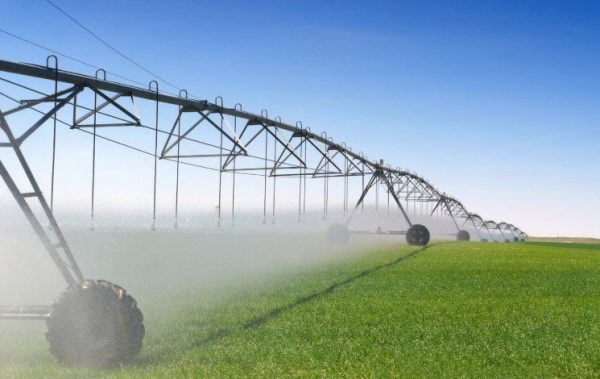
With the current storage capacity of dams estimated at 8.6 billion cubic meters, set to reach 9 billion cubic meters upon completion of ongoing projects, the hydraulics sector places agricultural irrigation at the heart of its priorities. This was affirmed by the Minister of Hydraulics, Taha Derbal, during his address to the National People’s Assembly (APN) Commission on Agriculture, Maritime Fisheries, and Environmental Protection.
The official stated that Algeria now has 81 dams, 604 water mobilization structures (small dams and hill reservoirs), 17 large seawater desalination plants, 13 monobloc stations, 234 wastewater treatment plants, 290,000 wells, and 18 major water transfer systems. These achievements, according to him, reflect the strong political will granted by the President of the Republic to water security, considered a priority of the public water service, including for agricultural irrigation.
These accomplishments have enabled the mobilization of significant water volumes, with over 70% allocated annually to the agricultural sector, thus ensuring broad coverage of national irrigation needs, in addition to supplemental irrigation for crops whenever conditions allow and water is available in the relevant dams. In his presentation, the minister highlighted the current state of agricultural irrigation in Algeria and the major challenges facing the sector, particularly securing irrigation water amid accelerated climate change, which has a direct and tangible impact on national water resources, both surface and underground.
He emphasized that the relationship between the hydraulics and agriculture sectors is organic and inseparable, asserting that there can be no sustainable and productive agriculture without a stable and guaranteed water resource. To this end, the hydraulics sector works, in permanent coordination with other relevant ministries, to ensure irrigation water supply and support agricultural activity to meet growing demand for agricultural products, while guaranteeing the water security needed to sustain economic dynamics and the accelerated development of the sector.
Referring to the significant decline in precipitation in recent years, Mr. Derbal noted that this situation has strongly affected the country’s traditional water resources and complicated the supply of drinking water and irrigation water. Facing these challenges, and on the instructions of the President of the Republic, the high authorities have established a national water security strategy.
This strategy rests on several major axes, including the nationwide rollout of seawater desalination plants, the expansion of storage and transfer infrastructure, and the reuse of treated wastewater, particularly in agriculture. The desalination strategy primarily aims to secure drinking water supply for coastal cities and inland cities within a 250-kilometer radius, while reducing pressure on traditional water resources, which are weakened by climate change.
Furthermore, as part of the national agricultural development policy and the achievement of food security, the minister highlighted the efforts deployed to support the modernization of agriculture in the Grand South, particularly in the wilayas of Adrar, Timimoun, El-Meniaa, and Ouargla. The hydraulics sector thus ensures the facilitation of administrative procedures related to granting well drilling authorizations, in the shortest possible timeframes.
In this context, the National Water Resources Agency (ANRH) handles borehole location and technical monitoring of wells, with approximately 15,000 authorizations issued to date. On this point, the minister stated that these achievements, set to be strengthened by the completion of ongoing projects, constitute far more than mere technical infrastructure. They represent, he affirmed, a true lever of resilience for Algerian agriculture, today and in the future, in the face of persistent climate change and the fragility of traditional water resources.