

The hydrocarbons and mining sectors in Algeria are expected to benefit from technical and financial support from the World Bank, given the dynamic development of these sectors and their significance not only for Algeria but also internationally due to their export potential.
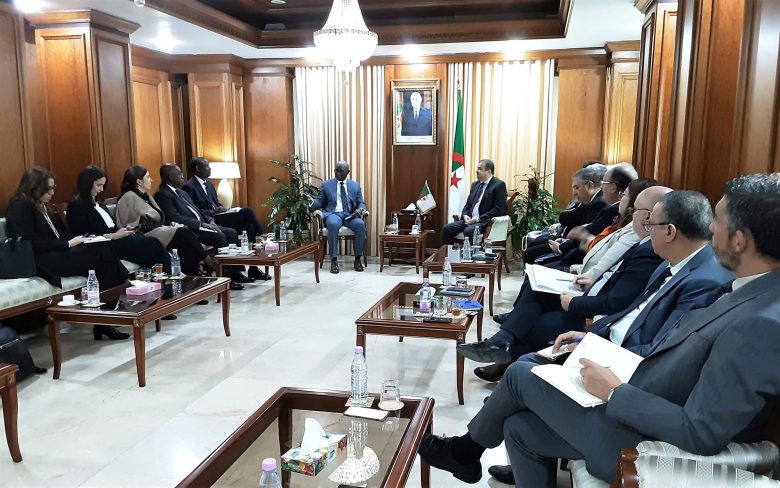
This emerged from the meeting between the Minister of State, Minister of Hydrocarbons and Mines, Mohamed Arkab, and the World Bank Vice President for the Middle East, North Africa, Afghanistan, and Pakistan region, Ousmane Dione, whom he received this Sunday along with the accompanying delegation at the headquarters of his ministry.
The meeting discussed “prospects for strengthening cooperation between Algeria and the World Bank, particularly regarding technical and financial aspects, exchange of expertise, and support for strategic projects related to the development of the hydrocarbons and mining sectors,” according to a ministry statement, adding that the Secretary of State to the Minister of Hydrocarbons and Mines in charge of Mines, Karima Bekir Tafer, participated in the meeting.
During this session, Mr. Arkab and Ousmane Dione examined opportunities to broaden their cooperation in priority areas, such as development projects for the oil, gas, and petrochemical industries. Discussions also covered support for “national efforts to reduce emissions and decrease the carbon footprint,” notably with Sonatrach.
Regarding the mining sector, both parties reviewed ways to support major structural projects related to mining, particularly those connected to phosphate and fertilizer production, as well as local processing and transport of mineral resources, especially by rail. These major projects have national importance as well as cross-border significance, knowing that part of the production is destined for export. To this end, railway lines starting from ore extraction regions (Tindouf in the West and Tébessa in the East) toward two ports in the north of the country are progressing steadily.
On this occasion, Mr. Arkab provided a comprehensive overview of the orientations of Algeria’s energy policy and sector development programs, especially the strengthening of hydrocarbon infrastructures, hydrogen development, and the promotion of optimal exploitation of mineral resources.
He also highlighted the national seawater desalination program and the sector’s role in ensuring the domestic supply of petroleum products and providing raw materials to manufacturing industries.
In this context, the minister emphasized Algeria’s contribution to supporting energy security at regional and international levels, thanks to the reliability of its hydrocarbon exports and its programs aimed at increasing production capacities, developing petrochemical industries, promoting resource valorization technologies, reducing emissions, and carbon capture.
In the mining sector, the minister reviewed the progress of major projects under construction, such as phosphate extraction and processing and phosphate fertilizer production, the Gara Djebilet iron project, as well as zinc and lead extraction projects at Tala Hamza and Amizour. Mr. Arkab stressed that these projects will supply raw materials to local industries and increase national added value, in addition to exploiting strategic minerals, notably those related to the renewable energy industry and storage.
For his part, Ousmane Dione praised the positive momentum in Algeria’s hydrocarbons and mining sectors, underlining the World Bank’s willingness to deepen cooperation and provide financial and technological support to priority projects, especially those related to the oil, gas, and petrochemical industries. According to the same statement, he also emphasized cooperation in developing mining activities, valorizing primary resources, and their transportation—particularly by rail—to contribute to sustainable economic development and job creation.