

The historic and contemporary role of Algeria in supporting liberation movements, defending just causes, and consolidating an African vision free from interference was highlighted this Sunday by Riadh Sidaoui, a political analyst and director of the Arab Center for Political and Social Studies in Geneva.
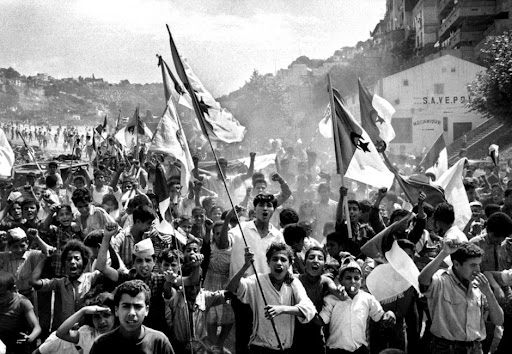
At the start of his intervention, Mr. Sidaoui affirmed on the national radio that “Algeria has remained faithful to the philosophy of its Revolution. It supports oppressed peoples because it has itself experienced oppression.” Addressing the November revolution, Mr. Sidaoui argued that it constitutes a historical event and a political and moral landmark for many peoples, explaining that “the Revolution remains one of the most powerful models for liberation movements,” a model that has shaped, over the decades, the international perception of Algeria.
This historical legitimacy still manifests today in Algiers’ firm positions on the Sahrawi and Palestinian issues. The political scientist recalled that Algeria was among the first states to recognize the Sahrawi Arab Democratic Republic and continues to defend, on all international platforms, the right of the Sahrawi people to self-determination.
He also emphasized Algeria’s “constant and deeply rooted” support for Palestine, recalling the President’s commitment and Algiers’ diplomatic activism on this cause.
For Mr. Sidaoui, Algeria plays a central role on the African stage by advocating diplomacy based on stability and non-interference. It defends the “Africa–Africa” principle and encourages internal solutions to crises, as in Libya, where it supported an exclusively Libyan dialogue, regarded today as “the only viable solution for lasting peace.” Moreover, Algeria is actively involved in conflict prevention and management in the Sahel, through the Algiers agreements and various regional mechanisms, assuming a role few African countries can play.
Asked about the importance of memory in relations between Algiers and Paris, Riadh Sidaoui was categorical: “History and memory remain the main determinants of the bilateral relationship,” asserting that there can be no lasting normalization without recognition of the crimes committed during a century and thirty-two years of colonization. He also stressed that Algeria has always been firm on its demands, which are recognition of colonial crimes, an official apology, and a serious process of symbolic and moral reparation.
He cited in this regard the statements of the Minister of Foreign Affairs, Ahmed Attaf, who said that “Africa has the full right to obtain reparation for colonial crimes.” This position, noted Mr. Sidaoui, fits into a broader continental dynamic aimed at criminalizing colonialism in legal, political, and historical terms. On the other hand, he observed that France has adopted a strategy based on the formula “looking to the future.” A way to “circumvent the depth of the colonial trauma,” explained the political analyst.
Beyond the Algerian-French face-off, Mr. Sidaoui called on African countries to build a common position on the continent’s major strategic issues. According to him, Africa cannot progress without a shared vision and strong institutions capable of imposing a real balance of power on the international stage. He further noted the obligation to officially adopt the principle of criminalizing colonialism and move forward with reparation mechanisms, asserting that this approach constitutes “an act of sovereignty, dignity, and historical justice.”
Mr. Sidaoui advocated for greater African integration to build a true continental economy, a unified market, and a common strategy to fight terrorism, believing that “if Africa speaks with one voice, no one will be able to ignore it.” He emphasized the importance of the New Partnership for Africa’s Development (NEPAD) in modernizing African economies while warning against foreign interference that slows the continent’s autonomy. According to him, Algeria today plays a leading role in promoting an independent African identity and relies on its diplomatic tradition to foster dialogue, sovereignty, and solidarity, placing it at the heart of African initiatives on the international stage.