

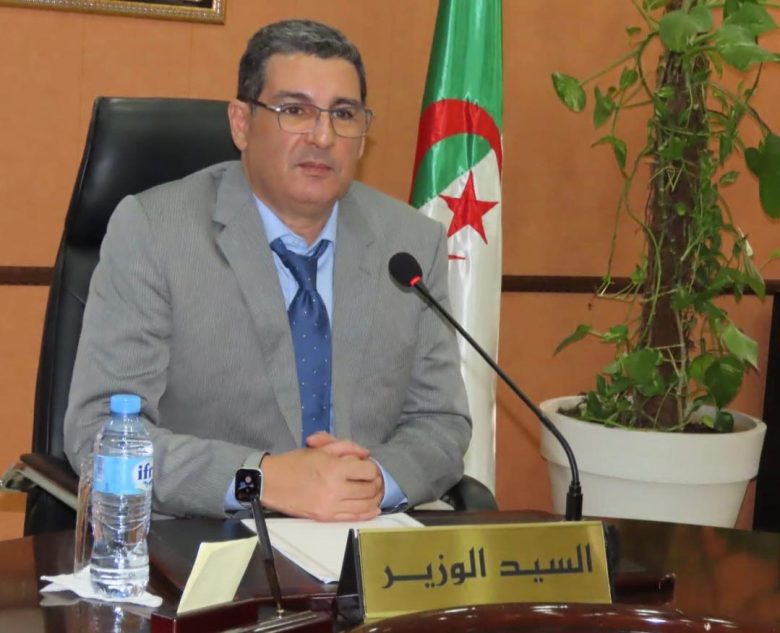
The Minister of Health, Mohamed Seddik Aït Messaoudène, announced on Thursday in Algiers the opening of 24,487 new budget positions for the 2026 finance law project, including 2,600 allocated to specialist doctors.
Presenting the sectoral budget of the Ministry of Health before the Finance and Budget Committee of the People’s National Assembly (APN), Mr. Aït Messaoudène stated that the total number of positions opened in 2026 represents “an increase of 5,397 budget positions compared to 2025.”Of the 24,487 planned positions, 2,600 will be assigned to specialist doctors, 2,000 to general practitioners, 14,860 to paramedical staff, 3,000 to contractual agents, 90 to specialized administrative staff, and 1,937 to public health midwives. The minister also indicated that the health sector will benefit from over 1,048 billion dinars in payment credits and 1,038 billion dinars in commitment authorizations. He specified that “this budget has been allocated according to clearly defined strategic objectives focused on prevention, care, training, and public administration.”
Within the framework of the 2026 finance law, the expenses of the Cancer Control Fund will be increased through the modification of article 79 of law 10-13 related to the 2011 finance law. This revision will allow a boost in subsidies allocated to health institutions under supervision.
The minister affirmed that “the available credits in this Fund will exceed 93 billion dinars for the year 2026.” This budget will support specialized structures and enhance the availability of oncological treatments.
Continuing in the direction of sustainable financing for public health, the 2026 finance law project proposes an increase in the additional tax on tobacco products, from 65 to 75 DA.
The revenues generated from this measure will be distributed between the Emergency Fund and medical care activities, with the contribution rising from 14 to 19 DA, and the Cancer Control Fund, which will now receive 26 DA instead of 21.
This measure is part of a preventive health approach aimed at reducing risks associated with smoking, while financially supporting treatment and research programs.
Following the minister’s presentation, members of the committee raised several concerns about sector operations. They notably called for an effective utilization of reports from the health committee’s information missions and the implementation of recommendations from parliamentary days and seminars organized by the APN.
Among the main difficulties mentioned were the lack of medical equipment in several health facilities, recurrent failures of diagnostic devices, such as scanners, and excessively long delays for radiotherapy sessions. The parliamentarians recommended increasing ambulance allocations to improve medical transportation and ensuring better patient care, especially in remote areas.
To improve the overall system performance, deputies proposed several measures. They suggested creating a special fund for managing chronic diseases and medical emergencies, equipping new polyvalent care rooms, and constructing hospitals in wilayas lacking adequate facilities. They also called for the addition of 60-bed hospitals, the creation of positions for trained auxiliary medical staff in private schools, and the implementation of a unified digital system for better health data management.
The proposals also included providing housing benefits and financial incentives for specialist doctors, along with ensuring ongoing training. The elected officials emphasized the importance of strengthening control of private clinics, updating the health map, and increasing training capacities for nurses, midwives, anesthesia technicians, and radiology technologists.
Among urgent priorities were the creation of mother-and-child hospitals in certain wilayas, opening new cancer treatment centers, and widespread use of painless glucose measurement devices for diabetics. These initiatives, inspired by international best practices, aim primarily to improve patients’ quality of life and adapt the national health system to global technological advancements.
At the opening of the session, Mohamed Benhachem, chairman of the commission, stated that health remains “a major priority for citizens,” facing challenges related to the quality of services, healthcare coverage, and shortages of human and material resources. Mr. Benhachem also praised “the significant share of the national budget allocated to health,” which clearly reflects “the political will of public authorities to strengthen the national health system and guarantee the fundamental right to health, enshrined in the Constitution.”
He also highlighted the complementarity and close cooperation between the legislative and executive powers, which he described as a shared commitment for the service of the country’s highest interests and the well-being of citizens.