

Rapidly growing in the country, considering the number of dedicated banks and those that have introduced it, as well as the number of accounts opened and deposits recorded, Islamic finance faces challenges it must overcome to ensure its development.
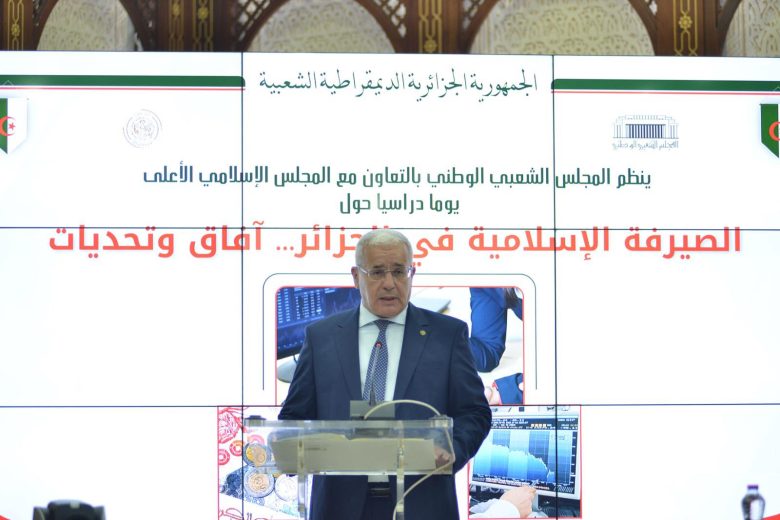
It was on the challenges and prospects of Islamic finance that the National People’s Assembly (APN) focused yesterday, organizing, in coordination with the High Islamic Council, a study day under the theme “Islamic Finance in Algeria: Challenges and Prospects.”
Affirming that Islamic finance is not merely “a technical alternative to the conventional banking system,” the APN president, Brahim Boughali, who opened the study day, emphasized the need to strengthen the foundations of Islamic finance. “Islamic finance offers modern financing solutions compliant with Sharia and adapted to the demands of contemporary development,” he stated.
According to the APN president, this approach has “attracted liquidity held by investors reluctant to the conventional system, while stimulating productive investment in the agriculture, industry, tourism, and services sectors.”
Noting that the implementation of Islamic finance reflects President Abdelmadjid Tebboune’s commitment to diversifying financing instruments and strengthening financial inclusion, Mr. Boughali indicated that “this financing method contributes to the implementation of financial and social justice” through formulas based on “El Moucharaka,” “El Mourabaha,” and “L’idjara.” Adding details, the APN president explained that, beyond mobilizing national resources and reintegrating capital circulating outside the official economic circuit, this contributes to the transformation and development dynamic that Algeria is experiencing.
To achieve the objectives set for Islamic finance, it is essential, according to the president of the National People’s Assembly, to address certain challenges related, among others, to adapting the legal framework and developing new Islamic finance products. He thus emphasized the need to establish “a flexible and coherent legal and regulatory framework and to train specialized competencies in financial jurisprudence and risk management.”
He also stressed the importance of raising public awareness of the benefits of Islamic finance and developing Islamic financial products adapted to digital transformation, in order to enhance the sector’s competitiveness nationally and internationally.
Noting that the main challenge is to make Islamic finance a strategic pillar of the national economy, Mr. Boughali stated that the success of Algeria’s experience with Islamic finance will depend on the level of coordination and synergy between the state, financial institutions, investors, and experts.
This study day, which is part of the strengthening of coordination between the APN and the High Islamic Council, was marked by presentations from members of both institutions relating to the state and development of Islamic finance in Algeria.