

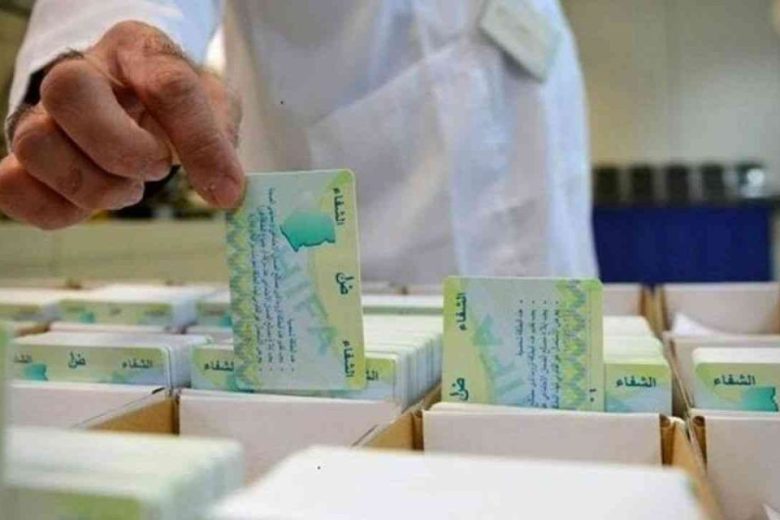
In implementation of the program of the President of the Republic, Abdelmadjid Tebboune, which emphasizes the social dimension of the State, the Minister of National Solidarity, Family, and Women’s Conditions, Soraya Mouloudji, chaired this Monday, alongside the Minister of Labor, Employment, and Social Security, Abdelhak Saïhi, the official launch ceremony of the electronic card intended for socially uninsured needy persons, enabling them to access medications free of charge.
Ms. Mouloudji stated, during her speech at the launch ceremony of the card for the most needy, that “this major initiative crowns a process of governmental coordination and in-depth work, both regulatory and procedural, in application of executive decree No. 24-287 setting the modalities for the medical coverage of needy persons not covered by social security, particularly those affected by chronic diseases as well as their minor dependent children.”
The minister specified that a joint ministerial decision, signed between the ministries of National Solidarity, Labor, Health, and Finance, defines the organization and operation modalities of the wilaya commissions responsible for examining medication coverage requests for the benefit of socially uninsured needy persons.
She also announced that a second joint decision sets the list of concerned medications, which includes nearly 1,000 pharmaceutical and medicinal references, broken down into nearly 5,000 commercial brands, thus covering almost all therapeutic needs fully covered by the State at 100%, without limitation related to the number or amount of medical prescriptions.
Asserting that “this total gratuity constitutes a firm commitment of the State, with a control and monitoring mechanism ensured by the services of the National Social Security Fund,” she added that “this card will contribute to the governance of coverage, the traceability of services, and the rigorous, transparent, and equitable application of the system.” She highlighted “the spirit of institutional cooperation and sectoral complementarity that marked the realization of this project.”
Sovereign Decision in Service of Citizen Dignity
Taking the floor in turn, Mr. Saïhi qualified this card initiative for the most needy as “a sovereign decision translating a clear political will to place the human being at the heart of public policies.” He emphasized that “the right to health, treatment, and medication is a constitutional right guaranteed by the State.”
Mr. Saïhi took care to highlight that since President Tebboune’s accession to the supreme magistracy, Algeria has experienced “profound social reforms and historic decisions that have restored the central role of the social State, ended exclusion, and mobilized considerable financial and human resources to ensure free care and comprehensive coverage of citizens, without distinction.”
On the historical level, the minister recalled that the social vocation of the Algerian State draws its foundations from the Manifesto of November 1, 1954, consolidated as early as 1974 by the establishment of free care. He added that “it suffices to recall that this year, more than 12 million specialized medical acts have been performed free of charge, that nearly 12 million children are schooled, and that comprehensive coverage of serious pathologies, such as childhood cancer, is ensured.” He also announced the upcoming opening of a specialized hospital for pediatric cardiac surgery in Mahelma.
Furthermore, Mr. Saïhi supported that this electronic card constitutes “the symbol of a modern public policy based on digitization, transparency, and equal opportunities,” adding that it contributes to eliminating bureaucracy and preserving citizen dignity, guaranteeing direct and effective access to medications.
Evoking the dynamic of digital transformation, the minister indicated that his sector has engaged, for more than a year, an advanced dematerialization process, whose pace has significantly accelerated in recent months. He specified that “today, more than 88% of ministerial services have reached an advanced level of digitization, in accordance with the orientations of the President of the Republic.”
It should be noted that the electronic card concerns needy persons not socially insured, without income, including those affected by chronic diseases, as well as their minor dependent children. Applications are processed through a simplified administrative process, starting with the submission of an administrative and medical file to the social action service of the commune of residence.
After review by the competent commission and validation, the files are transmitted to the CNAS, which assigns an registration number, before the establishment and activation of the electronic card by the wilaya agencies. This allows beneficiaries to obtain prescribed medications free of charge from affiliated pharmacies, in accordance with the list set by the joint ministerial decision of July 13, 2025, with coverage that can extend up to three months of treatment for chronic patients.
Thus, with this new card, the State, under the leadership of President Tebboune, strengthens its commitment to guarantee equal access to care and health services, without exclusion or discrimination, thereby consolidating its social model based on solidarity, social justice, and human dignity.