

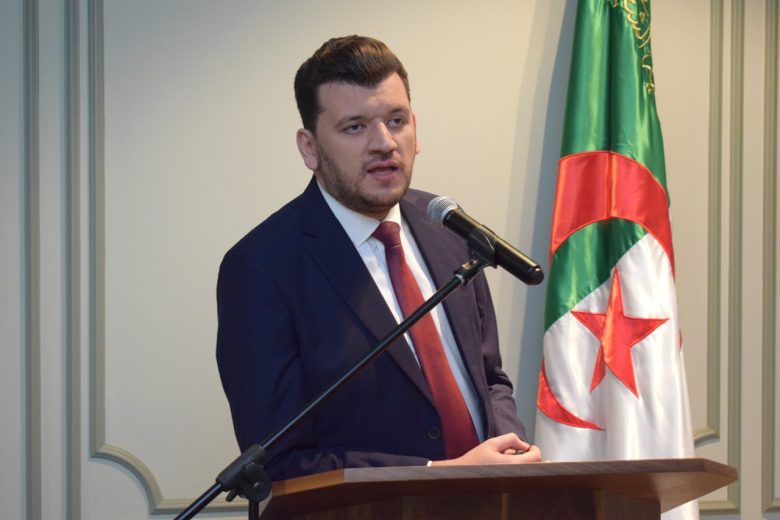
The Minister of Agriculture, Rural Development, and Fisheries, Yacine El-Mahdi Oualid, announced that the state has allocated over 886 billion dinars for 2026, mainly to carry out the major investment projects in the sector included in the 2026 Finance Bill (PLF), aimed at strengthening national production and food security.
Speaking before the Finance and Budget Committee of the National People’s Assembly (APN) on Monday afternoon, the minister detailed the strategic orientations of his sector for the coming year, according to a statement from the Assembly yesterday. According to Mr. Oualid, the total budget allocated reached 886.452 billion dinars, primarily intended to finance major investment projects in the sector, including 801.602 billion dinars for agriculture and rural development, 55.084 billion for forests, 7.512 billion for fisheries and aquaculture, and finally 22.288 billion for general administration.
Moreover, the sector’s program portfolio benefits from a commitment authorization of 764.264 billion dinars, distributed among four main programs: agriculture and rural development (90.25% of the total), forests (6%), fisheries and aquaculture (0.75%), and general administration (3%).
An amount of 92.091 billion dinars will be dedicated to supporting the development of agricultural investment, protecting animal and plant health, and aiding breeders and small farmers. Additionally, a budget of 23.298 billion dinars will cover Sonelgaz’s receivables related to connecting agricultural farms to electricity, within the framework of the presidential program.
Aiming to reduce imports and support purchasing power, the state’s contribution to the interprofessional offices for milk (ONIL) and cereals (OAIC) reaches 427.728 billion dinars, nearly 79% of transfer expenditures. Of this amount, 331.249 billion dinars will go to the OAIC and 96.179 billion to the ONIL.
The sector also plans to build and equip five long-term cereal storage silos, with a total capacity of 5 million quintals, requiring 47.5 billion dinars in commitment authorization and 14.25 billion in payment credits.
Ten powdered milk storage centres will also be constructed for ONIL, with 12 billion dinars in commitment authorization and 6.253 billion in payment credits. Furthermore, the ministry plans to regularise ongoing project payments, particularly those involving 30 long-term silos and 350 intermediate storage centres spread over 52 provinces.
As part of the Grand South mega-projects, 40 billion dinars are planned for connecting projects such as Baladna, BF, and Cevital to electricity and gas networks, including 20 billion in payment credits.
Connecting strategic agricultural perimeters in 14 provinces will mobilize 23 billion dinars in commitment authorization and 5 billion in payment credits, while 10 billion is allocated for opening and developing agricultural tracks.
Regarding forests, a budget of 12 billion dinars is dedicated to the rehabilitation and development of the green dam in 13 provinces, with 6.68 billion in payment credits. The anti-fire program will receive 1.18 billion dinars, including the acquisition of 25 tanker trucks, 20 light vehicles, 3,000 anti-fire kits, and detection and surveillance equipment for prevention and rapid intervention.
Furthermore, 400 million dinars are reserved for the general census of fisheries and aquaculture, including 100 million in payment credits, alongside digitization projects and the acquisition of navigation simulators for training schools.
Among the sector’s strategic goals, the minister cited reducing dependency on cereal and dry legume imports through increased productivity and yield, expanding irrigated areas, generalising the use of water-saving irrigation systems, and developing strategic crops in the South, notably through activities aimed at opening up agricultural farms and connecting them to electricity networks.
According to Mr. Oualid, the ministry works to support agro-food processing industries (milk and industrial tomato), increase agricultural product storage capacity, develop the national cold storage network, promote afforestation and reforestation programs and forest fire prevention, and develop fishing and aquaculture activities.
In this regard, the minister assured that the sector “is advancing steadily according to a clear forward-looking vision, developed with the participation of all national skills,” affirming that this strategy will achieve the country’s food security “thanks to the contribution of all, without exclusion.”