

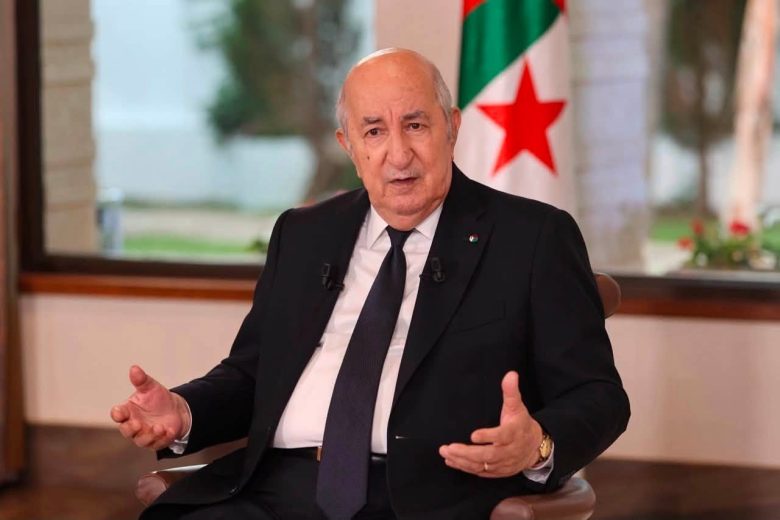
The nation’s economic landscape, progress achieved across multiple sectors, and growth outlooks were thoroughly reviewed by President Abdelmadjid Tebboune. He highlighted strengthened economic ties with European partners, particularly Germany, while issuing a call to further unlock European markets for Algerian exports.
During his periodic media interview on Sunday evening, the Head of State emphasized the remarkable performance of the agricultural sector, a promising field delivering tangible outcomes. Praising the commendable progress recorded in durum wheat cultivation, with self-sufficiency anticipated during the ongoing agricultural cycle, the President described this milestone as extraordinary. He noted that several favorable elements fueled the rise in national yield, notably a refined technical methodology and favorable rainfall levels.
Beyond slashing the import bill by over 1.5 billion dollars, attaining self-sufficiency reinforces national pride and underscores Algeria’s commitment to securing food sovereignty, the President asserted. Within this context, he also referenced the broader surge across the agricultural domain, whose goods are now reaching new international markets.
Having moved past an era of importing staple produce such as garlic and potatoes, the country now satisfies its domestic consumption requirements. The achieved milestones stem from a supportive economic environment that created ideal conditions for success, particularly through grid power connections, he explained, observing that the sector is heading toward self-sufficiency across most agricultural branches. The meat sector remains an exception, still hampered by market speculation that the state intends to dismantle, the President assured.
Expanding Industrial Sectors
In addition to accomplishments in oil refining—where fuel self-sufficiency involving gasoline and kerosene was attained in 2022—the President highlighted strides within the industrial sector. He affirmed that the country is advancing toward self-sufficiency in several segments, including home appliances and electrical equipment, backed by strong export capacity. Major structural infrastructure projects were also addressed, such as the Algiers-Tamanrasset railway line, which has entered an accelerated execution phase targeted for completion in 2028. This infrastructure will bolster Algeria’s role in advancing African integration.
Efforts dedicated to securing water safety were likewise outlined by the President. He stated that accelerating the construction program for seawater desalination plants along the coastline will establish Algeria as a global leader in the field, achieving a 62 percent coverage rate for domestic consumption by 2029.
The Head of State, who highlighted structural reforms aimed at improving Algeria’s business climate, also emphasized initiatives to safeguard purchasing power. He affirmed that measures designed to protect and promote local production while driving non-hydrocarbon exports have brought inflation under control, dropping dramatically to 2 percent in 2026 after surpassing 11 percent in previous years.
Solid Relations with Germany, Italy, and Spain
President Tebboune further expanded on bilateral cooperation with key partners, most notably Germany, with whom relations have reached an excellent standard thanks to projects launching across industry and energy.
The Opel project for local automotive engine manufacturing will enable Algeria to gain meaningful entry into high-precision mechanical manufacturing, grounded in industrial applied sciences tailored to national economic priorities, noted the President. He stated that Algeria aims to become Germany’s primary supplier of green hydrogen via a pipeline traversing Austria, while exploring options to allocate vast areas for solar power plants to transmit electricity to Europe through Italy, a key partner. The pharmaceutical sector also stands among the main pillars of strengthened cooperation with Germany through technology transfers to Algeria.
Regarding Spain, Mr. Tebboune indicated that several bilateral agreements covering multiple economic domains, including energy, will be evaluated and signed during an upcoming meeting scheduled for October.
Addressing hydrocarbon exports, the President noted that Italy stands as the top importer of Algerian gas, followed by Spain in second place and France third.
Opening European Markets Further to Algerian Products
With the European Union, Algeria seeks a mutually beneficial partnership, long requesting a revision of the 2005 Association Agreement to align with the country’s updated economic reality of diversified production.
According to him, Algeria’s current economic profile demands a review of the association deal concluded in 2005 to reflect the capabilities generated by economic diversification. He cited the cement industry, where Algeria imported 3 million tons in 2016 before expanding production capacity beyond 40 million tons, with a portion directed to exports. He noted that solid relations with nearly all European nations allow for launching the agreement review process, adding that he urged European leaders—particularly in Italy, Germany, and Spain—to grant broader access for Algerian products. This request has received a favorable response from several nations, led by Italy.