

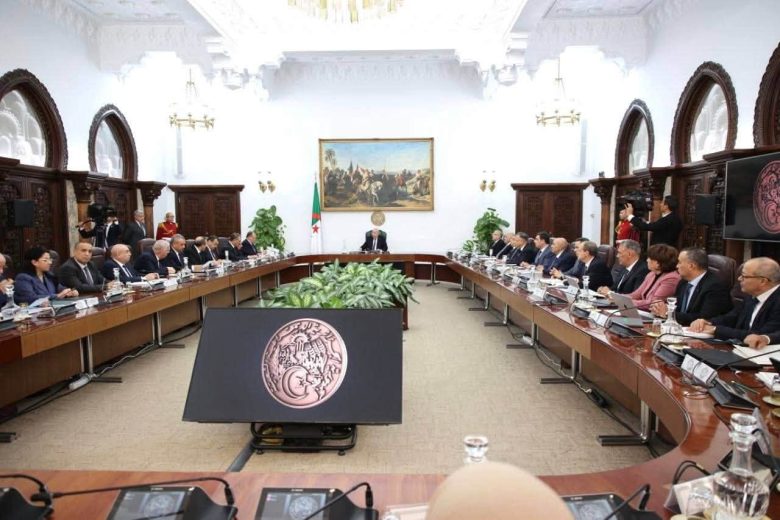
The head of state, Abdelmadjid Tebboune, chaired a ministerial gathering Sunday dedicated to assessing current conditions and future strategies for agriculture, rural development, and fisheries. Following the session, he issued a series of mandates concerning sector organization, productivity enhancement, and public health safeguards.
The nation’s leader mandated the formulation of a fresh regional administrative framework for farming to ensure greater transparency alongside an updated, high-precision census mechanism. He additionally authorized establishing a specialized bureau focused on dried vegetables, while grain oversight remains exclusively under the Algerian Interprofessional Cereal Office.
An agricultural statistics division must be deployed promptly to prevent supply chain bottlenecks within domestic markets, specifically regarding staple commodities. Furthermore, the agriculture minister must draft a portfolio reallocation scheme, assigning a delegated minister for fisheries and a state secretary for forestry, both operating under the agriculture ministry. Public enterprise operations and their functional efficacy will undergo subsequent review.
Beginning in November, preparations for the upcoming harvest season must commence, featuring equipment fleets appropriately scaled in volume and capability for all cultivation zones. This initiative necessitates enforcing prior decrees establishing specialized mechanization cooperatives.
The president decreed a strict ban on leaving arable land fallow or uncultivated, denouncing such methods as incompatible with contemporary agricultural practices. He additionally instructed officials to penalize producers withholding harvests, emphasizing that the government possesses adequate financial mechanisms to acquire strategic crops at optimal rates.
In another major policy shift, authorities enacted a complete prohibition on utilizing corn as green livestock fodder. Official statements noted that this practice failed to enhance meat yields or satisfy national demands, instead triggering severe grain corn deficits. Combating illicit activities spanning from initial production through final distribution remains a top priority. The agriculture minister must report back to the council detailing directive implementation and the impacts of the overarching agricultural guidance law.
Beyond the agricultural sphere, Tebboune instructed officials to expand inspection laboratories at seaports and airports, noting that only two currently operate. Priority implementation targets high-traffic shipping hubs including Oran, Mostaganem, Ghazaouet, Jijel, and Annaba.
Once these facilities are operational, the justice minister must bolster statutory frameworks by enacting maximum penalties against individuals intentionally smuggling hazardous goods through ports, airports, or land borders that threaten public welfare. Finally, the president urged government agencies to maintain sustained vigilance across their respective jurisdictions regarding imported goods posing potential public hazards.
Cabinet members are additionally required to integrate departmental statistical data into the national digital platform managed by the High Commissariat for Digitalization.
The ministerial summit concluded with formal approval regarding executive decrees authorizing appointments and dismissals concerning senior government positions.